Why don't you like this?



Description
Short Summary
Interesting Facts
Notable Quotes
Recommendations
Takeaways


Management Summary
If it is the goal of information security to enable the business as well as protect it, then the traditional network model of an insecure outside (the Internet) with a firewall protecting the secure internal network fails the business on both counts.
This old model is being actively bypassed by exploits from adversaries who want to steal information, extort money or damage the business operation, while simultaneously hindering business agility with a rigid border that must be traversed every time the organisation needs to interact outside their “hardened shell”.
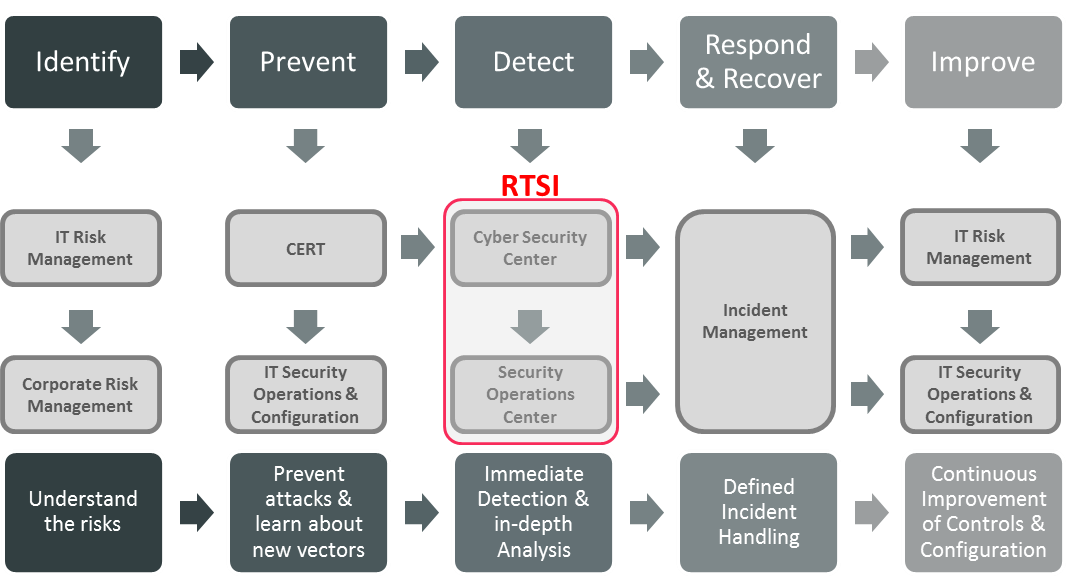
Instead we need to re-purpose the firewall, moving from one perimeter to many micro-perimeters, using one tool to centrally provide a consistent view of the configuration and the logs. Coupling this with analytic and real-time security intelligence (RTSI) should provide businesses with a greater level of protection from today’s threats.
This strategic approach should be driven by a good understanding of where the organisation’s data needs to flow, together with a set of modern appliances that place the protection and access as close as possible to the data the business defines as needing protecting.
This advisory note provides a broad set of high-level recommendations and approaches for aligning a modern network security architecture and security strategy with the needs of the business; resulting in an agile approach that enables data to flow to wherever and whoever is authorised to access it, as well as providing actionable advice for security organizations on how to:
- Understand the limitations of traditional firewall and network architecture
- The need to perform a network data flow analysis
- Use this understanding to drive a network and security strategy
- Adopt a “data-centric” security model, moving the security and protection of data closer to the data itself
- Make the concept of “inside” and “outside” irrelevant, protecting data to the same level wherever it, or the device it resides on, happens to be
- Leverage identity to provide frictionless access to data and systems
- Ensure that firewall and other logs are coupled with the analytics and threat intelligence strategy
Highlights
The full “Highlights” chapterCreate a free account
Why firewalls are dead?
In the full chapter: Modern exploits bypass firewalls, Rules on a firewall are un-manageable, The network already extends outside your perimeter, Encryption defeats a firewall, Everything uses ports 80 & 443, and Logging and MonitoringCreate a free account
Building a resilient, defendable network
In the full chapter: A strategic approach to control systems, A strategic approach to Data, Architectural models, System Hardening, Application Hardening, Micro-perimeterisation, Inherently Secure Protocols, Encryption, Identity, VLAN’s, Anomaly monitoring & detection, Data Centres / DMZ, Insecure Office networks, Inland Networks, and Firewall managementCreate a free account
Recommendations
In the full chapter: Map and understand where the data needs to flow, Take a strategic view of data & systems security, Retain firewalls where they do some good, Stop protecting areas where the battle is not worth winning, Protect what is of value, Visibility is key, and Leverage encryption & identity to replace network securityCreate a free account
Conclusion
The full “Conclusion” chapterCreate a free account
Related Research
Advisory Note: Plant Automation Security – 71560
Advisory Note: Software Defined Infrastructures – 71111
Advisory Note: Managing Risks to Critical Infrastructure – 70819
Advisory Note: Real Time Security Intelligence – 71033
Advisory Note: Enterprise Key and Certificate Management – 70885
Leadership Compass: Secure Information Sharing – 72014
Copyright
© 2026 KuppingerCole Analysts AG. All rights reserved. Reproducing or distributing this publication in any form is prohibited without prior written permission. The conclusions, recommendations, and predictions in this document reflect KuppingerCole Analysts' initial views. As we gather more information and conduct deeper analysis, the positions presented here may undergo refinements or significant changes. KuppingerCole Analysts disclaims all warranties regarding the completeness, accuracy, and adequacy of this information. Although KuppingerCole Analysts' research documents may discuss legal issues related to information security and technology, we do not provide legal services or advice, and our publications should not be used as such. KuppingerCole Analysts assumes no liability for errors or inadequacies in the information contained in this document. Any expressed opinion may change without notice. All product and company names are trademarks™ or registered® trademarks of their respective holders. Their use does not imply any affiliation with or endorsement by them.
KuppingerCole Analysts supports IT professionals with exceptional expertise to define IT strategies and make relevant decisions. As a leading analyst firm, KuppingerCole Analysts offers firsthand, vendor-neutral information. Our services enable you to make decisions crucial to your business with confidence and security.
Founded in 2004, KuppingerCole Analysts is a global, independent analyst organization headquartered in Europe. We specialize in providing vendor-neutral advice, expertise, thought leadership, and practical relevance in Cybersecurity, Digital Identity & IAM (Identity and Access Management), Cloud Risk and Security, and Artificial Intelligence, as well as technologies enabling Digital Transformation. We assist companies, corporate users, integrators, and software manufacturers to address both tactical and strategic challenges by making better decisions for their business success. Balancing immediate implementation with long-term viability is central to our philosophy.
For further information, please contact clients@kuppingercole.com.
Management Summary
Highlights
Why firewalls are dead?


Modern exploits bypass firewalls
Rules on a firewall are un-manageable
The network already extends outside your perimeter
Encryption defeats a firewall
Everything uses ports 80 & 443
Logging and Monitoring
Building a resilient, defendable network
A strategic approach to control systems
A strategic approach to Data
Architectural models
System Hardening
Application Hardening
Micro-perimeterisation
Inherently Secure Protocols
Encryption
Identity
VLAN’s
Anomaly monitoring & detection
Data Centres / DMZ
Insecure Office networks
Inland Networks
Firewall management
Recommendations
Map and understand where the data needs to flow
Take a strategic view of data & systems security
Retain firewalls where they do some good
Stop protecting areas where the battle is not worth winning
Protect what is of value
Visibility is key
Leverage encryption & identity to replace network security
Conclusion
Related Research
Copyright
Table of Contents


Table of contents
Close
Management Summary
Highlights
Why firewalls are dead?
Modern exploits bypass firewalls
Rules on a firewall are un-manageable
The network already extends outside your perimeter
Encryption defeats a firewall
Everything uses ports 80 & 443
Logging and Monitoring
Building a resilient, defendable network
A strategic approach to control systems
A strategic approach to Data
Architectural models
System Hardening
Application Hardening
Micro-perimeterisation
Inherently Secure Protocols
Encryption
Identity
VLAN’s
Anomaly monitoring & detection
Data Centres / DMZ
Insecure Office networks
Inland Networks
Firewall management
Recommendations
Map and understand where the data needs to flow
Take a strategic view of data & systems security
Retain firewalls where they do some good
Stop protecting areas where the battle is not worth winning
Protect what is of value
Visibility is key
Leverage encryption & identity to replace network security
Conclusion
Related Research
Copyright









