Dana asks her personal AI agent to find an earlier flight. It proposes one but never mentions the change fee. Dana taps approve. Her employer refuses to reimburse the fee. But every login along the way worked perfectly.
That was the scenario Matthew Gardiner brought to CIAM Impact Day in Frankfurt. It exposed a problem that goes beyond authentication: what happens when an agent acts on someone's behalf, but the person, the agent, and the organization have different understandings of what was authorized?
On November 18, business leaders, analysts, and practitioners gathered in Frankfurt for the third and final Impact Day of the year. Across 19 sessions, the discussion moved between customer journeys, digital identity, delegation, and the implications of AI.
The discussions looked ahead to a world with fewer people in the process. The day itself, however, was very much about people.
The Customer Who Isn't There
Matthias Reinwarth opened with an account created in 2016. Forgotten, with a reused password and no second step, it can end in one of two ways a decade later: someone else takes it over, or the customer is invited back and returns, and in many organizations, nobody is watching for either outcome.
Onboarding gets the budget and login gets the attention, while the long middle and the end of the customer relationship receive much less consideration.
Reinwarth mapped that longer relationship as a 15-stage customer journey, a model first developed by Martin Kuppinger. Research on the customer journey will be published in the next few weeks.
Danial O'Shea of Specsavers brought the same challenge into a retail context. Having grown up offline, the company is now digitizing every step of the customer experience and asking what AI changes next. Starting a relationship is the easy part. Paying attention to it afterwards is harder, for people and systems alike.
Matthias Wagner of GLS Group approached the challenge from another direction. You don't move a directory, you move journeys, habits, and responsibilities. James Naughton, drawing on his years leading identity services at DB Schenker, added a familiar rule: if something is hard to use, customers will go somewhere else. His team there focused on making the safer route the easy route.
The common thread was that customer identity cannot be reduced to the moment someone logs in. It follows the relationship, including the habits, expectations, and responsibilities that develop along the way.
What Gets Lost When People Leave the Process
Andrzej Kawalec illustrated what happens when people are removed from systems, drawing on the history of lighthouses and the London Stock Exchange.
The technology kept working. The lights stayed on, the market kept moving. But something less tangible disappeared with the people: the watchfulness, the noise, and the shared understanding that had never needed to be formally documented.
The web carries a similar assumption: a human will see it, read it, click, and decide. Agents don't browse that way: they query sites and services directly for what they need.
John Erik Setsaas took another familiar idea and brought it up to date. In 1993, a cartoon joked that on the internet, nobody knows you're a dog. With AI, he argued, you can be anyone.
In Norway, according to a Norstat survey for BankID, one in five people have logged in with someone else's BankID, usually to help a relative and often because sharing is simpler than any proper way to delegate. It is a practical example of how people work around systems when the available options don't reflect what they need.
That brings us back to Dana's flight. Authentication worked at every step. The dispute was about what Dana had allowed.
There are now four parties in every transaction: the customer, the agent, the employer, and the airline. Each of them can say “not me.”
The question changes from “who are you?” to “what did you allow, and who can prove it?”
Recognizing a person or an agent is no longer enough. We also need to understand the permissions behind an action, the limits of those permissions, and who is responsible for the outcome.
The Conversations in Between
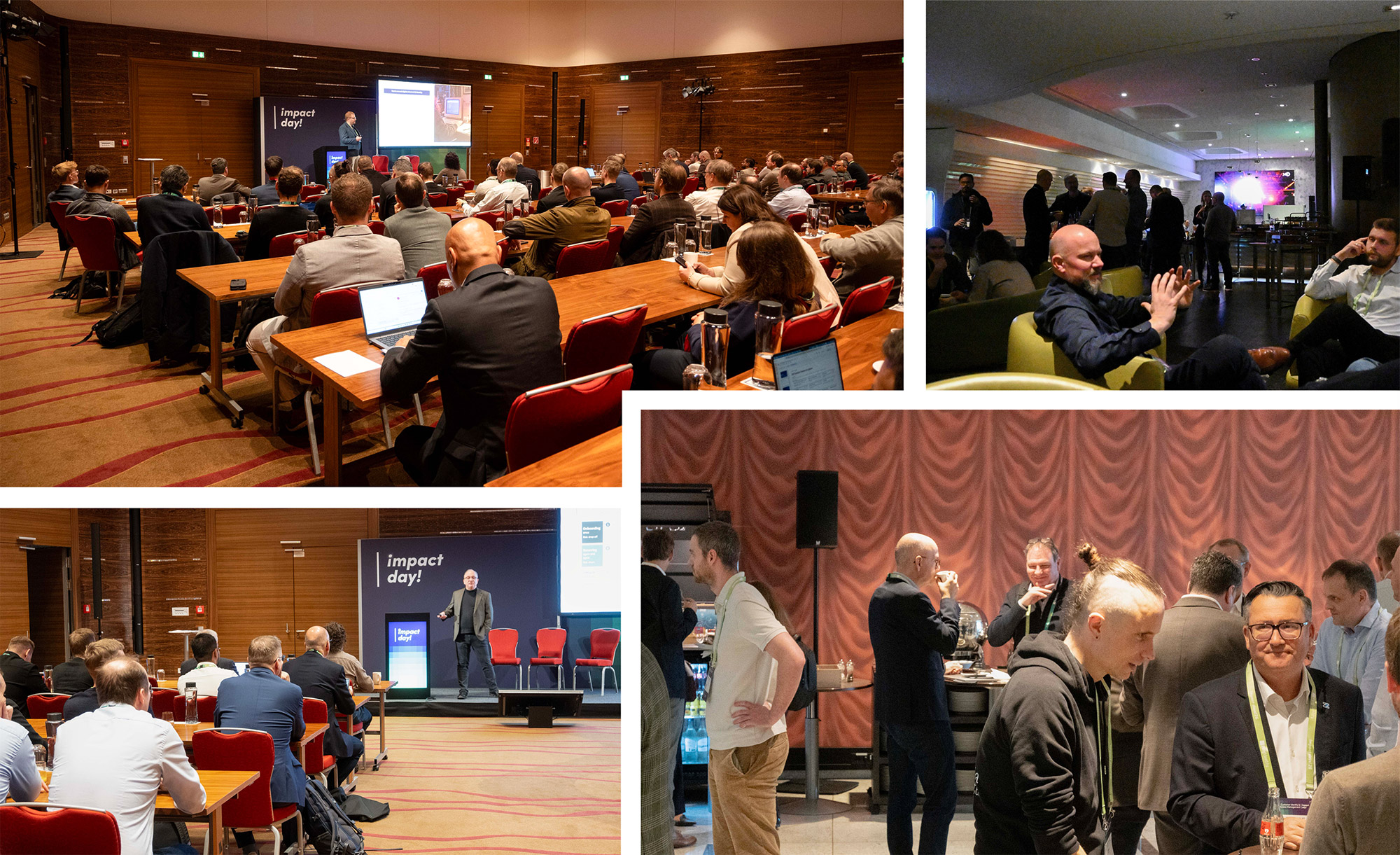
The formal discussions were only one part of the day. The evening before already brought old colleagues together, turned profile photos into handshakes and introductions into reintroductions.
During the event, the program ran on a quiet system of heads-ups from our moderators. Some speakers raced through their last slides, some took their time anyway, and some apologized and still had time for questions. The audience responded with patience, sighs, laughs, and questions.
None of this was particularly efficient. Conversations ran on, people interrupted, and questions took unexpected turns. An agent never runs over, never apologizes, and never makes a room laugh.
But the discussions kept returning to a practical question: what happens when AI starts making decisions on our behalf?
Even if you have never thought about digital identity, you already make decisions about it. You tap approve, accept the default, and hand over a fingerprint. AI is about to book, buy, and reply on our behalf. Where nobody decides what it may do, the default decides, and someone else wrote the default.
In that sense, not having an opinion is itself an opinion.
Mathias' closing line brought the discussion back to accounts: the customer who isn't there still has one, so decide what happens to it before someone else does.
Next up: Nordics Identity Impact Day
CIAM Impact Day closed our 2026 Impact Days series. In 2027, we start in February, heading north to Gothenburg.
Setsaas's examples of digital IDs, including BankID and MitID, come from the region our next event will visit. Nordics Identity Impact Day will continue the discussion around AI, identity, and trust, with digital identity, wallets, and verifiable credentials also on the agenda.
As in Frankfurt, the focus will be on real implementation stories and candid conversations among practitioners.
Nordics Identity Impact Day takes place on February 9, 2027, at the Riverton Hotel in Gothenburg.