Why don't you like this?



Description
Short Summary
Interesting Facts
Notable Quotes
Recommendations
Takeaways


Executive Summary
The KuppingerCole Leadership Compass provides an overview of a market segment and the vendors in that segment. It covers the trends that are influencing that market segment, how it is further divided, and the essential capabilities required of solutions. It also provides ratings of how well these solutions meet our expectations. This analysis is based on the KuppingerCole Leadership Compass Methodology.
This Leadership Compass covers solutions that ….
Provide a way to continuously identify and control certain risks associated with the use of cloud services. They provide visibility into vulnerabilities in the way these services are configured, secured, and used and assess the risks against common regulatory obligations, security frameworks, and organizational policies. They automate the discovery and reporting of these risks and automate appropriate corrective action. An important trend, which these solutions must evolve to cover and exploit, is the use of machine learning (ML) and artificial intelligence (AI), which are based on cloud computing.
Most organizations now have a hybrid IT environment where services are delivered in multiple ways, some delivered as cloud services from multiple providers, while others remain on premises or at the edge. Cloud Infrastructure as a Service (IaaS) is used to develop and deliver new applications, reengineer existing ones, as well as to store data. This provides an environment well suited to digital transformation without the need for capital expenditure or lengthy procurement delays to obtain hardware. However, it also brings new challenges including increased complexity, ephemeral resources, and shared responsibility for security.
The responsibility for security of cloud services is shared between the Cloud Service Provider (CSP) and the cloud customer. While the CSP must take steps to secure the service it provides, it is up to the cloud customer to secure the way they use the service. The customer must implement what are known as Complementary User Entity Controls (CUECs) to achieve this. Cloud Security Posture Management (CSPM) tools are intended to help organizations using cloud services to identify and manage the risks under their control.
The second challenge is the ephemeral nature of cloud resources that are created and destroyed as they are needed using shared physical resources. The traditional basis for security is to know what you have in order to protect it. A static approach does not work for dynamic cloud service resources. CSPM solutions can help to implement policies and guardrails that control the creation of dynamic resources to mitigate risks.
Additionally, each cloud service provides its own set of capabilities for the customer to implement their controls. These capabilities, tools, and APIs are provided in ways that are different for each cloud. Where enterprises are using multiple clouds, this makes a common approach to security management extremely hard. CSPM as part of a cloud security fabric provides a common way of specifying security policies, implementing controls, and monitoring their effectiveness across the multi-cloud hybrid IT environment.
The market for CSPM solutions is growing rapidly due to the increasing adoption of cloud services and the corresponding need for security. Key drivers in this market include the rising number of data breaches, stricter regulatory requirements, and the complexity of multi-cloud environments. CSPM solutions offer automation, real-time monitoring, and advanced analytics, which are important for maintaining security in cloud settings.
This report offers an in-depth analysis of the market for CSPM solutions within the context of today’s hybrid IT services. The market for these solutions is now well established and was valued at $10.81 billion in 2024 and is growing annually at 20.2%. The market is continuing to evolve with the emergence of cloud-native solutions that exploit AI and ML
The large cloud service providers like AWS, Microsoft Azure, and Google Cloud all offer tools with CSPM capabilities for their cloud. Specialized security firms like Palo Alto Networks and Check Point offer CSPM solutions with cross cloud capabilities as part of their wider Cloud Native Application Protection Packages (CNAPP). In addition, other IT risk management vendors such as JupiterOne and Qualys offer capabilities that cover cloud services as well as non-cloud IT services.
Organizations are starting to adopt AI and ML, mainly delivered as cloud services. This introduces further security challenges including protecting the training data and AI models as well as ensuring confidentiality of training data. CSPM must evolve to cover these challenges. Additionally, AI and ML can play a significant role in enhancing cybersecurity, through capabilities such as advanced threat detection and automated security processes, data sensitivity analysis, and improved disaster recovery. Solutions should exploit these technologies to predict and prevent attacks and automate routine tasks to reduce human error. They can also assist in ensuring compliance with regulatory requirements.
Key Findings
What are the top considerations buyers should know about?
- The report evaluates a wide range of CSPM vendors, categorizing them into leaders, challengers, and followers based on product strength, innovation, and market presence.
- The leading vendors in the CSPM market include Check Point, Microsoft, Palo Alto Networks, Uptycs, and Wiz.
- The market for CSPM solutions is growing rapidly, driven by increased cloud service adoption, demand for security, and regulatory compliance. The market is valued at $10.81 billion in 2024, growing annually at 20.2%.
- Key drivers in this market include the rising number of data breaches, stricter regulatory requirements, and the complexity of multi-cloud environments.
- CSPM solutions help customers to monitor and manage their security controls consistently across multiple clouds, and some solutions also cover non-cloud IT services.
- General cybersecurity vendors such as Check Point, Palo Alto Networks, and Qualys offer CSPM and CNAPP as part of broader security portfolios.
- There is a growing number of born-on-the-cloud vendors with CSPM solutions offered as part of a cloud security platform.
- There is some market consolidation taking place: in August 2024 Fortinet announced the completion of its acquisition of Lacework.
- Leading IaaS vendors like AWS, Microsoft Azure, and Google Cloud all provide CSPM capabilities but with a focus primarily on their own offering.
- Most CSPM solutions are now delivered as part of a Cloud Native Application Protection Platform (CNAPP).
- Essential CSPM capabilities include a dynamic service inventory, with risk assessments covering vulnerabilities in user entitlements, data storage, networks, compute services, and DevOps as well as reporting security posture against a range of common frameworks and regulations.
- Most CSPM solutions now exploit ML, and a few exploit GenAI to enhance their capabilities.
- Only a few solutions provide capabilities to monitor the technical risks around the development of AL and ML-based applications.
Market Analysis
The market for CSPM solutions is growing at over 20% each year. This is due to the increasing adoption of cloud services and the corresponding need for security and regulatory compliance. Key drivers in this market include the rising number of data breaches, stricter regulatory requirements, and the complexity of multi-cloud environments. CSPM solutions offer automation, real-time monitoring, and advanced analytics, which are crucial for maintaining security in dynamic cloud settings.
This is a rapidly evolving market. Vendors are consolidating stand-alone CSPM solutions into cloud security platforms such as CNAPP to provide a complete cloud security fabric. For example, in August 2024, Fortinet announced the completion of its acquisition of Lacework with the objective of “integrating Lacework’s cloud-native platform with the Fortinet Security Fabric”. At the same time, traditional security solution vendors are extending their solutions to encompass the CUECs related to the use of cloud delivered services, as well as those delivered in other ways.
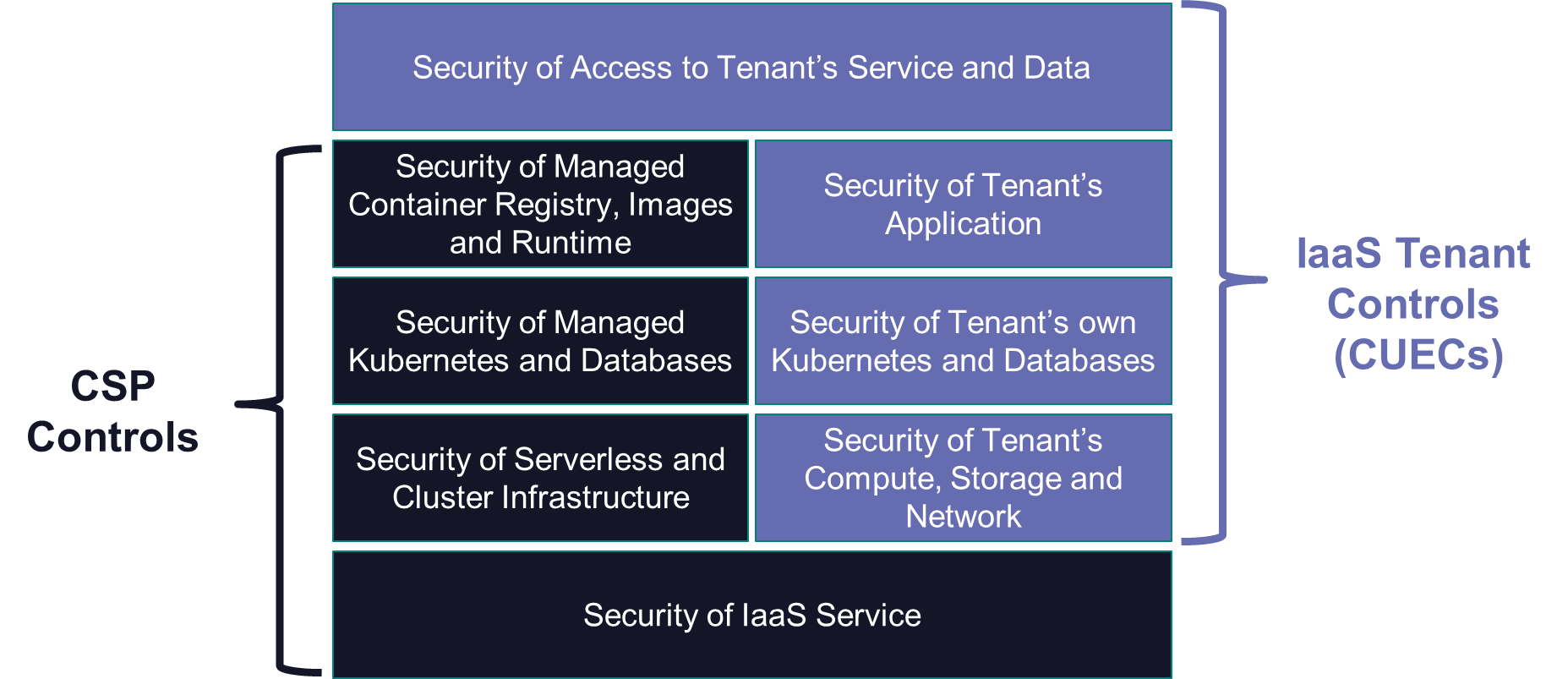
Figure 1: Shared responsibility for security.
All the major cloud services including AWS, Microsoft Azure, and Google Cloud offer inbuilt capabilities and services for securing the use of their service. These providers are enhancing their CSPM solutions to offer visibility, compliance, and threat detection not only within their own cloud services but also across other cloud platforms. For example, Microsoft's Defender for Cloud now supports multi-cloud environments, including AWS and Google Cloud, in addition to hybrid environments. Google Cloud's Security Command Center has expanded its integration capabilities to monitor resources in AWS and Azure. AWS Security Hub has also integrated with Azure and Google Cloud to centralize security management across these platforms.
There is a wide range of solutions on the market that help to secure the way in which cloud services are used. These tools provide additional controls that are relevant to the security threats and risks that are relevant to the cloud. These tools include:
CASB (Cloud Access Security Brokers) these provide control over which SaaS services organizational users can access. CASB discovers shadow IT usage and prevents access to unsanctioned services that the organization considers to be too risky. They often integrate with the major SaaS services to implement fine-grained controls over how these sanctioned services can be used. They also include or integrate with DLP (Data Leakage Prevention) solutions to control which data can be moved to cloud services.
SASE (Secure Access Service Edge) these provide network-based access controls to cloud services. They commonly provide capabilities that are a convergence of SD-WAN (Software Defined Wide Area Networking), SWG (Secure Web Gateways), VPN (Virtual Private Network) and Remote Browser Isolation (RBI) to implement Zero Trust access controls based on the combination of user and device identities.
CIEM (Cloud Infrastructure Entitlement Management) provides controls over the entitlements possessed by virtual resources. In a software defined infrastructure, such as that provided by a cloud service, the software defined elements need entitlements to operate and threat actors can exploit excessive entitlements.
CSNS (Cloud Service Network Security) helps to secure the in-cloud network, combining tools such as web application firewalls, secure web gateways, and DDoS protection.
CSPM (Cloud Security Posture Management) provides a way to continuously identify, visualize, and manage an overview of the risks associated with the use of IaaS cloud services.
CWPP (Cloud Workload Protection Platform) provides controls at the microservices instance/container level. They typically include threat detection, intrusion prevention, anti-malware, application control, and monitoring vulnerabilities.
DSPM (Data Security Posture Management) provide capabilities to discover, catalog and ensure protection and compliance of data held across multiple clouds, from databases to unstructured object storage services.
AISPM (AI Security Posture Management) These solutions are beginning to evolve to provide capabilities to monitor risks around the use of AL and ML within organizations. These risks and how to manage them are described in the standard ISO/IEC 42001:2023. While many of the risks are organizational, the use of these technologies has implications for data provenance, security, and privacy. These risks emphasize the need for DSPM and the need to implement controls on the AI development lifecycle and tools, as well as the infrastructure that they use.
In addition, cloud security tools are embracing the opportunities provided by AI and ML to enhance their capabilities. For example, AI and ML can enhance CSPM by automating the detection of misconfigurations, vulnerabilities, and anomalies in cloud environments. These technologies can identify cyber-attack patterns and predict potential security threats. AI-driven insights can help enable proactive threat detection, real-time response, and continuous compliance monitoring. Additionally, ML models can learn from past incidents to improve security recommendations and automate routine tasks, reducing the risk of human error and enhancing cloud security posture.
Market Size and Segmentation
Based on our current research, the Cloud Security market size was last estimated at $10.18B with an annual growth rate of 20.2%.
The market has evolved, with CSPM capabilities being integrated with vendor security platforms with varying focus.
Some solutions focus on particular use cases. These include compliance management, providing capabilities to help to ensure adherence to regulatory standards like HIPAA and GDPR; threat detection and response with capabilities to identify and mitigate potential security threats; and risk Assessment with capabilities to evaluate risks by identifying vulnerabilities and misconfigurations.
Some solutions focus on specific cloud service types. Most solutions have a strong focus on IaaS. Some include specific capabilities focused on risks related to the application development pipeline and deployment of Kubernetes-based software. A few cover risks related to the use of SaaS.
General cybersecurity vendors such as Palo Alto Networks and Qualys offer CSPM and CNAPP as part of broader security portfolios. Pure play cloud security vendors such as AlgoSec, Uptycs, and Wiz offer CSPM as part of their specialized cloud security platforms. Many other cybersecurity vendors now provide limited CSPM capabilities as part of their offer. In addition, the major IaaS providers offer CSPM capabilities with a focus on their cloud, for example, AWS Security Hub, Microsoft's Defender for Cloud, and Google Cloud's Security Command Center.
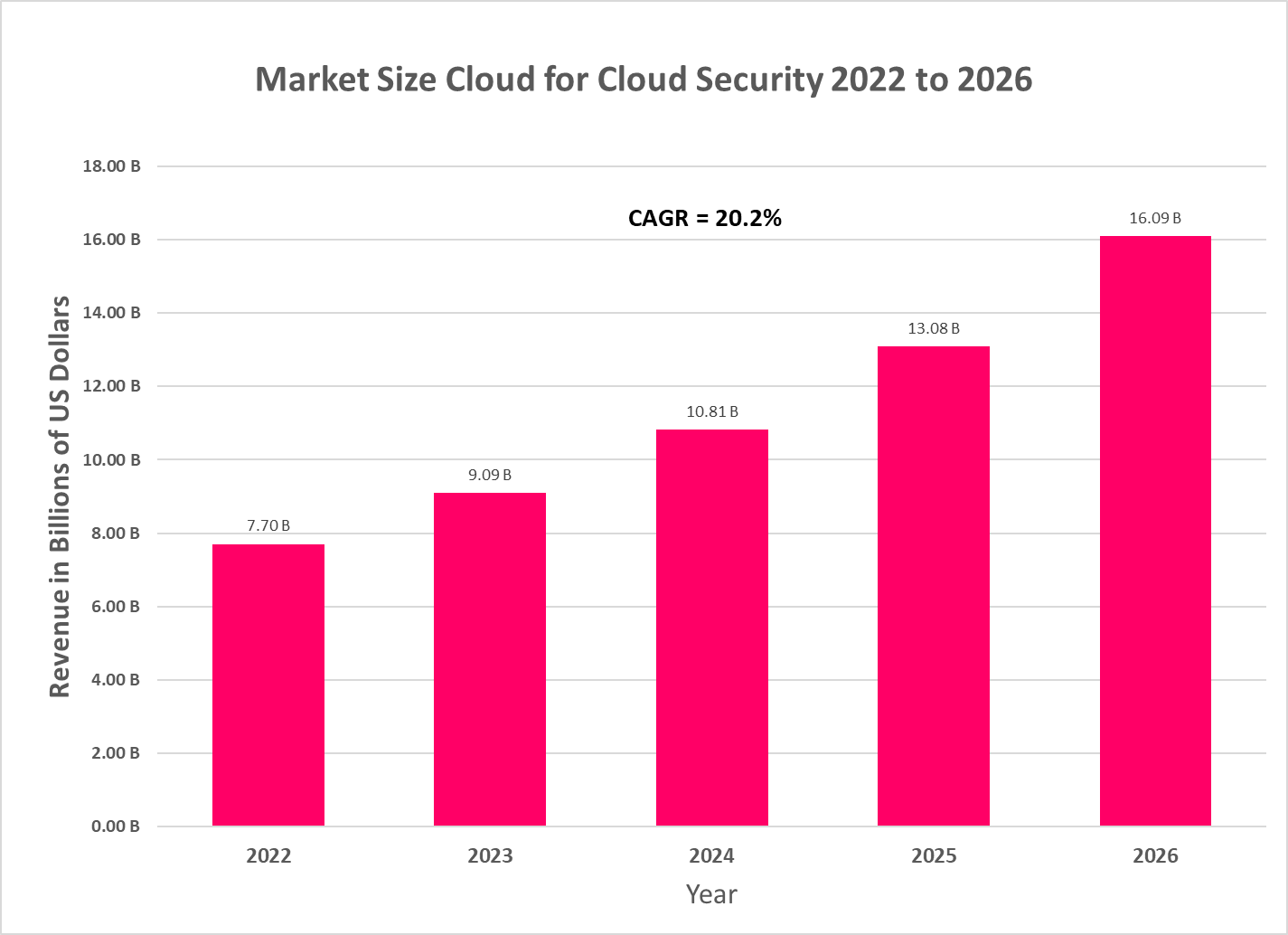
Figure 2: Cloud Security Market size predictions 2022-2026.
Delivery Models
Since the aim of these solutions is to measure risk in how cloud services, most are delivered through the cloud. This helps to provide tight integration with the services that they are managing. However, some elements may be delivered and deployed on premises or at the edge.
Deployment models for Cloud Security Posture Management include:
- As a physical appliance – that can be deployed on premises or in a data center.
- As a virtual appliance that can be deployed on-premises or in a cloud service.
- As a service from multi-tenant public cloud services where updates and patches are deployed by the service provider across all tenants with full automation. This is a growing market because of ease of adoption combined with the scalability offered by public clouds.
- As single-tenant services that can operate in various deployment models, i.e., in private or public clouds or even on-premises, where they are operated in a full as-a-service model, i.e., services where updates, patches, etc. are deployed by the service provider across all tenants with full automation.
Required Capabilities
This Leadership Compass analyses the main attributes and functions of Cloud Security Posture Management solutions. These capabilities should include:
Basic capabilities include creating a detailed inventory of the cloud services being used by the customer, together with an analysis of the risks related to the way in which these cloud services are configured and being used. These risks include those related to identities and access, the data held, and the security controls implemented to secure network access, compute service elements, and container-based DevOps.
Deployment – covers how quickly, easily, and repeatably can the solution be deployed. This category considers deployment options that the solution offers and whether the solution requires agents installed on the protected systems.
Administration – covers how easy it is to administer the solution. An example would be GUI/wizards provided for ease of use and CLI/APIs for automation. It is the sum of capabilities the solutions provide to securely delegate administration to lines of business managers and application owners.
Cloud Coverage – it is important that the solution covers the risks related to a wide range of cloud services and technologies. These should include the major hyperscale cloud services such as Amazon AWS, Microsoft Azure, Google Cloud Platform (GCP), Oracle OCI, and IBM Cloud, as well as the common virtualization technologies such as Hyper-V, Nutanix, OpenStack, and VMware.
Service Inventory – the dynamic nature of how cloud services are acquired and deployed makes it possible for organizations to be unaware of which services are in use. This adds to the risks since they may not be configured in line with policies and best practices. The solution should be able to dynamically discover and record the services and service elements owned or in use by the customer. In addition, the solution should be able to interoperate with existing CMDB (Configuration Management Data Base) solutions.
User and Entitlements Risks – The solution should include capabilities to dynamically discover and analyze the user accounts (people and services) with access to the cloud services together with their entitlements. It should Identify, report, and remediate user accounts with excessive / abnormal privileges and other risks such as orphan accounts (those without owners), as well as accounts with weak authentication policies.
Data Storage Risks – The solution should include capabilities to discover and analyze the data storage systems in cloud services to identify, report, and remediate those where data is exposed to excessive risk or that is being stored out of policy. This includes data without appropriate controls (e.g., not encrypted), data with public access, and data directly exposed to the Internet for a wide range of cloud storage types (file systems, object stores, databases, etc.).
Network Security Risks — The solution should include capabilities to discover and analyze cloud network security controls to support a Zero Trust approach to network management. It should discover and map cloud networks owned and identify, report, and remediate risky firewall configurations, risky permitted network protocols, as well as poor TLS certificate management and rotation.
Compute Service Risks – The solution should include capabilities to discover and analyze cloud compute services owned to identify, report, and remediate risky configurations. It should cover VMs with risky patch levels, VMs with unmanaged vulnerabilities, and risky configurations for a wide range of VM and OS types. It should also support these capabilities for serverless computing elements.
DevOps Risks – The solution should include capabilities to analyze container security. It should discover cloud container services used by the tenant to identify, report, and remediate insecure container images, container registries, and deployments for common container environments such as Kubernetes. It should analyze the DevOps packages to identify, report, and remediate apps exposed to the internet, apps with exposed vulnerabilities (e.g., SQL injection), apps without appropriate traffic controls (e.g., WAF), APIs exposed to the internet and APIs without appropriate access controls, and apps with other risky deployments. In addition, it should monitor the security controls on the CI/CD (Continuous Integration / Continuous Delivery) pipeline.
AI DevOps Risks – the solution should include capabilities to analyze the technology related risks from the development of AI-based applications. They should detect the sensitive data used to train AI models and the controls in place to ensure their security and confidentiality. These should cover the access controls to the AI development tools and the cloud infrastructure that supports them. They should also cover controls on the AI DevOps pipeline including the lifecycle of machine learning models, versioning, approval workflows, and deployment.
AI Integration – the solution should exploit the capabilities provided by ML and AI to enhance their capabilities. This could include automating the detection of misconfigurations, vulnerabilities, and anomalies in cloud environments as well as helping with compliance monitoring. Additionally, to automate routine tasks to reduce the risk of human error and enhance cloud security posture.
Risk Reporting – the solution should include capabilities to report on the risks that have been discovered. The reports should provide information on the likelihood of the risk and its impact. It should provide a report on the aggregated overall risk / security posture based on its analysis suitable for presentation to board level management. The reporting capabilities should be interactive, allowing the user to expand the overall risks to identify the underlying causes. The solution should also support integration with workflow / ticketing systems to recommend, initiate, and track remediation.
Compliance and Best Practices – the solution should support the comparison and reporting of security posture against a range of common security frameworks and best practices such as NIST, ISO/IEC 2700x, CIS as well as major regulatory obligations.
Leadership
In the full chapter: Overall Leadership, Product Leadership, Innovation Leadership, and Market LeadershipCreate a free account
Products and Vendors at a Glance
The full “Products and Vendors at a Glance” chapterCreate a free account
Product/Vendor evaluation
In the full chapter: Spider graphs, AlgoSec – Prevasio Cloud Security Platform, ARMO – ARMO Platform, Check Point – CloudGuard, CloudDefense.AI – ACS Cloud Security, Cyscale – Cloud Security Platform, JupiterOne – JupiterOne Cyber Asset Analysis Platform, Microsoft – Defender for Cloud, Orca Security – Orca Cloud Security Platform, Palo Alto Networks – Prisma Cloud, Qualys – TotalCloud, Sysdig – Sysdig Secure, Uptycs – Unified CNAPP and XDR, and Wiz – Cloud Security PlatformCreate a free account
Vendors to Watch
In the full chapter: AppOmni, Aqua Security, AWS, Balbix, Barracuda Networks, Caveonix, Cisco Systems Inc, CrowdStrike, Cymulate, Ermetic, Fidelis Cybersecurity, Forcepoint, Fortinet / Lacework, Fortra, IBM, Netskope, Oracle, Skyhawk Security, Skyhigh Security, Snow Software, Snyk, Sophos, Symantec, Tenable, Trend Micro, Virsec, and ZscalerCreate a free account
Related Research
Leadership Compass: Cloud-Native Application Protection Platforms (CNAPP)
Leadership Compass: Cloud Backup for AI Enabled Cyber Resilience
Leadership Compass: Privileged Access Management
Leadership Compass: Data Governance
Leadership Compass: Cloud Infrastructure Entitlement Management (CIEM)
Leadership Compass: Zero Trust Network Access
Whitepaper: Assuring Cloud Security and Compliance
Advisory Note: Cyber Risk Frameworks in 2024
Advisory Note: Securing Tomorrow - Strategic Cybersecurity Recommendations for 2024-2033
Advisory Note: Maturity Level Matrix for Cyber Security
Advisory Note: Security Organization Governance and the Cloud
Advisory Note: Cloud Services and Security
Blog: Cloud Security Alphabet Soup
Copyright
© 2026 KuppingerCole Analysts AG. All rights reserved. Reproducing or distributing this publication in any form is prohibited without prior written permission. The conclusions, recommendations, and predictions in this document reflect KuppingerCole Analysts' initial views. As we gather more information and conduct deeper analysis, the positions presented here may undergo refinements or significant changes. KuppingerCole Analysts disclaims all warranties regarding the completeness, accuracy, and adequacy of this information. Although KuppingerCole Analysts' research documents may discuss legal issues related to information security and technology, we do not provide legal services or advice, and our publications should not be used as such. KuppingerCole Analysts assumes no liability for errors or inadequacies in the information contained in this document. Any expressed opinion may change without notice. All product and company names are trademarks™ or registered® trademarks of their respective holders. Their use does not imply any affiliation with or endorsement by them.
KuppingerCole Analysts supports IT professionals with exceptional expertise to define IT strategies and make relevant decisions. As a leading analyst firm, KuppingerCole Analysts offers firsthand, vendor-neutral information. Our services enable you to make decisions crucial to your business with confidence and security.
Founded in 2004, KuppingerCole Analysts is a global, independent analyst organization headquartered in Europe. We specialize in providing vendor-neutral advice, expertise, thought leadership, and practical relevance in Cybersecurity, Digital Identity & IAM (Identity and Access Management), Cloud Risk and Security, and Artificial Intelligence, as well as technologies enabling Digital Transformation. We assist companies, corporate users, integrators, and software manufacturers to address both tactical and strategic challenges by making better decisions for their business success. Balancing immediate implementation with long-term viability is central to our philosophy.
For further information, please contact clients@kuppingercole.com.
Executive Summary


Leadership
Products and Vendors at a Glance
Product/Vendor evaluation
Spider graphs
AlgoSec – Prevasio Cloud Security Platform
ARMO – ARMO Platform
Check Point – CloudGuard
CloudDefense.AI – ACS Cloud Security
Cyscale – Cloud Security Platform
JupiterOne – JupiterOne Cyber Asset Analysis Platform
Microsoft – Defender for Cloud
Orca Security – Orca Cloud Security Platform
Palo Alto Networks – Prisma Cloud
Qualys – TotalCloud
Sysdig – Sysdig Secure
Uptycs – Unified CNAPP and XDR
Wiz – Cloud Security Platform
Vendors to Watch
AppOmni
Aqua Security
AWS
Balbix
Barracuda Networks
Caveonix
Cisco Systems Inc
CrowdStrike
Cymulate
Ermetic
Fidelis Cybersecurity
Forcepoint
Fortinet / Lacework
Fortra
IBM
Netskope
Oracle
Skyhawk Security
Skyhigh Security
Snow Software
Snyk
Sophos
Symantec
Tenable
Trend Micro
Virsec
Zscaler
Related Research
Copyright












Table of Contents


Table of contents
Close
Executive Summary
Leadership
Products and Vendors at a Glance
Product/Vendor evaluation
Spider graphs
AlgoSec – Prevasio Cloud Security Platform
ARMO – ARMO Platform
Check Point – CloudGuard
CloudDefense.AI – ACS Cloud Security
Cyscale – Cloud Security Platform
JupiterOne – JupiterOne Cyber Asset Analysis Platform
Microsoft – Defender for Cloud
Orca Security – Orca Cloud Security Platform
Palo Alto Networks – Prisma Cloud
Qualys – TotalCloud
Sysdig – Sysdig Secure
Uptycs – Unified CNAPP and XDR
Wiz – Cloud Security Platform
Vendors to Watch
AppOmni
Aqua Security
AWS
Balbix
Barracuda Networks
Caveonix
Cisco Systems Inc
CrowdStrike
Cymulate
Ermetic
Fidelis Cybersecurity
Forcepoint
Fortinet / Lacework
Fortra
IBM
Netskope
Oracle
Skyhawk Security
Skyhigh Security
Snow Software
Snyk
Sophos
Symantec
Tenable
Trend Micro
Virsec
Zscaler
Related Research
Copyright










