Why don't you like this?



Description
Short Summary
Interesting Facts
Notable Quotes
Recommendations
Takeaways


Executive Summary
The Research Compass Cybersecurity 2026 outlines our plans for evaluating the global cybersecurity market. This document gives technology leaders, vendors, and investors advance visibility into our planned market evaluations, supporting informed decisions across procurement, product development, and investment strategies as the industry transitions toward an era of increased autonomy, and agentic AI defense.
Takeaways for 2026
Expanded Leadership Coverage: We will publish 14 Leadership Compass (LC) reports focusing on emerging and critical cybersecurity domains.
From Generative to Agentic AI: The cybersecurity landscape is moving beyond AI-based natural language assistants toward agentic AI “teammates,” which are autonomous systems capable of independent reasoning, providing comprehensive recommendations, and even executing multi-step remediations. This shift will redefine the emerging AI Security Operations Center (SOC), moving human analysts up the value chain from data collectors to supervisors of AI teammates. 2026 is the year when AIs impact on cybersecurity will become clear.
Continued Technical Control Rationalization: Enterprise buyers are aggressively consolidating their security stacks. Native eXtended Detection and Response (XDR) and Cloud Native Application Protection Platforms (CNAPPs) are set to replace outdated Endpoint Detection and Response (EDR) and Security Information and Event Management (SIEM) tools by offering a unified data source for automated responses.
Geopatriation and Digital Sovereignty: Driven by the EU Data Act and NIS2, there is a massive shift toward sovereign cloud and local Cyber Managed Security Service Providers (MSSPs). Organizations are prioritizing jurisdictional certainty, ensuring that security operations and data processing remain immune to foreign extraterritorial access.
Proactive Defense: Cybersecurity is shifting from reactive detection to proactive anticipation. By utilizing tools like Network Detection and Response (NDR), XDR, Attack Surface Management (ASM), SaaS Security Posture Management (SSPM), and continuous Breach and Attack Simulation (BAS), organizations will identify and neutralize attack paths before they can be exploited.
Deeper Supply Chain Transparency: As the EU Cyber Resilience Act (CRA) enters enforcement, Software Supply Chain Security (SSCS) must evolve beyond third-party tracking to monitor Nth party dependencies. The adoption of Vulnerability Exploitability eXchange (VEX) and Cryptographic Bill of Materials (CBOM) will become mandatory for mapping cryptographic and component-level risks.
Post-Quantum Cryptography (PQC) Readiness: With 2026 serving as a critical deadline for quantum-safe transitions in regulated sectors, crypto-agility is now a foundational requirement. Organizations are beginning to inventory cryptographic assets to defend against "harvest now, decrypt later" threats that will become possible as quantum computing continues to enter the mainstream.
API Security as a Strategic Control Layer: evolving from isolated technical controls into a strategic control layer for digital business. As APIs underpin application architectures, data exchange, partner ecosystems, and increasingly autonomous software components such as AI agents, concerns including discovery, access control, usage governance, and abuse prevention are converging. By 2026, organizations evaluate API platforms not only on protection capabilities, but on how effectively they provide visibility, control, and governance across the entire API lifecycle and across both human and non-human consumers.
Regulatory Enforcement Phase: 2026 marks the transition from legislative adoption to active audit and enforcement for major frameworks including NIS2, Digital Operational Resilience Act (DORA), and the EU AI Act. Compliance is now a primary driver for investment in high-fidelity telemetry and automated incident reporting.
How to Use This Document
| If You Are... | Focus On... |
|---|---|
| CISO/Security Leader | Sections “Market Trends and Drivers”, “Leadership Compass Calendar”, and “Stakeholder Guidance” for roadmap planning |
| Cybersecurity Program Owner | Sections “Market Trends and Drivers”, “Leadership Compass Calendar”, and “Predictions & Outlook” for strategy alignment |
| Vendor/Product Team | Sections “Leadership Compass Calendar”, “Stakeholder Guidance”, and “Understanding the Framework” for market positioning |
| Investor/Analyst | Sections “Market Trends and Drivers” and “Predictions & Outlook” for market signals |
2026 Market Trends & Drivers
The Research Compass Cybersecurity 2026 reflects our assessment of where markets are heading and what forces are shaping technology decisions. This section provides context for why specific topics appear on the 2026 calendar.
Cybersecurity Trends
1. Agentic AI and the Emerging AI SOC:
The security industry has moved beyond generative AI toward the application of agentic AI, where increasingly autonomous agents independently reason, plan, and execute multi-step security workflows, leveraging a wide range of external and internal data. Unlike traditional automation that follows static scripts, these multi-agent systems can more independently manage discrete functions, such as incident triage, enrichment, investigative support, and even initial remediation, without human intervention. This is a direct response to the structural shortage of security expertise, alert fatigue, and the need for faster response.
LC Implications: ASM, SSPM, the Emerging AI SOC, and XDR now focus on the maturity of these reasoning engines, the safety guardrails for autonomous agents, the enforcement of human-in-the-loop, and the ability of these systems to provide transparent audit trails for their conclusions and actions.
2. Preemptive Cybersecurity and Predictive Risk Scoring:
Organizations are transitioning from primarily applying reactive detection to a preemptive defense model. By utilizing predictive AI and continuous behavioral monitoring, security platforms can now identify and neutralize threats and vulnerabilities before they materialize as active breaches. This involves correlating signals across ASM and digital twins of the network to simulate and block potential attack paths in real time.
LC Implications: ASM, XDR, SSPM, and NDR are shifting toward predictive capabilities, emphasizing the integration of threat simulation and the accuracy of proactive risk scores over historical alerting.
3. Post-Quantum Cryptography (PQC):
With 2026 serving as the official deadline for EU Member States to begin their transition to quantum-safe encryption, PQC is no longer a theoretical concern. Organizations in critical infrastructure and finance are prioritizing crypto-agility to ensure they can replace vulnerable algorithms as NIST standards are finalized. This trend is driven by the "harvest now, decrypt later" threat where adversaries harvest encrypted data today to break it once quantum computers arrive.
LC Implications: Research for Zero Trust Platforms and Sovereign Cloud now includes PQC readiness, cryptographic inventory capabilities, and the ability to support hybrid classical-quantum encryption models.
4. Geopatriation and Sovereign Cloud Autonomy:
Geopolitical fragmentation has led to geopatriation, a concept where nations and enterprises repatriate data and workloads to sovereign clouds to ensure legal and operational autonomy. In 2026, this is driven by the EU Data Act and the NIS2 Directive, which mandate stricter controls over data residency and foreign extraterritorial access. This shift is critical for maintaining digital sovereignty in highly regulated sectors and regions in the world.
LC Implications: Evaluation of Sovereign Cloud and Cyber MSSPs now prioritizes jurisdictional certainty, local operational control, and the provider's ability to ensure data is exempt from foreign legal reach.
5. Confidential Computing for AI Privacy:
Protecting data and models during processing is emerging as a trend in 2026, driving growing adoption of confidential computing for AI workloads. Confidential computing relies on hardware-enforced Trusted Execution Environments (TEEs) that isolate execution and encrypt memory, limiting access even from privileged system software or cloud infrastructure operators. For AI training and inference, these capabilities are implemented through CPU-based TEEs such as Intel TDX and AMD SEV-SNP, increasingly complemented by GPU-level protections including NVIDIA’s confidential computing support for accelerated workloads. This is particularly relevant for organizations running sensitive or regulated AI workloads in shared cloud environments or in collaborative data ecosystems where infrastructure-level trust cannot be assumed.
LC Implications: Data Security Platforms and CNAPP evaluations are beginning to incorporate confidential computing as an assessment for AI security, with emphasis on support for hardware enclaves, workload attestation, and protection of training and inference processes.
6. Vulnerability Exploitability eXchange (VEX):
VEX provides machine-readable attestations that clarify whether a vulnerability in a component is exploitable in a specific product context. This dramatically reduces the noise of non-exploitable vulnerabilities and allows security teams to focus on risks that truly matter to their unique environment.
LC Implications: SSCS and ASM research now emphasizes the ability to ingest and produce VEX data as well as how to lower false positives, automating the reconciliation between general vulnerability lists and actual organizational risk.
7. Advanced Fraud Detection:
Fraudsters use deepfakes and social engineering to bypass authentication and get their victims to “authorize” fraudulent transactions. FRIPs must infer intent to prevent scams and Authorized Push Payment (APP) fraud.
LC Implications: FRIP evaluations now include criteria for advanced scam detection, and the ability to detect synthetic media during real-time interactions.
8. AI Security Posture Management (AISPM) and Shadow AI Governance:
In 2026, enterprises will move beyond simple bans of public AI services to deploying platforms that provide deeper visibility into the AI stack that is in use. This involves discovering hidden Large Language Model (LLM) integrations, securing data pipelines used for Retrieval-Augmented Generation (RAG), and mitigating risks like prompt injection and data leakage.
LC Implications: Evaluation criteria for SSPM and Data Security Platforms now prioritize AISPM capabilities, including detecting shadow AI usage, enforcing model-level data privacy, and monitoring the behavior of autonomous AI agents.
9. API Security for Autonomous and Non-Human Consumers:
As organizations introduce higher levels of automation, including AI-driven agents, APIs increasingly mediate interactions between non-human software components. This amplifies existing challenges such as unmanaged API proliferation, opaque service-to-service communication, and limited visibility into business logic execution. In 2026, securing these interactions requires consistent discovery, authorization, and behavioral monitoring across all API consumers, rather than the creation of entirely new security models.
LC Implications: Evaluations increasingly emphasize comprehensive API discovery, support for non-human identities, and runtime visibility into API usage patterns. Solutions are assessed on their ability to enforce consistent security and governance controls across heterogeneous consumers, including services, automation, and emerging AI-driven workloads.
10. Cyber-Physical System (CPS) Convergence and Resilience:
The boundary between IT and Operational Technology (OT) has almost vanished, leading to a focus on CPS security. Modern security operations must now manage risks across industrial controllers, medical devices, and smart infrastructure within a unified framework. Resilience is the new goal, where systems are designed to maintain minimum viable operations even during an active cyberattack.
LC Implications: XDR, Managed Detection and Response (MDR), and MSSP evaluations are placing greater weight on specialized support for OT protocols, the ability to manage cyber-physical risks, and the maturity of business continuity integration.
Regulatory & Compliance Drivers
European Regulations
- NIS2: Following the 2024 transposition, 2026 marks the move to active supervision and audits (enforcement phase). The directive drives massive investment in MDR, XDR, or MSSP services to meet the strict “all-hazards" risk management and mandatory incident reporting timelines (24-hour early warning and 72-hour assessment).
- DORA: Taking full effect in early 2026, DORA mandates that financial entities and their critical Information and Communication Technology (ICT) providers conduct Threat-Led Penetration Testing (TLPT) and maintain real-time risk monitoring. This is a primary driver for tools like FRIP, ASM, XDR, and NDR.
- EU AI Act: Fully applicable from August 2026, this act classifies many security-related AI systems as "high-risk." Platforms in the emerging AI SOC and FRIP categories must now provide technical documentation on model governance, transparency, and human-monitoring mechanisms to remain compliant.
- EU Cyber Resilience Act (CRA): With mandatory reporting of exploited vulnerabilities starting in September 2026, the CRA forces software manufacturers to provide Software Bills of Materials (SBOMs) and maintain security support throughout the product lifecycle, directly impacting the SSCS and CNAPP markets.
Global Developments
- US SEC Enhancement & Disclosure Rules: Effective for the 2026 reporting cycle, updated rules for both domestic and foreign private issuers (FPIs) require the disclosure of material cybersecurity incidents within four business days. This increases the demand for high-fidelity telemetry from XDR and ASM to determine materiality without delay.
- National Zero Trust Mandates (US & APAC): Transitioning from federal mandates to private sector expectations, the "Zero Trust as a Service" model is being enforced in critical infrastructure. This drives adoption of integrated Zero Trust Platforms and SSPM to secure distributed and hybrid environments.
- Data Sovereignty & Localization Laws: Stricter enforcement of data residency in the EU, India, and China is forcing a shift away from centralized global clouds. This creates a high-growth environment for sovereign cloud providers and specialized Cyber MSSPs that can guarantee local data processing and jurisdictional autonomy.
- Post-Quantum Cryptography (PQC) Mandates: As 2026 targets for quantum-readiness emerge in banking and healthcare, regulators are beginning to require quantum inventories. Organizations must now evaluate their Data Security Platforms and Sovereign Cloud stacks for crypto-agility and the ability to support quantum-resistant algorithms.
- US Cyber Incident Reporting for Critical Infrastructure Act (CIRCIA) Implementation: Under the CIRCIA, May 2026 is the hard deadline for final rule enforcement. Organizations in 16 critical sectors (Chemical, Commercial Facilities, Communications, Critical Manufacturing, Dams, Defense Industrial Base, Emergency Services, Energy, Financial Services, Food and Agriculture, Government Facilities, Healthcare and Public Health Information Technology, Nuclear Reactors, Materials, and Waste, Transportation Systems, and the Water and Wastewater Systems) must now report substantial incidents to Cybersecurity and Infrastructure Security Agency (CISA) within 72 hours and ransom payments within 24 hours. This creates a race against the clock that mandates integrated, high-fidelity telemetry from XDR and MDR to automate the discovery-to-reporting pipeline.
- Canada’s Critical Cyber Systems Protection Act (CCSPA) Enforcement (Bill C-26): With the CCSPA fully operational in 2026, Designated operators in banking, telecom, and energy face administrative penalties of up to $15 million for non-compliance. What is different now is the mandate to establish a formal cyber security program within 90 days of designation, forcing a move toward ASM tools.
- Singapore’s Foundational Digital Infrastructure (FDI) Rules: As of late 2025 and moving into 2026, Singapore has expanded its cybersecurity act to include foundational digital infrastructure, including cloud service providers and data centers. These entities are now legally required to adhere to specific codes of practice for availability and security, shifting the burden of proof for resilience from the customer to the infrastructure provider.
- Australia’s Security of Critical Infrastructure (SOCI) Act & Smart Device Standards: Commencing in March 2026, Australia’s security standards for smart devices mandate that all connectable products must have no default passwords and transparent vulnerability reporting. Simultaneously, SOCI Act now requires board-approved risk management programs, moving cybersecurity from the IT office to the boardroom as a direct legal liability.
- US Federal PQC Inventory Mandate (NSM-10): Following the Quantum Computing Cybersecurity Preparedness Act, 2026 is a key milestone year for federal agencies and their contractors to provide a prioritized inventory of quantum-vulnerable systems. This is driving the CBOM trend, where vendors must now disclose the specific encryption algorithms used within their software stacks to ensure long-term crypto-agility.
The 2026 Leadership Compass Calendar
The 2026 Leadership Compass Calendar provides advance visibility into KuppingerCole's research agenda for 2026. Please note that the indicated publication months are preliminary and subject to change. While we make every effort to adhere to the planned schedule, publication dates are not binding and may be adjusted due to editorial, strategic, or operational considerations. No legal claims can be derived from this timeline.
Calendar Overview
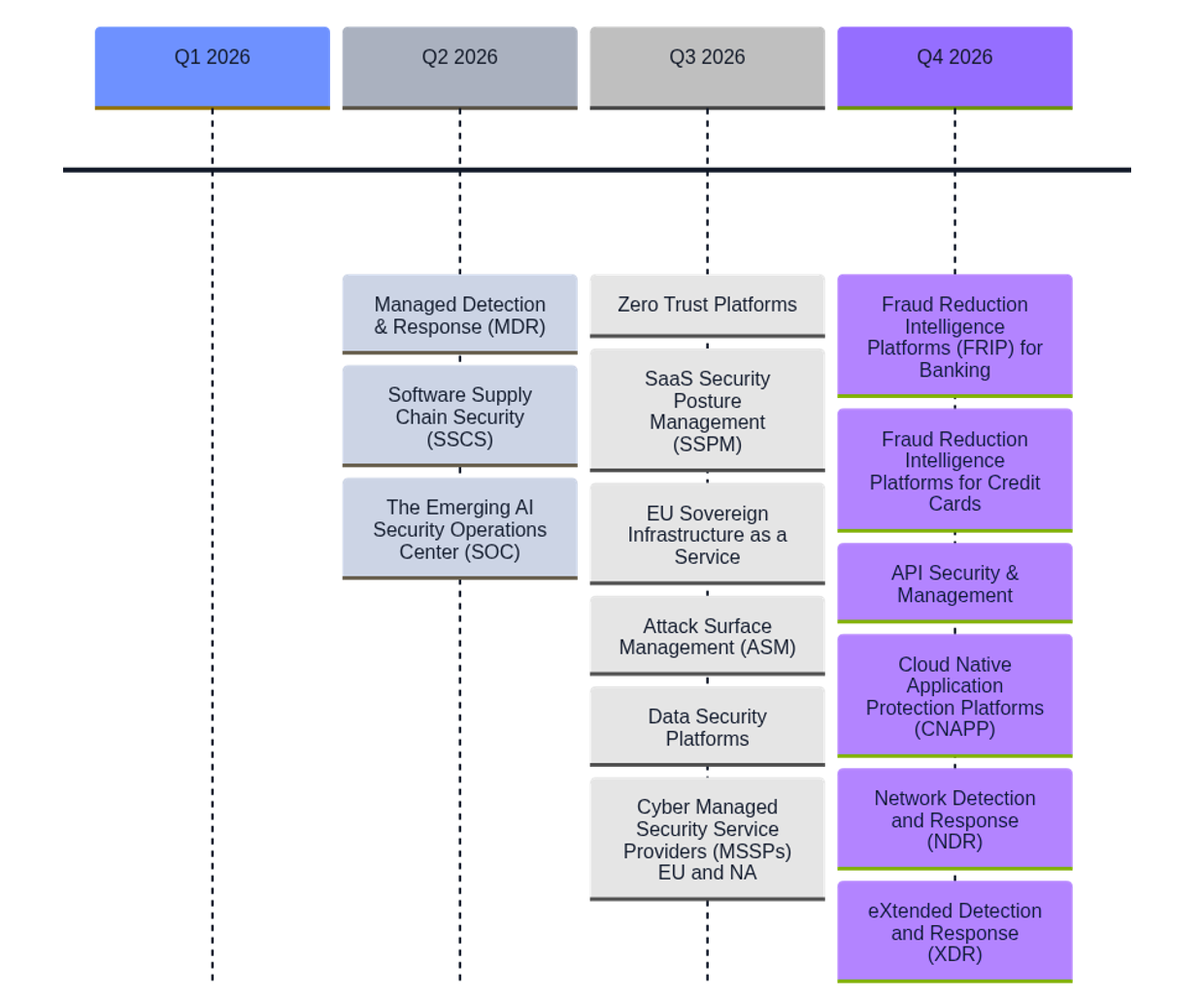
Figure 1: The 2026 Leadership Compass Calendar for Cybersecurity Research
Click here to access the latest KC research calendar
Cybersecurity Research Calendar
| Leadership Compass | Publication | Author |
|---|---|---|
| Managed Detection & Response (MDR) | April/May 2026 | Warwick Ashford |
| Software Supply Chain Security (SSCS) | May 2026 | Jonathan Care |
| The Emerging AI Security Operations Center (SOC) | May 2026 | Matthew Gardiner |
| Zero Trust Platforms | June 2026 | Alexei Balaganski |
| EU Sovereign Infrastructure as a Service (1) | July 2026 | Mike Small |
| Attack Surface Management (ASM) | August 2026 | Osman Celik |
| Data Security Platforms | September 2026 | Alexei Balaganski |
| Cyber Managed Security Service Providers (MSSPs) EU and NA (1) | September 2026 | Warwick Ashford |
| Fraud Reduction Intelligence Platforms (FRIP) for Finance | November 2026 | John Tolbert |
| API Security & Management | December 2026 | Alexei Balaganski |
| Cloud Native Application Protection Platforms (CNAPP) (1) | December 2026 | Mike Small |
| Generative AI Defense (GAD) | December 2026 | Jonathan Care |
| Network Detection and Response (NDR) (1) | December 2026 | Osman Celik |
| eXtended Detection and Response (XDR) (1) | December 2026 | Osman Celik |
(1) Planning, to be confirmed later.
Topic Deep Dives
Managed Detection and Response
Market Definition: MDR solutions are cybersecurity services that combine advanced detection and response technologies with human expertise to provide continuous monitoring, threat analysis, and incident response. Unlike traditional MSSPs, which primarily focus on compliance and security control administration, MDR takes a proactive approach by utilizing integrated platforms, AI, and ML to perform active threat hunting and thorough verification. These solutions allow organizations of all sizes to manage networks, endpoints, applications, and logs by either fully outsourcing their SOC or supplementing existing in-house teams to fill expertise gaps and ensure coverage during out-of-office hours. The market includes specialized offerings such as SOC as a Service (SOCaaS) and Managed eXtended Detection and Response (MXDR), all aiming to reduce the time required to identify and mitigate high-risk threats.
Why Now: Cybercriminals and state-sponsored groups are launching increasingly sophisticated attacks, including ransomware, phishing, and supply chain compromises, driven by factors such as digital transformation and the shift to remote work. Meanwhile, a global shortage of cybersecurity professionals has left many organizations unable to keep pace with these threats or fill critical roles. The overwhelming volume of alerts generated by disparate systems and the inherent costs involved often prevent existing security teams from building or maintaining a reliable in-house SOC. MDR bridges this gap by providing at a relatively affordable cost the 24/7 expert coverage and automated response capabilities necessary to manage complex threats and meet the regulatory compliance demands that internal teams cannot manage alone.
Evaluation Focus Areas:
- Flexible Deployment: Support for varied infrastructure needs, including on-premises, public/private cloud, container environments, and hybrid deployment models to suit diverse organizational environments.
- Advanced Detection and Response: Use of AI and ML for user and attacker behavior analytics, combined with proactive threat hunting and automated containment capabilities in addition to analyst-driven incident response actions.
- Integration and Interoperability: Availability of open APIs and pre-built connectors to ensure integration with existing security stacks, including SIEM, Security Orchestration, Automation, and Response (SOAR), and third-party Endpoint Protection, Detection, and Response (EPDR) tools.
- Service and Support Excellence: Provision of 24/7 SOC support, rapid incident response times (e.g., guaranteed response SLAs), and access to expert analysts for forensic investigation and remediation.
- Scalability and Tailored Services: Flexible pricing models and service tiers that serve organizations of all sizes from Small Medium Businesses (SMBs) to large enterprises, often including industry-specific or local language support.
Expected Vendor Population: A global range of 20 vendors that provide MDR solutions, focusing on 24/7 monitoring, proactive threat hunting, and rapid incident response. Solutions must support AI-driven analytics, strong integration with existing security architectures, and automated remediation capabilities tailored to the sophisticated cyber threat landscape and diverse organizational compliance needs.
Related KuppingerCole Research: To better understand the broader context, readers may refer to earlier publications that address adjacent market segments and capabilities:
- Leadership Compass: Managed Detection and Response (2024)
- Buyer’s Compass: Managed Detection and Response (2025)
Software Supply Chain Security
Market Definition: SSCS solutions encompass the suite of tools and processes designed to secure the software development lifecycle (SDLC) from the initial coding phase through to deployment and maintenance. Unlike traditional application security testing that isolates proprietary code for bugs, SSCS adopts a holistic view to ensure the integrity and authenticity of software components. This includes open-source libraries, third-party APIs, and the building infrastructure itself. These solutions deliver end-to-end visibility by generating and managing SBOMs, verifying code provenance via cryptographic signing, and hardening Continuous Integration and Continuous Deployment/Delivery (CI/CD) pipelines against tampering. The primary objective is to shield organizations from upstream attacks where adversaries compromise trusted components to infiltrate downstream systems.
Why Now: The market for SSCS is accelerating due to a series of high-profile supply chain attacks, such as the SolarWinds and Log4j incidents, which exposed the fragility of modern software dependencies. These events demonstrated how a single compromised library can trigger catastrophic cascading effects across the global digital ecosystem. In response, governments have issued strict mandates, including the US Executive Order 14028 and the EU Cyber Resilience Act, compelling organizations to maintain detailed SBOMs and attest to the integrity of their software. Furthermore, the widespread adoption of DevOps and cloud-native architecture has exponentially increased the complexity of software dependencies, rendering manual verification obsolete. Organizations require SSCS solutions immediately to automate risk discovery in third-party components and to ensure compliance with these rapidly evolving security standards.
Evaluation Focus Areas
- Software Composition Analysis (SCA) and SBOM Management: The ability to generate, ingest, and analyze SBOM to provide deep visibility into open-source dependencies and third-party components.
- Build Integrity and Code Signing: Features that cryptographically sign release artifacts and verify code provenance to ensure software remains untampered with between the commit and deployment stages.
- CI/CD Pipeline Security: Capabilities to harden the build environment by detecting insecure configurations, secret leakage, and unauthorized access to development pipelines.
- Vulnerability Prioritization and Risk Management: Advanced analytics that go beyond simple detection of Common Vulnerabilities and Exposures (CVEs) to assess their actual exploitability in the runtime environment, often utilizing VEX data.
- Policy Enforcement and Compliance: Mechanisms to define and automatically enforce security policies across the SDLC to ensure alignment with industry standards such as the NIST Secure Software Development Framework (SSDF) and Supply-Chain Levels for Software Artifacts (SLSA).
Expected Vendor Population: The research is expected to cover approximately 15 vendors, ranging from specialized start-ups to established cybersecurity platform providers that deliver comprehensive SSCS solutions. These vendors are selected based on their ability to secure the full software development lifecycle through automated SBOM management, proactive threat hunting in open-source repositories, and integration with DevOps toolchains. The solutions included must support diverse development environments, including cloud-native and containerized applications, and provide the governance tools necessary to meet stringent regulatory requirements for software transparency.
Related KuppingerCole Research: To better understand the broader context, readers may refer to earlier publications that address adjacent market segments and capabilities:
- Leadership Compass: Software Supply Chain Security (2023)
- Blog: Software Supply Chain Security - Are You Importing Problems? (2024)
The Emerging AI SOC
Market Definition: The Emerging AI SOC represents the next generation of security automation, evolving from traditional, rule-based SOAR systems into AI-centric platforms. These solutions use natural language/chat interfaces, agentic AI, and probabilistic reasoning to support complex security operations tasks such as alert enrichment and triage, investigations, malware analysis, and threat hunting. Unlike legacy systems that rely on preconfigured, static playbooks, AI SOC platforms prioritize and remediate threats by gaining fast insights into risks that matter most to the organization. This market includes standalone automation specialists, automation as integrated components of broader security platforms, as well as full stack MDR providers, all aimed at creating more efficient and effective security operations.
Why Now: Organizations are facing a high volume of sophisticated cyberattacks that preventive measures alone cannot defend against. Security teams are often overwhelmed by alert flooding and a chronic shortage of skilled personnel, making it impossible to manually analyze and respond to every threat with the necessary intensity. The recent burst of AI-led innovation, particularly in generative and agentic AI, has created a critical opportunity to replace manual, error-prone processes with smart(er) automation. Organizations need to adopt the AI SOC model now to better make use of their existing staff, reduce the time spent on repetitive low-value tasks, focus on higher risk incidents, and gain the speed necessary to remediate active incidents before they turn into significant business impacting breaches.
Evaluation Focus Areas:
- AI-Driven Reasoning and Agentic Workflows: The capacity to move beyond deterministic rules toward using AI-based reasoning and autonomous agent “teammates” that can adapt to evolving threats without continual manual playbook updates.
- Tool Heterogeneity and Interoperability: The ability to integrate with a diverse array of third-party security and IT systems, ensuring that automation can coordinate investigations and response actions across a multi-vendor environment.
- Alert Triage and Contextual Enrichment: Features that automatically consolidate alerts from disparate sources and enrich them with business and security context to prioritize the most critical threats and reduce false positives.
- Unified Case Management and Investigation: A centralized interface for managing the end-to-end lifecycle of an incident, providing security analysts with a single workspace for forensic analysis and coordinated response.
- Scalability and SaaS Delivery: The provision of a cloud-native platform that supports high-volume data processing while offering flexible delivery models that ensure data residency and sovereignty requirements are met.
Expected Vendor Population: The research will cover approximately 20 vendors, split between established multi-category security platform providers, a new wave of standalone, AI-centric automation specialists, and full stack MDR providers with strong security automation offerings. These vendors are selected based on their ability to move beyond traditional, deterministic workflows toward adaptive, AI-assisted security operations. The solutions included must demonstrate high levels of interoperability with diverse security controls and provide the scalability required to support modern enterprises. This population includes both those who embed automation into SIEM, XDR, ITSM, and MDR offerings and those who maintain a tool-independent approach to automation and orchestration.
Related KuppingerCole Research: To better understand the broader context, readers may refer to earlier publications that address adjacent market segments and capabilities:
- Leadership Compass: Security Orchestration, Automation, and Response (2024)
- Leadership Compass: Intelligent Security Information and Event Management (2024)
Zero Trust Platforms
Market Definition: Zero Trust Platforms represent the evolution of Zero Trust from a conceptual security strategy into an operational enforcement layer for modern hybrid infrastructures. Building on early implementations such as Zero Trust Network Access (ZTNA), these platforms unify identity-driven access control, segmentation, and continuous contextual enforcement across users, devices, workloads, services, APIs, and increasingly autonomous machine and AI identities. Rather than relying on static perimeters or implicit trust, Zero Trust Platforms translate centralized policy and real-time context into distributed, fine-grained controls that are enforced consistently across on-premises, cloud, SaaS, and edge environments. Their purpose is not to redefine Zero Trust as a product, but to provide the technical means to implement Zero Trust architecture at scale.
Why Now: Enterprise infrastructure no longer has a clear boundary. Organizations operate across multiple clouds, SaaS platforms, legacy environments, and edge locations, while applications increasingly communicate with each other more than with human users. At the same time, lateral movement, credential abuse, and misuse of trusted access remain dominant attack techniques. The rapid growth of non-human identities, including services, APIs, and AI-driven agents, further challenges traditional security models that assume stable users and networks. Zero Trust Platforms address these realities by enforcing adaptive trust everywhere, continuously verifying identity, posture, and context for every connection. Regulatory pressure, cyber insurance requirements, and formal Zero Trust initiatives further accelerate the need for consistent, auditable enforcement mechanisms that go beyond point solutions.
Evaluation Focus Areas:
- Context-Aware Access Enforcement: Identity- and attribute-based access control with continuous re-evaluation of trust and authorization as risk, posture, or behavior changes.
- Segmentation and Lateral Movement Control: Dynamic, identity-driven segmentation of users, workloads, services, and application flows to reduce attack surfaces and contain compromise.
- Secure Connectivity and Trust Enforcement: Authenticate-before-connect models with encrypted communications and elimination of implicit network trust.
- Integration and Interoperability: Tight integration with identity systems, endpoint and workload posture tools, and adjacent ecosystems such as SIEM, SOAR, DevOps, and SASE/SSE.
- Machine and AI Identity Protection: Application of Zero Trust principles to non-human identities, including service accounts, APIs, and AI-driven systems operating under explicit and limited trust.
Expected Vendor Population: The Leadership Compass is expected to cover approximately 20 vendors that deliver Zero Trust Platform capabilities as integrated solutions or architectural building blocks. These vendors range from global security providers to specialized innovators and are selected based on their ability to operationalize Zero Trust principles through centralized policy definition, distributed enforcement, and broad applicability across hybrid infrastructures and both human and non-human identities.
Related KuppingerCole Research: To better understand the broader context, readers may refer to earlier publications that address adjacent market segments and capabilities:
- Leadership Brief: Zero Trust Platforms
- Leadership Compass: Zero Trust Network Access (2024)
- Buyer’s Compass: Zero Trust Network Access (2024)
EU Sovereign Infrastructure as a Service
Market Definition: The market for EU Sovereign Infrastructure as a Service cloud is defined by solutions that provide deep Infrastructure as a Service (IaaS) capability within the European Union that are fully subject to EU Laws and regulations. Modern IaaS extends beyond basic IT components to include managed infrastructure building blocks that accelerate deployment and reduce operational complexity yet still allow customers to design and manage their own applications and architectures. This allows organizations to offload undifferentiated service management while maintaining flexibility, portability, and control.
In an EU sovereign IaaS all data, metadata, operational processes, and administrative control remain fully within the European Union and under the jurisdiction of EU law. This includes compliance with EU regulations such as the EU General Data Protection Regulation (GDPR), the EU Cloud Code of Conduct, the European Cybersecurity Scheme for Cloud Services (EUCS), and sector-specific regulations such as those for finance, healthcare, and public sector operations. To achieve EU sovereignty, ownership, physical infrastructure, support personnel, and cloud operations must be in the EU and subject to EU laws. There must be no administrative access, overriding ownership, or control rights held by non-EU entities that could create exposure to foreign legislation such as the US CLOUD Act. The cloud provider must ensure that the residency of customers’ data is strictly enforced, that encryption keys are generated and controlled within EU borders, and that EU-based personnel perform management operations exclusively.
Why Now: In 2024 the European market for cloud services was estimated to be worth $70 billion and yet only 15% of that was held by EU owned cloud service providers. Organizations use these services for operational agility, scalability, and innovation. However, reliance on non-sovereign cloud providers creates several important risks. These arise from the way in which public services, manufacturing and commerce depend on these for a highly optimized and just in time approach. Any loss of access can have a significant impact as was illustrated by the recent AWS service outage. The core issue is that governments can override legal contracts, especially during times of geopolitical tension. This makes cloud services, which are dependent on cross-border infrastructure and data flows, inherently vulnerable to unilateral state actions. It emphasizes the need to consider not just sovereignty but the risk of lock-in as well as to prepare an exit strategy.
Organizations in highly regulated sectors, such as government, healthcare, and finance, are facing stricter mandates like the EU Cyber Resilience Act and DORA which require greater control over data residency and operational resilience. As digital transformation reaches critical infrastructure, organizations need sovereign solutions to ensure continuity of service and protect sensitive national or corporate assets from being accessed or influenced by external factors.
Evaluation Focus Areas:
- Breadth of IaaS services provided: Covering Compute, Serverless, Network and Storage. Managed data storage services including filesystems, databases, and data lakes. Managed Kubernetes as a service as well as GenAI development and inference capabilities.
- Industry coverage: Providing cloud services aligned with various industry sectors including Financial Services, Telecommunications, Healthcare, Manufacturing, Public services, Government. These services certified as complying with EU market sector standards as well as overall EU regulations such as NIS2 and GDPR.
- Technology Depth: The range of technologies provided by the services such as High-Performance-Computing (HPC), IoT / Edge capabilities such as industry grade IoT stacks, DevOps, and GenAI capabilities.
- Complementary User Entity Controls: Provided by the service for the service customer to secure their use of the service. These include identity management, privileged service administration control, data encryption, secure network connectivity, vulnerability and misconfiguration management and integration with SIEM / SOAR.
- Service Openness: The service capabilities provided in a way that minimizes customer lock-in. These include open data formats, using open Infrastructure as Code (IaC) standards such as Terraform, Integration capabilities be based on open protocols, Identity, Access, and Federation based on open standards such as OIDC, SAML 2.0.
- Outbound migration support: The ease with which the cloud customer can export that data, configurations, and workloads to another provider’s cloud service.
- EU Sovereignty: How well the service conforms to EU sovereignty including EU local data centers, EU data boundary, EU legal entity provides the service, EU operational staff and EU ownership of technology and code.
Expected Vendor Population: The research is expected to cover approximately 15 vendors, comprising a mix of global Hyper Scalers with dedicated sovereign offerings and regional service providers that operate localized infrastructure. These vendors are selected based on their ability to deliver high-performance cloud services that meet stringent criteria for legal, operational, and technical autonomy. The solutions included must demonstrate a commitment to transparency and local management of data, providing the strong security controls required for organizations to maintain digital sovereignty in a fragmented global landscape.
Related KuppingerCole Research: To better understand the broader context, readers may refer to earlier publications that address adjacent market segments and capabilities:
- Blog: Confidential Computing and Data Sovereignty in Non-Sovereign Clouds
- Blog: Google Cloud’s Sovereign Solutions: A European Perspective on Digital Autonomy
- Blog: AWS’s EU Sovereign Cloud: A Step Toward European Autonomy or a Strategic Compromise?
- Blog: Microsoft’s Cloud Sovereignty Promises: Progress or Patchwork?
Attack Surface Management
Market Definition: ASM solutions provide organizations with a continuous, outside-in view of their entire digital footprint to identify and manage vulnerabilities across the internet-facing environment. These solutions automate the discovery of known and unknown assets, including cloud instances, domains, certificates, and shadow IT that exist outside the traditional security perimeter. By combining asset discovery with vulnerability assessment and risk prioritization, ASM enables security teams to understand their environment from an attacker’s perspective. The primary goal is to provide real-time visibility and actionable intelligence that allows organizations to reduce their exposure before vulnerabilities can be exploited.
Why Now: The rapid expansion of digital environments through cloud migration, remote work, and the proliferation of IoT devices has created a sprawling attack surface that is now more difficult to secure. Many organizations struggle with shadow IT, where business units deploy assets without the knowledge or monitoring of the security team, leaving gaps that attackers frequently exploit. Furthermore, the speed at which adversaries can scan for and weaponize new vulnerabilities means that periodic or point-in-time assessments are no longer sufficient. Organizations need ASM now to achieve continuous visibility into their evolving perimeter and to prioritize remediation efforts based on actual risk rather than just vulnerability severity.
Evaluation Focus Areas:
- Asset Discovery and Inventory: The ability to continuously scan the internet to identify all digital assets associated with an organization, including those in multi-cloud environments, subsidiary networks, and shadow IT.
- Vulnerability Assessment and Risk Scoring: Features that analyze discovered assets for misconfigurations, expired certificates, and open ports, while providing risk scores based on the likelihood and impact of an exploit.
- External Attack Surface Monitoring (EASM): Capabilities to monitor the external perimeter for threats, including leaked credentials, typo squatted domains, and exposed databases.
- Integration and Workflow Automation: The availability of APIs and native connectors to share data with existing security tools such as SIEM, SOAR, and Vulnerability Management platforms to facilitate remediation.
- Prioritization and Attribution: Advanced logic to attribute discovered assets to the organization and prioritize them based on business criticality, helping security teams focus on the most significant risks.
Expected Vendor Population: The research is expected to cover approximately 25 vendors, ranging from dedicated ASM specialists to broad cybersecurity platform providers that have integrated external visibility into their portfolios. These vendors are selected based on their capability to provide continuous, automated discovery and analysis of internet-facing assets. The solutions included must support large, complex digital footprints and offer the sophisticated risk scoring and integration capabilities required to help modern enterprises manage their exposure in a hostile cyber threat landscape.
Related KuppingerCole Research: To better understand the broader context, readers may refer to earlier publications that address adjacent market segments and capabilities:
- Leadership Compass: Attack Surface Management (2025)
- Buyer’s Compass: Attack Surface Management (2025)
Data Security Platforms
Market Definition: Data Security Platforms are integrated security solutions designed to protect data across its full lifecycle in modern hybrid and cloud-native environments. Moving beyond traditional database security, these platforms provide centralized visibility, policy enforcement, and protection controls for sensitive data regardless of where it is stored, processed, or consumed. They combine capabilities such as data discovery and classification, encryption, access control, monitoring, and threat prevention into cohesive platforms that address the growing complexity of distributed data architectures. Data Security Platforms increasingly extend their scope to include data used by analytics pipelines, cloud-native applications, and AI systems, positioning data itself as the primary security perimeter.
Why Now: Enterprise data environments have become highly distributed, ephemeral, and tightly coupled with cloud services and AI-driven workloads. At the same time, regulatory pressure is intensifying, demanding stronger technical enforcement of data protection, resilience, and auditability. The rapid adoption of generative AI introduces new risks around data leakage, unsanctioned model usage, and exposure of sensitive information through prompts, embeddings, and inference pipelines. In parallel, geopolitical fragmentation is driving data sovereignty, while the transition toward post-quantum cryptography forces organizations to rethink long-term data confidentiality. Data Security Platforms address these challenges by providing scalable, policy-driven protection that adapts to cloud scale, AI usage, and evolving regulatory and cryptographic requirements.
Evaluation Focus Areas:
- Data Discovery, Classification, and DSPM: Continuous visibility into sensitive data across heterogeneous databases, cloud services, and analytics environments, including posture management for large-scale cloud deployments.
- Data Protection and Crypto-Agility: Encryption, masking, and key management with support for customer-controlled keys, sovereign deployment models, and readiness for post-quantum cryptography transitions.
- Access Control and Privilege Management: Fine-grained, policy-based controls for human and non-human identities, including detection and mitigation of excessive privileges and misuse.
- Monitoring, Analytics, and Threat Prevention: Real-time monitoring of data access and activity, anomaly detection, and protection against data-centric attacks such as injection, abuse of APIs, or insider threats.
- AI and Data-in-Use Protection: Controls for data consumed by AI and machine learning pipelines, including protection of RAG data flows, mitigation of data leakage, and emerging support for confidential computing.
- Audit, Compliance, and Sovereignty Support: Tamper-resistant logging, reporting, and enforcement mechanisms aligned with regulatory requirements and data residency constraints.
Expected Vendor Population: The Leadership Compass is expected to cover approximately 15 to 20 vendors, ranging from established data security providers to cloud-native specialists. Included vendors must demonstrate platform-level capabilities for protecting sensitive data across hybrid environments, strong integration with cloud and security ecosystems, and a clear roadmap for addressing AI-driven data usage, regulatory compliance, and long-term cryptographic resilience.
Related KuppingerCole Research: To better understand the broader context, readers may refer to earlier publications that address adjacent market segments and capabilities:
Cyber MSSPs EU and NA
Market Definition: MSSPs in European Union and North America offer outsourced security monitoring and management to help organizations defend against increasingly sophisticated threats. These services typically include 24/7 SOC support, vulnerability management, MDR, and compliance reporting. In the North American market, there is a strong emphasis on advanced AI-driven platforms and proactive threat hunting. In the European market, the definition is heavily shaped by digital sovereignty and strict regulatory requirements, focusing on local data residency, operational autonomy, and adherence to EU-specific mandates. Modern MSSPs in both regions are shifting from being transactional vendors that simply forward alerts to strategic partners that provide deep risk context and automated remediation.
Why Now: The global cybersecurity landscape is at a breaking point due to the massive shortage of skilled security professionals, the relentless volume of AI-powered attacks, and the rapid shift from on-premises to cloud and SaaS environments. Consequently, organizations can no longer rely on internal teams alone to manage a sprawling infrastructure that includes multi-cloud, hybrid, and remote environments. In Europe, the urgency is further driven by the implementation of the NIS2 Directive and DORA, which impose strict cyber resilience and reporting obligations on a much wider range of industries. In North America, the rapid adoption of identity as the new perimeter and the need to secure supply chains against third-party risks are the primary catalysts. Organizations in both regions need MSSPs now to achieve continuous visibility, meet complex compliance standards, and maintain operational resilience without the excessive cost of building an in-house SOC.
Evaluation Focus Areas:
- SOC Maturity: The capability to provide high-fidelity alert correlation and 24/7 incident response, moving beyond basic monitoring to active threat containment and forensic investigation.
- Regulatory Compliance and Digital Sovereignty: Support for region-specific mandates such as GDPR, NIS2, and DORA in the EU, as well as Systems and Organization Controls 2 (SOC2), HIPAA, and Cybersecurity Maturity Model Certification (CMMC) in North America, including options for localized data storage.
- AI-Enhanced Automation and Orchestration: The use of AI agents and SOAR to reduce false positives, accelerate mean time to respond (MTTR), and automate repetitive analyst tasks.
- Identity and Cloud Security Posture: Features that integrate identity-centric security, such as Identity Threat Detection and Response (ITDR), and cloud-native protections, such as CSPM/CWPP, to protect distributed workforces and multi-cloud workloads.
- Service Flexibility and Hybrid Integration: The ability to support diverse IT environments, ranging from legacy on-premises systems to serverless cloud architectures through flexible, co-managed or fully managed delivery models.
Expected Vendor Population: The research is expected to cover approximately 30 vendors in two separate LCs, featuring a balance between global cybersecurity giants and dominant regional players from Europe and North America. These vendors are selected based on their geographic footprint, technical breadth, and ability to satisfy high-level enterprise requirements for both security efficacy and regulatory adherence. The included providers must demonstrate a high degree of transparency in their service delivery and a proven track record of supporting large-scale, complex organizations in highly regulated sectors.
Related KuppingerCole Research: To better understand the broader context, readers may refer to earlier publications that address adjacent market segments and capabilities:
- Buyer’s Compass: NIS2 - EU Network and Information Security Directive (2024)
- Analyst’s View: Managed Detection and Response (2024)
Fraud Reduction Intelligence Platforms for Finance
Market Definition: FRIPs are designed to detect and mitigate fraudulent activities across the entire financial services ecosystem. These platforms assess signals from identity verification, sanctions/watchlist screening, behavioral biometrics, device intelligence, user behavior analytics, behavioral biometrics, and real time transaction context to protect against a broad spectrum of threats. This includes account opening (AO) fraud, account takeover (ATO), card-not-present (CNP) fraud, APP fraud, and scams.
Why Now: The financial sector is currently confronting a surge in high velocity fraud facilitated by the global shift toward instant payments and the use of AI-driven cybercrime tools. Fraudsters are utilizing deepfakes and automated bots to exploit vulnerabilities in digital onboarding processes and mobile banking apps. At the same time, regulatory bodies are mandating stricter consumer protections and anti-money laundering controls, increasing the financial and legal liability for institutions. Organizations need these consolidated platforms now to gain a holistic view of risk, allowing them to automate fraud prevention across disparate banking and payment channels without compromising the user experience.
Evaluation Focus Areas:
- Behavioral Biometrics and Identity Orchestration: The ability to analyze user interaction patterns and coordinate multiple identity verification signals to secure account opening and protect against AO fraud.
- Real-Time Transaction Scoring and Authorization: Features that ingest high-volume payment data to produce risk scores in milliseconds, enabling issuers to block fraudulent transactions at the moment of authorization.
- Automated Bot and Credit Application Fraud Detection: Capabilities to identify and mitigate automated attacks and synthetic identities that target credit applications and account checking processes.
- Global Network and Merchant Intelligence: Utilization of cross-institutional data to identify compromised merchants, high-risk geographic clusters, and coordinated attack patterns across the payment network.
- Compliance, Auditing, and Case Management: Tools that ensure adherence to global Anti-Money Laundering (AML) and Know Your Customer (KYC) regulations via sanctions/watchlist screening while providing streamlined workflows for forensic investigation and dispute resolution.
Expected Vendor Population: The research is expected to cover approximately 30 vendors, ranging from global payment processors and credit bureaus to specialized innovators in behavioral analytics and bot management. These vendors are selected based on their ability to provide multi-layered fraud coverage that scales across heterogeneous banking and card-issuing environments. The included solutions must demonstrate the technical maturity to process massive volumes of transaction and identity telemetry in real time while offering the granular policy controls required by complex, regulated financial institutions.
Related KuppingerCole Research: To better understand the broader context, readers may refer to earlier publications that address adjacent market segments and capabilities:
- Leadership Compass: Fraud Reduction Intelligence Platforms for eCommerce (2025)
- Leadership Compass: Fraud Reduction Intelligence Platforms for Finance (2025)
- Buyer’s Compass: Fraud Reduction Intelligence Platforms for eCommerce (2025)
- Buyer’s Compass: Fraud Reduction Intelligence Platforms for Finance (2025)
API Security & Management
Market Definition: API Security and Management platforms provide the technical foundation for designing, publishing, operating, and protecting application programming interfaces across modern digital ecosystems. As APIs have become the dominant integration layer for applications, services, and data, these platforms combine traditional API management capabilities with increasingly sophisticated security controls to address risks across the full API lifecycle. This includes REST, GraphQL, gRPC, event-driven APIs, and service-based communication patterns commonly found in cloud-native, microservice, and serverless architectures. In 2026, API Security and Management is no longer limited to protecting exposed endpoints but serves as a central control plane for governing access, behavior, and data flows between applications, services, and AI-driven systems.
Why Now: The shift toward Agentic AI, microservices, cloud-native architectures, and the open banking movement has made APIs the primary connective layer of modern digital business, yet they have also become a top target for cyberattacks. Traditional Web Application Firewalls (WAFs) and identity providers are often unable to detect sophisticated attacks that exploit broken object-level authorization or logic flaws within the API itself. Furthermore, the rapid pace of DevOps and automated deployments frequently results in undocumented APIs being pushed to production, creating significant security gaps. Organizations need API Security and Management now to regain control over their expanding digital interfaces, ensure compliance with data privacy regulations, and protect the sensitive business logic that protects their web and mobile applications.
Evaluation Focus Areas:
- API Discovery and Inventory: Continuous discovery, classification, and monitoring of APIs across hybrid, multi-cloud, and containerized environments to maintain an accurate view of the API attack surface.
- Lifecycle Management and Developer Enablement: Support for API design, testing, documentation, and integration into CI/CD pipelines to embed security and governance early in the development process.
- Identity- and Context-Aware Access Control: Fine-grained authentication and authorization for human and non-human identities, supporting modern protocols and runtime, context-based decision making.
- Threat Detection and Runtime Protection: Protection against API-specific attacks, including abuse, injection, denial-of-service, and data exfiltration, with behavioral analytics and anomaly detection.
- AI and Data-Centric API Security: Controls to secure APIs used by AI systems, including protection of data exposed through inference, mitigation of prompt-based attacks, and enforcement of data usage policies.
- Compliance and Operational Resilience: Logging, auditability, and policy enforcement aligned with regulatory requirements, ensuring availability, integrity, and traceability of API-driven services.
Expected Vendor Population: The research is expected to cover approximately 25 vendors, ranging from established API management leaders to specialized security innovators. These vendors are selected based on their ability to provide a comprehensive suite of tools that bridge the gap between development efficiency and cybersecurity monitoring. The included solutions must demonstrate scalability and high performance, offering the deep inspection and automation capabilities required to secure high-traffic, complex API environments in multi-cloud and hybrid architectures.
Related KuppingerCole Research: To better understand the broader context, readers may refer to earlier publications that address adjacent market segments and capabilities:
- Leadership Compass: API Security and Management (2025)
- Buyer’s Compass: API Security and Management (2025)
Cloud Native Application Protection Platforms
Market Definition: CNAPP represents an integrated security architecture designed to protect cloud-native applications across their entire lifecycle, from development to production.
These platforms consolidate multiple disparate security functions, including Cloud Security Posture Management (CSPM), Cloud Workload Protection Platforms (CWPP), and Cloud Infrastructure Entitlement Management (CIEM), into a single, cohesive solution. By unifying these capabilities, CNAPP provide deeper visibility into risks spanning misconfigurations, vulnerable software components, and over-privileged identities. The primary goal is to shift security to the left by integrating with development workflows while providing real-time protection for workloads running in containers, serverless functions, and virtual machines.
Why Now: The cloud customer is responsible for securing their use of cloud services and most cloud breaches result from failures of the customer’s controls While all the major cloud providers offer built-in capabilities and services for securing the use of their service the capabilities, user interfaces, and APIs for each cloud are different. In response, a market in CNAPPs has evolved to help Infrastructure as a Service (IaaS) tenants and cloud app developers to identify and remove vulnerabilities in their apps and in their cloud configurations. CNAPP solutions help to prevent and protect against cyber threats, to measure security posture, and to demonstrate regulatory compliance.
CNAPP provides capabilities that address the tactics used by cyber adversaries to attack cloud systems. As well as the application code, the cloud resources involved in delivering the application, together with their security controls, are defined in code. CNAPP focusses on DevOps’ needs covering preventative security processes (Code to Cloud) as well as in responding to cloud incidents (Cloud to Code) where it may be necessary to change the code.
Evaluation Focus Areas:
- Integrated Security Posture Management: The ability to continuously monitor cloud configurations and compliance against industry standards, providing automated remediation for misconfigured services and insecure settings.
- Cloud Storage Security – capabilities to dynamically discover and analyze cloud data storage services to identify, report, and remediate excessive risk. This includes data storage services without appropriate controls, data storage with public access, and data storage directly exposed to the Internet for a wide range of cloud storage types.
- Comprehensive Workload Protection: Capabilities that secure various computing types, including virtual machines, containers, and serverless functions, through vulnerability scanning, runtime defense, and behavioral monitoring.
- Cloud Infrastructure Entitlement Management (CIEM): Capabilities to discover and manage identities and permissions across cloud environments, enforcing the principle of least privilege to mitigate the risk of account takeovers.
- DevSecOps and Pipeline Integration: The capacity to integrate security scanning directly into CI/CD pipelines and Integrated Development Environments (IDEs), allowing developers to identify and fix risks early in the development process.
- Unified Risk Correlation and Prioritization: Advanced analytics that combine insights from configurations, vulnerabilities, and identities to provide a contextualized view of risk, helping teams focus on the most critical threats.
- Cloud GenAI Security: Capabilities to dynamically discover, analyze and report on the cloud services used for development of AI-based applications, and the sensitive data used to train AI models and the controls in place to secure these.
Expected Vendor Population: The research is expected to cover approximately 15 vendors, ranging from established cloud security leaders to innovative specialists focused on integrated platform capabilities. These vendors are selected based on their ability to deliver a broad suite of cloud-native security features that reduce the need for multiple standalone products. The solutions included must demonstrate deep integration across major public cloud providers and offer the scalability and automation required to protect high-growth, complex cloud environments.
Related KuppingerCole Research: To better understand the broader context, readers may refer to earlier publications that address adjacent market segments and capabilities:
- Leadership Compass: Cloud Native Application Protection Platforms (2025)
- Buyer’s Compass: Cloud Native Application Protection Platforms (2025)
Generative AI Defense
Market Definition: GAD represents a fundamental shift in security thinking where attacks occur through natural language rather than code exploits. These solutions protect the AI lifecycle against risks where the protected asset itself can be manipulated into becoming the attack vector. GAD platforms provide defense mechanisms to protect against prompt manipulation, model tampering, and the generation of harmful or non-compliant content.
Why Now: The enterprise transition from pilot projects to production AI deployments has created blind spots in systems. Traditional security controls, such as legacy Data Leakage Prevention (DLP), are rendered essentially irrelevant by new AI-driven workflows and technologies like Model Context Protocol (MCP) servers. Organizations face an urgent need to prevent sensitive corporate data from leaking through AI interactions, which are often inadvertently transmitted by employees, while simultaneously preparing for regulatory enforcement from the EU AI Act and other frameworks. Without purpose-built GAD, organizations remain exposed to Shadow AI and natural language attacks that bypass traditional security perimeters.
Evaluation Focus Areas:
- Prompt Security and Input Validation: The ability to detect and block malicious manipulation, including basic prompt injection, jailbreaking, and sophisticated threats like multi-step chains and indirect injection.
- Output Sanitization and Safety Controls: Robust filtering mechanisms that screen generated material for harmful content, misinformation, or inappropriate results to ensure compliance with ethical and safety standards.
- Advanced DLP: Moving beyond basic keyword filtering to advanced semantic (and semiotic) analysis to prevent the exposure of proprietary information and protect against training data reconstruction.
- Model Integrity and Supply Chain Protection: Features that guard against unauthorized access, model tampering, data poisoning, and extraction attempts, ensuring the model remains untainted.
- Governance and Compliance Automation: Providing pre-built templates and automated reporting for regulatory frameworks like the EU AI Act, alongside policy enforcement for thorough and responsible AI usage.
- Enterprise Ecosystem Integration: The maturity of third-party integrations with existing SIEM, SOAR, and identity providers to avoid siloed security and maintain a unified defense architecture.
Expected Vendor Population: The research is expected to cover approximately 15 vendors, ranging from established cybersecurity platform providers to specialized AI-native security innovators. These vendors are selected based on their ability to offer integrated protection across the AI lifecycle, including prompt validation, model integrity, and output sanitization. The solutions included must demonstrate the technical maturity to secure AI workloads while providing the governance and compliance automation required to support broad, scalable deployments.
Related KuppingerCole Research: To better understand the broader context, readers may refer to earlier publications that address adjacent market segments and capabilities:
Network Detection and Response
Market Definition: NDR solutions provide continuous monitoring of network traffic to detect, investigate, and respond to malicious activities and anomalous behaviors that bypass traditional perimeter defenses. These solutions utilize non-signature-based techniques, such as AI, ML, and advanced behavioral analytics, to inspect raw network packets or flow data across on-premises, cloud, and hybrid environments. By providing deep visibility into lateral movement and internal traffic (east-west traffic), NDR complements endpoint-focused tools to ensure no part of the infrastructure remains non-transparent. The primary goal is to provide security teams with forensic data and automated response capabilities needed to contain threats before they escalate into major breaches.
Why Now: While we have been talking about the death of the perimeter for years, the real reason network visibility is so critical today is that our other tools are being bypassed. Attackers have made it standard practice to disable endpoint security agents and wipe local logs as soon as they get in. The network layer is often the only place left to find evidence of compromise. Legacy intrusion detection systems often fail to spot these modern, multi-stage attacks that do not rely on known malware signatures. Furthermore, the rapid growth of IoT and unmanaged devices, which cannot host security agents, has created significant visibility gaps that only agentless network monitoring can fill. Organizations need NDR today to gain a definitive source for threat hunting and to meet the high-speed response requirements demanded by the modern threat landscape and regulatory compliance.
Evaluation Focus Areas:
- Advanced Traffic Analysis and Detection: The capacity to analyze vast amounts of encrypted network data in real time using behavioral analysis and ML to identify sophisticated threats like zero-day exploits and fileless malware attacks.
- Hybrid and Multi-Cloud Visibility: Features that ensure consistent monitoring and data collection across diverse architectures, including physical data centers, virtualized environments, and public cloud platforms.
- Forensic Investigation and Threat Hunting: Tools that provide high-fidelity alerts enriched with context, as well as the ability to store and query historical metadata for deep-dive investigations into past incidents.
- Automated and Guided Response: Capabilities to initiate immediate containment actions, such as isolating compromised segments or integrating with firewalls and EDR tools to block malicious traffic automatically.
- Interoperability and Ecosystem Integration: The availability of APIs and pre-built connectors to feed network intelligence into broader security frameworks like SIEM, SOAR, and XDR platforms.
Expected Vendor Population: The research is expected to cover approximately 15 vendors, ranging from pure-play NDR specialists to large-scale networking and security platform providers. These vendors are selected based on their ability to offer scalable, AI-driven inspection of network traffic and their effectiveness in detecting post-compromise attacker behavior. The solutions included must demonstrate strong performance in high-bandwidth environments and provide the sophisticated integration capabilities required to function as a core pillar of a modern SOC.
Related KuppingerCole Research: To better understand the broader context, readers may refer to earlier publications that address adjacent market segments and capabilities:
- Leadership Compass: Network Detection and Response (2024)
- Buyer’s Compass: Network Detection and Response (2024)
eXtended Detection and Response
Market Definition: XDR solutions are integrated security tools designed to provide cross-layered detection and response by unifying data from multiple security components. Unlike other detection and response solutions that focus on a single vector, XDR automatically collects and correlates telemetry from endpoints, networks, cloud workloads, and identity systems to provide a more accurate picture of the threat landscape. By applying advanced analytics and ML to these combined data sets, XDR platforms can identify complex attack patterns that would otherwise remain hidden in siloed environments. The primary objective is to facilitate security operations by reducing alert fatigue and enabling a faster, more coordinated response to sophisticated cyber threats.
Why Now: Most security teams are currently overwhelmed by a flood of alerts from a bunch of disconnected tools that do not communicate with each other. When an attacker moves across endpoints, the network, and cloud applications, teams must manually stitch together those logs to see the full picture. This is especially true for mid-size organizations that are already short on staff and cannot afford to manage a massive stack of niche products. The real push toward XDR right now is about vendor consolidation. Organizations need XDR now to consolidate their security stack, improve detection accuracy through cross-domain correlation, and provide their analysts with a unified workspace that accelerates incident remediation.
Evaluation Focus Areas:
- Cross-Domain Data Correlation: The ability to ingest and normalize data from various sources, such as EPDR, NDR, and identity systems, to identify lateral movement and multi-vector attack sequences.
- Advanced Analytics and Detection Accuracy: Utilization of ML and behavioral analysis to distinguish between legitimate activities and sophisticated threats while minimizing the occurrence of false positives.
- Automated Response and Orchestration: Features that allow for coordinated response actions across different security layers, such as simultaneously isolating a compromised host and blocking a malicious IP at the firewall.
- Centralized Management and Investigation: A unified interface that provides a single timeline of an attack, offering security analysts all the necessary context to conduct rapid forensic investigations.
- Interoperability: The capacity to integrate with third-party security tools through open APIs and standard data formats, ensuring that organizations can make best use of existing investments within the XDR framework.
Expected Vendor Population: The research is expected to cover approximately 15 vendors, ranging from established security leaders to comprehensive platform providers. These vendors are selected based on their ability to deliver a unified detection and response experience that spans multiple telemetry sources beyond just the endpoint. The included solutions must demonstrate sophisticated correlation engines and automation capabilities required to improve the efficiency and effectiveness of modern SOCs.
Related KuppingerCole Research: To better understand the broader context, readers may refer to earlier publications that address adjacent market segments and capabilities:
- Leadership Compass: eXtended Detection and Response (2024)
- Buyer’s Compass: eXtended Detection and Response (2025)
Predictions & Outlook (2026)
Market Consolidation
The cybersecurity market is undergoing great rationalization. Enterprise buyers prefer platforms that offer a unified data layer across all security domains. Bigger vendors are increasingly acquiring promising startups to fill critical gaps in AI governance and specialized detection. This is a buy-over-build strategy designed to keep pace with the rapid evolution of the cyber threat landscape. The recent acquisitions of Wiz by Google and the planned acquisition of CyberArk by Palo Alto Networks signal that major players are consolidating to own the full stack of the modern enterprise. Of course, there remains a dynamic counter trend of new specialist security vendors arriving on the scene, with more than 70 attaining billion-dollar valuations. Representative unicorn vendors include: Torq, Tines, Cyera, Pentera, and ReliaQuest.
Prediction: By the end of 2026, the rise of native XDR and CNAPP will lead to the functional displacement of legacy, disconnected EDR and SIEM tools. Vendors that cannot offer a unified platform or high-valued specialized defenses will be relegated to niche use cases as enterprises prioritize platforms that integrate ASM and ITDR directly into their core detection engines.
Prediction: Driven by global geopolitical fragmentation and the enforcement of the EU Data Act, we will see the emergence of powerful regional cloud and security providers in Europe and APAC. These sovereign clouds will gain significant market share from US-based hyperscalers by offering localized data processing and immunity from foreign extraterritorial access laws.
Prediction: The MDR and FRIP markets will see a wave of specialized acquisitions. Global MDR giants will acquire local Cyber MSSPs in Europe and NA to satisfy regulatory requirements, while FRIP vendors will acquire Deepfake Detection startups to counter the enormous increase in synthetic media fraud seen in the previous year. In the EU, MDR will no longer be a global service. To comply with NIS2, MDR providers will be required to offer sovereign SOCs where data and analysts reside entirely within the customer’s jurisdiction.
Technology Shifts
The Shift to Agentic AI and the Emerging AI SOC
Autonomous AI agents are capable of independent analysis, reasoning and executing multi-step remediation actions from initial triage to full system isolation without requiring human involvement. While a fully autonomous SOC is unlikely in 2026 and beyond, the need to elevate security analysts with smart(er) automation is clear. The SOAR market is rapidly evolving into that of the AI SOC.
Prediction: The AI Agent enabled SOC becomes the operational standard by the end of 2026. The emerging AI SOC will rely on multi-agent systems to manage most of Tier-1 and Tier-2 security tasks. Human analysts will shift their daily work from data gathering and basic triage to that of true analysts, focusing on managing the intent, guardrails, reasoning transparency, and actions of their AI teammates to deliver the goal of improved detection and response.
Nth Party Monitoring
As the EU CRA enters full enforcement, SSCS must evolve beyond simple third-party SBOM tracking.
Prediction: Organizations will move toward monitoring 4th, 5th, and Nth party dependencies to have a deeper supply chain visibility. The market will shift toward VEX and CBOM to provide a machine-readable map of every component and encryption algorithm used throughout the entire partnership ecosystem.
From Reactive Defense to Proactive Risk Management
The core philosophy of cybersecurity is shifting from detection and response to preemptive anticipation.
Prediction: ASM will converge with BAS. Organizations will start using digital twins of their networks to continuously simulate potential attack paths, allowing ASM, XDR and Zero Trust Platforms to proactively prevent vulnerabilities before they are ever exploited. Also, SSPM will continue to grow in importance as application infrastructures continue their rapid evolution from on-premises to cloud-based SaaS applications.
Zero Trust Maturity
The discussion around Zero Trust Platforms is moving from implementation to demonstrable efficacy.
Prediction: Enterprises will stop asking "Are we Zero Trust?" and start asking "How quickly can we resume operations? Zero Trust Platforms and SSPM will be evaluated on time to resilience metrics, with vendors providing board-ready reports that link security posture directly to business uptime and financial risk reduction.
Agent-to-Agent Logic
Traditional security was designed for human-to-app interactions, where a static token like a JSON Web Token (JWT) proved identity. In 2026, the primary traffic on many corporate backbones will be agent-to-agent, where autonomous systems call APIs to perform multi-step tasks.
Prediction: API security will shift from protecting human-to-app calls to agent-to-agent logic, focusing on intent-based authorization rather than just token validation.
Risks & Opportunities
For CISOs and Security Leaders
Prepare for:
- Board expectations for AI security strategy (both protecting AI and using AI for security)
- Operational technology security accountability expansion
- Third-party/supply chain security scrutiny intensification
- Security team skills gap in cloud-native and AI contexts
- AI enabled breaches. Both threat actors leveraging AI tools in their attacks as well taking advantage of weak enterprise AI application controls.
- The continued shift of focus of security control investments from on premises to cloud/SaaS
Opportunity:
- Security as business accelerant positioning (supporting AI adoption and cloud transformation)
- Automation and outsourcing to address talent shortage
- Tool consolidation to reduce operational complexity overall security software costs
For Vendors
Prepare for:
- Platform consolidation pressure (differentiate, integrate, or be acquired)
- AI capability expectations across all product categories
- Customer demand for deployment flexibility (cloud, on-premises, hybrid)
- Increased scrutiny of the security of vendor's own products
Opportunity:
- Market creation in new categories
- Vertical specialization as horizontal markets mature
- Geographic expansion (especially European market with regulatory drivers)
Stakeholder Guidance: How to Use This Calendar
For CISOs and Security Leaders
Technology Roadmap Alignment
Use the LC Calendar to synchronize your technology evaluation cycles with KuppingerCole research availability:
- Q1 to Publication: Prepare internal requirements and stakeholder alignment
- Publication Quarter: Consume LC for shortlist development
- Q1: Conduct focused evaluations of shortlisted vendors
- Q2: Procurement and implementation planning
Budget Cycle Considerations
If your organization follows a calendar-year budget cycle:
- Q1-Q2 LC publications inform current-year procurement decisions
- Q3-Q4 publications inform next year budget requests and planning
Recommended Actions:
- Map 2026 LC topics to your security architecture gaps
- Identify most relevant LCs to your 2026 priorities
- Schedule analyst inquiries for topics requiring deeper guidance
- Consider advisory engagement for complex selection decisions
For Cybersecurity Program Owners
Strategy Alignment
Use the LC Calendar to validate your cybersecurity strategy against market direction:
- Are your planned initiatives aligned with market maturity?
- Are you investing in categories that are consolidating?
- Are new categories relevant to your architecture direction?
Capability Gap Identification
Map your current identity capabilities against planned LCs:
- Topics without coverage suggest potential gaps
- Multiple relevant LCs may indicate fragmented point solution approach
- Use LCs to assess vendor consolidation opportunities
Business Case Support
LC publications provide objective market context for investment justification:
- Market growth data supports investment rationale
- Competitive analysis demonstrates peer behavior
- Vendor positioning informs build-vs-buy decisions
Recommended Actions:
- Review LCs for full market understanding
- Use LC criteria to benchmark current vendor capabilities
- Plan modernization of your tools if operating legacy platform
For Vendors and Product Teams
Product Strategy Alignment
Understand how KuppingerCole will evaluate your market to inform product direction:
- Review prior LC evaluation criteria to identify capability gaps
- Anticipate criteria evolution based on trends section
- Assess positioning in adjacent categories as markets converge
LC Inclusion Timeline
If you seek inclusion in an upcoming LC:
| Timeframe | Action |
|---|---|
| 6+ months before | Contact analyst team to discuss relevance and readiness |
| 3-4 months before | Formal invitation sent to qualified vendors |
| 2-3 months before | Complete vendor questionnaire |
| 1-2 months before | Briefing, demonstration, reference calls |
| Publication | Review draft for factual accuracy |
The Leadership Compass: Understanding the Framework
What is a Leadership Compass?
A Leadership Compass is KuppingerCole's vendor evaluation for a defined market segment. Each LC provides:
- Market definition and scope boundaries
- Vendor evaluations across standardized criteria
- Comparative analysis through visual positioning
- Guidance for technology selection decisions
LC reports are based on continuous research, including vendor briefings, customer feedback, product demos, and market monitoring.
The KuppingerCole Research Framework
The LC sits within a broader research portfolio designed to support technological decisions at every stage:
| Publication Type | Purpose | Typical Use Case |
|---|---|---|
| Leadership Compass | Full vendor comparison | Shortlist creation, RFP development |
| Executive View | Single-vendor deep dive | Due diligence on specific solutions |
| Advisory Note | Strategic guidance on specific topics | Planning and architecture decisions |
| Market Compass | Broad market overview | Early-stage market understanding |
| Rising Star | Spotlight on newer vendors | Innovation scouting |
| Whitepaper | In-depth exploration of specific technologies or issues | Detailed insight provides deep technical understanding and implementation strategies |
| Leadership Brief | Strategic insights and high-level recommendations | Executive decision-making and strategic planning |
What Makes KuppingerCole's Approach Distinct
Global Reach with European Perspective: Our analyst team maintains global coverage while having deep expertise in European market specifics, including regulatory environments such as General Data Protection Regulation (GDPR), NIS2, DORA, and eIDAS.
Practitioner Experience: Our analysts combine rigorous research with practical insights gained from close involvement in real-world implementation contexts, while maintaining full independence.
Independence: KuppingerCole maintains strict separation between research and commercial activities. Commercial relationships do not influence vendor inclusion or ratings.
Transparency: This Research Compass exemplifies our commitment to methodology transparency - we explain not just what we evaluate, but how and why.
Methodology & Process
Knowing how LC reports are made helps our members apply our findings to their decisions.
Topic Selection Criteria
LC topics are selected through structured evaluation considering:
Client Demand Signals
- Frequency of analyst inquiry topics
- Advisory project patterns
- Conference session attendance
- Direct client requests
Market Evolution Indicators
- Vendor population changes (new entrants, exits, M&A)
- Technology maturity progression
- Competitive differentiation patterns
- Pricing model shifts
Regulatory & Compliance Drivers
- New regulatory requirements creating market demand
- Compliance deadlines driving procurement cycles
- Regional regulatory variations requiring market segmentation
Technology Shifts
- Capabilities reaching production readiness
- Architecture changes (cloud-native, API-first)
- Integration pattern evolution
- AI/ML capability maturation
Vendor Selection Process
Inclusion Criteria:
- Active market presence with generally available product
- Minimum customer deployment base (varies by market maturity)
- Sufficient market traction to warrant evaluation effort
- Geographic availability aligned with report scope
- No minimum revenue threshold: inclusion based on comprehensive market coverage
Invitation Process:
- Market scanning to identify candidate vendors
- Formal invitation with timeline and requirements
- Vendor questionnaire completion
- Product demonstration and briefing
- Customer reference validation
- Draft review for factual accuracy
Note: Vendor participation is voluntary. Non-participation does not prevent inclusion if sufficient public information exists, though depth of coverage may be limited.
Evaluation Framework
Each LC employs KuppingerCole's standardized evaluation dimensions:
Security
- Authentication and authorization for administrative functions
- Security certifications
- Vulnerability and patch management
- Data protection capabilities
Functionality
- Core feature completeness
- Advanced/differentiating capabilities
- Integration breadth and depth
- Customization and extensibility
Deployment
- Deployment models including on-premises, hybrid, and Software as a Service (SaaS)
- Implementation complexity
- Time to value
- Operational requirements
- Upgrade and maintenance burden
Interoperability
- Standards support
- API coverage
- Partner integrations
- Migration capabilities
Usability
- Administrative experience
- End-user experience
- Documentation quality
- Support effectiveness
These dimensions are weighted based on market-specific priorities and aggregated into overall ratings for Product Leadership, Innovation Leadership, and Market Leadership.
Lifecycle & Refresh Cadence
Initial Publication: Full market evaluation
Major Revision (18-24 months): Complete re-evaluation with updated vendor population, revised criteria reflecting market evolution, and refreshed ratings
Retirement: Markets that consolidate, merge with adjacent categories, or become commoditized may be retired or merged into broader evaluations
Quality Assurance
- Multi-analyst review for objectivity and completeness
- Vendor fact-check on draft (factual accuracy only, not ratings)
- Editorial review for consistency and clarity
- Methodology audit ensuring criteria application consistency
Copyright
© 2026 KuppingerCole Analysts AG. All rights reserved. Reproducing or distributing this publication in any form is prohibited without prior written permission. The conclusions, recommendations, and predictions in this document reflect KuppingerCole Analysts' initial views. As we gather more information and conduct deeper analysis, the positions presented here may undergo refinements or significant changes. KuppingerCole Analysts disclaims all warranties regarding the completeness, accuracy, and adequacy of this information. Although KuppingerCole Analysts' research documents may discuss legal issues related to information security and technology, we do not provide legal services or advice, and our publications should not be used as such. KuppingerCole Analysts assumes no liability for errors or inadequacies in the information contained in this document. Any expressed opinion may change without notice. All product and company names are trademarks™ or registered® trademarks of their respective holders. Their use does not imply any affiliation with or endorsement by them.
KuppingerCole Analysts supports IT professionals with exceptional expertise to define IT strategies and make relevant decisions. As a leading analyst firm, KuppingerCole Analysts offers firsthand, vendor-neutral information. Our services enable you to make decisions crucial to your business with confidence and security.
Founded in 2004, KuppingerCole Analysts is a global, independent analyst organization headquartered in Europe. We specialize in providing vendor-neutral advice, expertise, thought leadership, and practical relevance in Cybersecurity, Digital Identity & IAM (Identity and Access Management), Cloud Risk and Security, and Artificial Intelligence, as well as technologies enabling Digital Transformation. We assist companies, corporate users, integrators, and software manufacturers to address both tactical and strategic challenges by making better decisions for their business success. Balancing immediate implementation with long-term viability is central to our philosophy.
For further information, please contact clients@kuppingercole.com.
Executive Summary


2026 Market Trends & Drivers
The 2026 Leadership Compass Calendar
Predictions & Outlook (2026)
Stakeholder Guidance: How to Use This Calendar
The Leadership Compass: Understanding the Framework
What is a Leadership Compass?
The KuppingerCole Research Framework
What Makes KuppingerCole's Approach Distinct
Methodology & Process
Topic Selection Criteria
Vendor Selection Process
Evaluation Framework
Lifecycle & Refresh Cadence
Quality Assurance
Copyright
Table of Contents


Table of contents
Close
Executive Summary
2026 Market Trends & Drivers
The 2026 Leadership Compass Calendar
Predictions & Outlook (2026)
Stakeholder Guidance: How to Use This Calendar
The Leadership Compass: Understanding the Framework
What is a Leadership Compass?
The KuppingerCole Research Framework
What Makes KuppingerCole's Approach Distinct
Methodology & Process
Topic Selection Criteria
Vendor Selection Process
Evaluation Framework
Lifecycle & Refresh Cadence
Quality Assurance
Copyright







