Why don't you like this?



Description
Short Summary
Interesting Facts
Notable Quotes
Recommendations
Takeaways


Please note that a newer
version of this paper is available, published on
October 01, 2024. You might want to check it out instead.
Introduction / Executive Summary
The KuppingerCole Leadership Compass provides an overview of a market segment and the vendors in that segment. It covers the trends that are influencing that market segment, how it is further divided, and the essential capabilities required of solutions. It also provides ratings of how well these solutions meet our expectations.
This Leadership Compass covers solutions that …
Provide backup, restore, and disaster recovery of all data held in today’s hybrid IT services into the cloud. It provides an assessment of the capabilities of these solutions to meet the backup and disaster recovery needs of organizations with a particular focus on ransomware protection.
There is a mature market with many existing backup and disaster recovery solutions that support the protection of data in IT services delivered on-premises by backing up data to physical media. However, the way in which IT services are delivered is changing as organizations move to a hybrid delivery model. This is leading to emerging markets for solutions that protect data in SaaS (Software as a Service) and IaaS (infrastructure as a Service) as well as for solutions that use cloud services to secure the backed-up data. There is also a growing market offering enterprise BaaS (Backup as a Service) and DRaaS (Disaster Recovery as a Service).
A major threat to business continuity is ransomware. This is because organizations are now very dependent upon their IT services and the data they contain. Working from home has increased the risks of ransomware because of the lack of data protection for unmanaged end user devices. In addition, cyber adversaries have made ransomware protection more difficult by attacking the backup processes as well as the backed-up data itself.
Most of the existing vendors are adapting their solutions to this hybrid service delivery model, but there is still some way to go, especially around SaaS platforms. In addition, new vendors, including the cloud service providers themselves, now offer solutions to protect data in their cloud and to store backup data from other sources. For SaaS, most vendors now offer solutions for customers to back-up the data held in Microsoft Office 365. Some offer solutions that also cover Google Workspace and Salesforce, however, there is a lack of comprehensive coverage for data in other SaaS platforms. This is likely to become more of a problem with the increase in the variety of business solutions delivered as SaaS.
Customers should look for solutions that provide capabilities that align with their business requirements for service continuity. Organizations must identify their business-critical systems and data and use this to define the business continuity protection needed. This sets the recovery objectives for backup and disaster recovery processes and tools.
In general, where an organization is already using an existing solution for on-premises protection, this will be preferred over adding other solutions, providing it meets their evolving business needs. Adding new solutions increases not only costs but also adds to the complexity of use and maintenance. However, in our research we see that some existing solutions on the market do not yet provide comprehensive coverage for the hybrid IT model. Where an existing solution does not meet the business requirements, the organization should consider the new-to-market solutions, if only as a stop gap.
Highlights
- Data is the most important business asset of the modern organization, and it needs to be protected against unauthorized access as well as ransomware and loss.
- Today’s e-commerce, financial services, and critical infrastructure demand continuous availability where even seconds of downtime could lead to severe damage and disruption.
- Ransomware is a major threat to business continuity. Cyber adversaries use various techniques to infiltrate an organization’s IT systems and make changes that prevent the organization from accessing their data and using their IT services.
- Backup and Disaster Recovery tools provide important controls that are needed to recover data and restore services following cyber-attacks. They are an essential part of a complete information lifecycle protection approach.
- Today’s hybrid IT environment creates additional challenges for backup and disaster recovery because of its complexity and heterogeneity.
- Traditional backup tools deployed as a combination of software, agents and appliances are complex to use, difficult to manage, hard to secure, and are often compromised as part of a ransomware attack.
- Cloud services create new backup and DR challenges. Organizations can misunderstand the shared responsibility model and believe data protection is the sole responsibility of the cloud provider. In addition, Big Data and massive data lakes held in cloud services create additional data resilience challenges.
- Cloud services also provide a way to overcome these challenges. Software as a Service removes many of the management and security tasks from the end user. They provide highly resilient and immutable storage capabilities to protect backup data. They also enable highly scalable backup solutions using modern architectures.
- The Overall Leaders (in alphabetical order) are Arcserve, Cohesity, Commvault, Druva, OpenText (Micro Focus), Veeam® and Veritas.
- The Product Leaders (in alphabetical order) are 11.11 Systems, Arcserve, Cobalt Iron, Cohesity, Commvault, Druva, OpenText (Micro Focus), Veeam®, and Veritas.
- The Innovation Leaders (in alphabetical order) are Clumio, Cobalt Iron, Cohesity, Commvault, Druva, HYCU, and Veeam®.
- The Market Leaders (in alphabetical order) are Arcserve, Commvault, OpenText (Micro Focus), Veeam®, and Veritas.
- The Market Disrupters (in alphabetical order) are Cobalt Iron, Clumio, Druva, and HYCU. These innovators are setting new standards for cloud backup solutions in this market by providing easy to use, lightweight and highly scalable SaaS based solutions.
Market Segment
Data is the most important business asset of the modern organization, and it needs to be protected against unauthorized access as well as ransomware and loss. Organizations are using cloud services to improve flexibility, to create new products and to reduce costs through digital transformation. This is creating a tension between the benefits that cloud services provide and the risks that using a third party, often in another country, to process data create.
It is important to remember that information protection must cover the whole of the information lifecycle and requires a wide range of different types of controls. Backup and Disaster Recovery tools provide some but not all of the controls that are needed. The KuppingerCole Information Protection Life Cycle (IPLC) and Framework[^1] describes the phases, methods, and controls associated with the protection of information. Though other IT and cybersecurity frameworks exist, none specifically focus on the protection of information across its use life. The IPLC documents three stages in the life of information and six categories of controls which can be applied to secure information.
Figure 1 illustrates the role of cloud backup and disaster recovery in the information protection lifecycle.
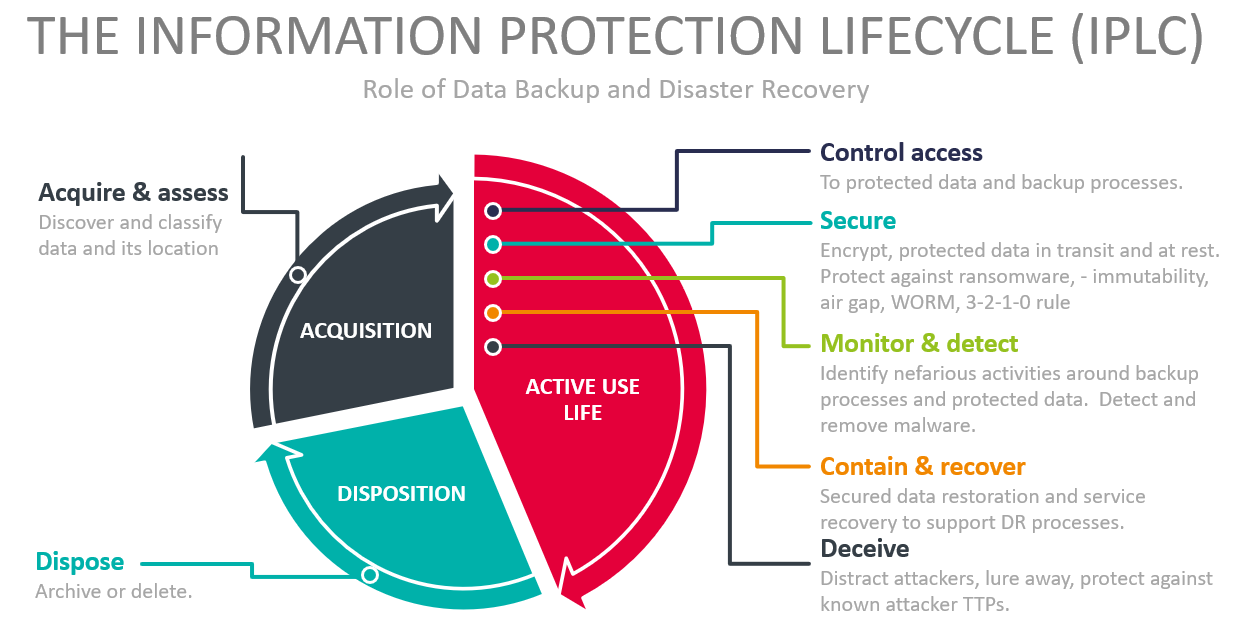
Figure 1: The Role of Backup and Disaster Recovery tools in the Information Protection Lifecyle
The term “Cloud Backup” stands for a comprehensive set of software, and services that protect business critical data held by organizations on-premises and in cloud services against ransomware and other risks by taking copies of that data and providing capabilities to restore it and the services.
Ensuring the continuity of IT services is an essential part of the security triad of confidentiality, integrity, and availability. This requires, amongst other things, ensuring that data related to these services are backed up in a way that allows them to be restored following unwanted events such as ransomware attacks as well as physical and logical damage to the storage devices or to the IT installation.
Today, ransomware is a major threat to business continuity. Cyber adversaries use various techniques to infiltrate an organization’s IT systems and make changes that prevent the organization from accessing their data and using their IT services. The organization then faces the choice of either paying a ransom to regain access or restoring the affected services and data from backups. Cyber adversaries attempt to make restoration and recovery more difficult by attacking the backup processes as well as the backed-up data.
Making backup copies of data is necessary but not sufficient, and organizations need to be able to use the backed-up data to recover their services. This can be a complex process and the backup processes must take account of the need to recover. Cloud Backup solutions must include the capabilities and services needed to recover data and rapidly restore services.
Two parameters specify the objectives for business continuity supported by Cloud Backup solutions. RPO (Recovery Point Objective) – this defines how frequently data must be backed up. RTO (Recovery Time Objective) – this defines how long it should take to recover from an incident.
The time criticality of digitized business services increases the need for an always on IT service architecture. Today’s e-commerce, financial services, and critical infrastructure demand continuous availability where even seconds of downtime could lead to severe damage and disruption. An always on architecture depends upon replicated service components with automated failover to ensure business continuity when individual elements fail.
All organizations need to consider the risks related to the availability of their business data and respond appropriately to mitigate these risks. This means investing in backup products and disaster recovery services and immutable storage solutions to ensure data resilience. It is vital that the chosen approach is adequate for the modern digitally transformed hybrid IT environment.
Delivery Models
When IT services were delivered exclusively on-premises, backup solutions made copies of the data to physical storage media (typically tape and disk) which were then held in separate locations with additional safeguards against fire and theft. The physical transfer of these media added delays and additional risks into the backup and recovery processes. However, IT services are now delivered through a hybrid model which introduces new challenges and provides new opportunities.
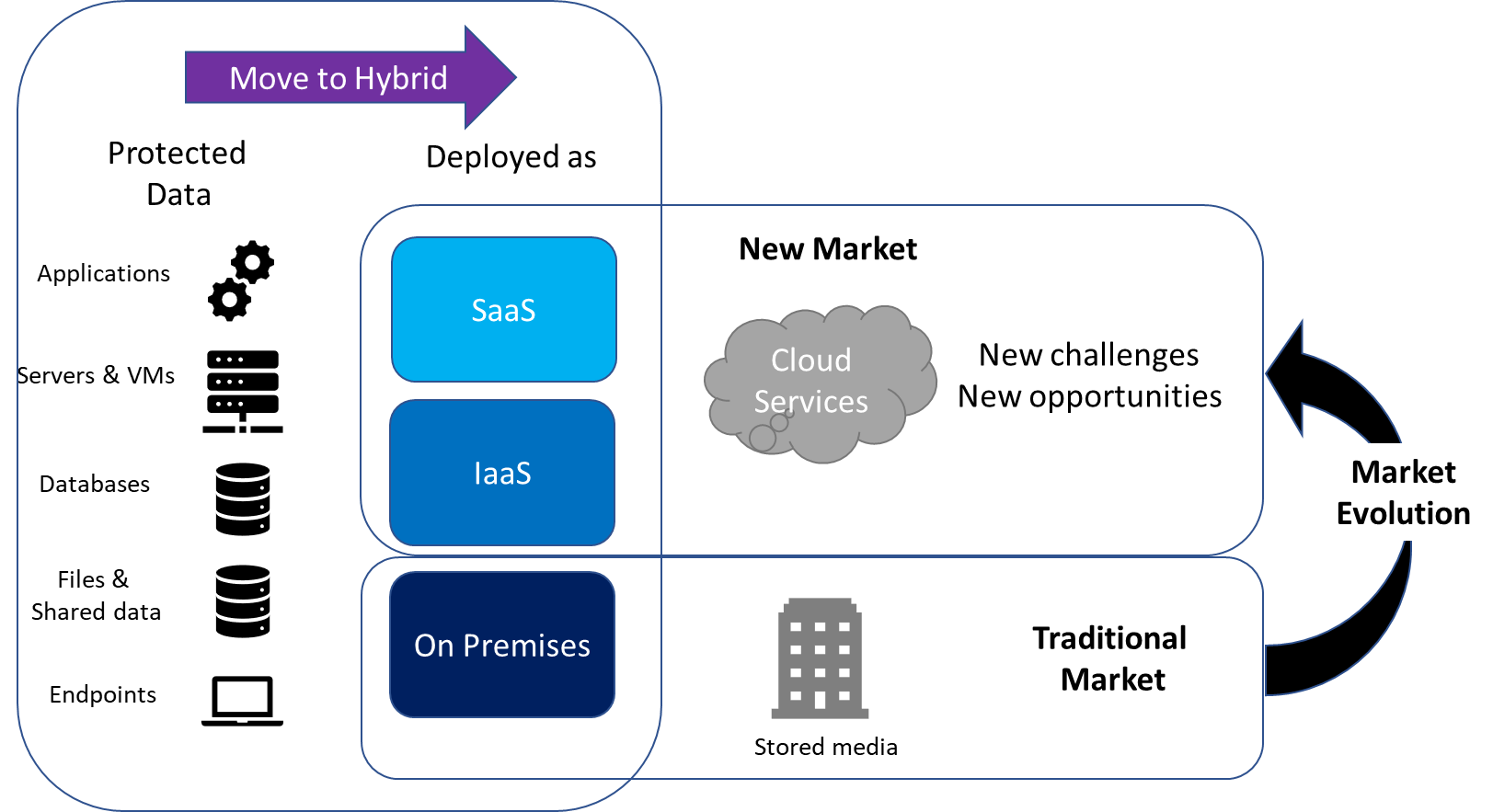
Figure 2: Evolution of Backup and Disaster Recovery
Most organizations now have a hybrid IT environment with IT services delivered in multiple ways, some remaining on-premises and others delivered as cloud services. This adds to the complexity of backup, restoration, and recovery processes.
The cloud also provides an alternative location for backup data since major cloud services are delivered from highly secured datacenters in multiple geographic locations. Organizations can therefore use the cloud to store their backup data with a high degree of resilience and this also reduces the delays and risks previously involved in the physical transfer of media to secure locations.
There is a temptation to believe that the use of a cloud service removes the need for the customer to consider the resilience of their data. The responsibility for data held in cloud services is shared between the tenant and the service provider and there are many situations where the tenant is responsible for the resilience of their data. In addition, where multiple data protection solutions are used this increases the management burden. To avoid this, organizations should look to implement a single solution that covers all the different use cases.
The cloud also provides an opportunity to simplify the delivery of backup and disaster recovery as SaaS. This eliminates the many tasks involved in managing, administering, and securing the backup services, software, and appliances. Modern architectures such as containerization and serverless also provide increased scalability and flexibility in the solutions.
These processes and tools can be complex, and, because of this, solutions should provide organizations with options to choose the level of managed service that is appropriate for their needs. The services on the market range from a full “white glove” managed service covering everything to self-service DRaaS providing only the tools needed.
Deployment models for Cloud Backup and Disaster Recovery include:
- As a physical appliance – that can be deployed on premises or in a data center.
- As a virtual appliance that can be deployed on-premises or in a cloud service.
- As a service from Multi-tenant public cloud services where updates and patches are deployed by the service provider across all tenants with full automation. This is a growing market because of ease of adoption combined with the scalability offered by public clouds.
- As single-tenant services that can operate in various deployment models, i.e., in private or public clouds or even on-premises, where they are operated in a full as-a-service model, i.e., services where updates, patches, etc. are deployed by the service provider across all tenants with full automation.
Required Capabilities
This Leadership Compass analyses the main attributes and functions of Cloud Backup for Ransomware Protection solutions. These capabilities should include:
- Basic capabilities – including data backup, data replication, data recovery, system restoration, and continuous data protection. The storage systems and data types protected by the solution. The cloud services in which user organizations can hold their protected data. How the solution supports realistic RPO and RTO targets. How the solution protects the backup data against deterioration. The way in which the solution minimizes the size of backed up data - for example through deduplication that removes multiple copies within the protected data.
- Extended capabilities – including support for near zero RTO and continuous replication for zero RPO. Support to automatically migrate data and applications between different environments to facilitate failover and failback. Support to non-destructively test data restoration and service recovery as well as capabilities for data archive / long-term retention.
- Deployment - how quickly, easily, and repeatably can the solution be deployed. The deployment options that the solution offers. Whether the solution requires agents installed on the protected systems.
- Administration - how easy it is to administer the solution. For example, GUI/Wizard provided for ease of use, CLI/APIs for automation. Capabilities to securely delegate administration to line-of-business managers and application owners.
- Data Security – the capabilities to protect backed-up data against theft, unauthorized access, and corruption. How the solution protects data in transit (for example, support for the latest versions of TLS 1.3). How the solution protects data at rest – the type of encryption the solution supports and how the solution secures the encryption keys. How the customer can manage the encryption keys.
- Cyber Security – How the solution is secured. Controls over administrative access including multi-factor authentication and granular authorization methods such as role-based and policy-based access control. Support for secure delegation of administration. How API and CLI access is secured against unauthorized access.
- Ransomware Protection – additional capabilities to protect against and recover from ransomware. For example, detection and control over abnormal administrative activities, additional protection for backed-up data (air gap, object lock, write once). Protection against malware, ransomware, and other forms of cyber-attack including proactive scanning of backups. Scanning of backed-up data to find and remove malware.
- Disaster Recovery – how the solution supports data recovery and service restoration - for example: run books, workflows, and process automation. Full stack restoration capabilities – (i.e., the coordinated restoration of multiple service components). DRaaS (Disaster Recovery as a Service) capabilities and guaranteed SLAs for RPO/RTO.
- On-premises Protection – out-of-the-box protection for storage and data types. Volumes, Databases, File Systems, File shares, OS Images, Hypervisor images, email servers and other applications. The out-of-the-box capabilities to protect DBMS including MS SQL, MySQL, Oracle, SAP HANA, others. Automated capabilities to discover and snapshot environments and applications.
- IaaS Services Protection – out-of-the-box coverage of the IaaS services. For example, major services such as AWS, Google, IBM Cloud, and Microsoft Azure. The capabilities to protect cloud DBMS including MS SQL, MySQL, Oracle, and SAP HANA. Capabilities to protect data held in the types of storage found in IaaS services e.g., files, file systems, object storage, etc. Capabilities to snapshot and restore the native cloud service VMs. Support for replicating applications to other regions for added DR readiness.
- SaaS Protection – the SaaS services covered out-of-the-box. These should include major services such as Microsoft Office 365, Google Workspace, Salesforce and cover the types of data that are found in these services.
- Regulatory Compliance – the capabilities provided by the solution for the customer to use it in a way that complies with laws and regulations across the world. These include customer control over the geographic jurisdiction in which the protected data is held as well as over encryption and the encryption keys. Capabilities to identify and classify sensitive data within the protected data and to add extra protection for this data. Audit capabilities provided as well as independent certifications for compliance with laws and regulations across the world. Up to date certification / attestation against relevant cloud hosting and security standards such as CSA Star, ISO 27001, SOC 2 Type 2, etc. Compliance with export control regulations where applicable.
Leadership
In the full chapter: Overall Leadership, Product Leadership, Innovation Leadership, and Market LeadershipCreate a free account
Correlated View
In the full chapter: The Market/Product Matrix, The Product/Innovation Matrix, and The Innovation/Market MatrixCreate a free account
Products and Vendors at a Glance
The full “Products and Vendors at a Glance” chapterCreate a free account
Product/Vendor evaluation
In the full chapter: 11:11 Systems – Backup and DRaaS, Arcserve – Unified Data Protection, Clumio – Protect, Cobalt Iron – Compass™, Cohesity – Cohesity Data Cloud, Commvault – Metallic® Backup as a Service, Druva – Data Resiliency Cloud, HYCU – Protégé, Kaseya – IT Complete & BCDR, NAKIVO – Backup & Replication, OpenText (Micro Focus) – Data Protector and Cloud Data Protector, Veeam® – Backup & Replication, and Veritas Technologies – NetBackup™ 10.1Create a free account
Vendors to Watch
The full “Vendors to Watch” chapterCreate a free account
Related Research
Buyers Compass Hybrid Cloud Backup and Disaster Recovery
Market Compass Global IaaS Providers Tenant Security Controls
Leadership Compass: Endpoint Protection Detection & Response
Leadership Brief: Incident Response Management
Leadership Brief: Cyber Hygiene: The Foundation for Cyber Resilience
Leadership Brief: Managing RDP Security Risks to Block Ransomware Attacks
Blog: Hybrid IT Backup and Recovery
Copyright
© 2026 KuppingerCole Analysts AG. All rights reserved. Reproducing or distributing this publication in any form is prohibited without prior written permission. The conclusions, recommendations, and predictions in this document reflect KuppingerCole Analysts' initial views. As we gather more information and conduct deeper analysis, the positions presented here may undergo refinements or significant changes. KuppingerCole Analysts disclaims all warranties regarding the completeness, accuracy, and adequacy of this information. Although KuppingerCole Analysts' research documents may discuss legal issues related to information security and technology, we do not provide legal services or advice, and our publications should not be used as such. KuppingerCole Analysts assumes no liability for errors or inadequacies in the information contained in this document. Any expressed opinion may change without notice. All product and company names are trademarks™ or registered® trademarks of their respective holders. Their use does not imply any affiliation with or endorsement by them.
KuppingerCole Analysts supports IT professionals with exceptional expertise to define IT strategies and make relevant decisions. As a leading analyst firm, KuppingerCole Analysts offers firsthand, vendor-neutral information. Our services enable you to make decisions crucial to your business with confidence and security.
Founded in 2004, KuppingerCole Analysts is a global, independent analyst organization headquartered in Europe. We specialize in providing vendor-neutral advice, expertise, thought leadership, and practical relevance in Cybersecurity, Digital Identity & IAM (Identity and Access Management), Cloud Risk and Security, and Artificial Intelligence, as well as technologies enabling Digital Transformation. We assist companies, corporate users, integrators, and software manufacturers to address both tactical and strategic challenges by making better decisions for their business success. Balancing immediate implementation with long-term viability is central to our philosophy.
For further information, please contact clients@kuppingercole.com.
Introduction / Executive Summary


Leadership
Correlated View
Products and Vendors at a Glance
Product/Vendor evaluation
11:11 Systems – Backup and DRaaS
Arcserve – Unified Data Protection
Clumio – Protect
Cobalt Iron – Compass™
Cohesity – Cohesity Data Cloud
Commvault – Metallic® Backup as a Service
Druva – Data Resiliency Cloud
HYCU – Protégé
Kaseya – IT Complete & BCDR
NAKIVO – Backup & Replication
OpenText (Micro Focus) – Data Protector and Cloud Data Protector
Veeam® – Backup & Replication
Veritas Technologies – NetBackup™ 10.1
Vendors to Watch
Related Research
Copyright














Table of Contents


Table of contents
Close
Introduction / Executive Summary
Leadership
Correlated View
Products and Vendors at a Glance
Product/Vendor evaluation
11:11 Systems – Backup and DRaaS
Arcserve – Unified Data Protection
Clumio – Protect
Cobalt Iron – Compass™
Cohesity – Cohesity Data Cloud
Commvault – Metallic® Backup as a Service
Druva – Data Resiliency Cloud
HYCU – Protégé
Kaseya – IT Complete & BCDR
NAKIVO – Backup & Replication
OpenText (Micro Focus) – Data Protector and Cloud Data Protector
Veeam® – Backup & Replication
Veritas Technologies – NetBackup™ 10.1
Vendors to Watch
Related Research
Copyright










