See All Locations



Oracle Corporation provides products and services that address all aspects of corporate IT environments. Our offerings are delivered to customers worldwide through a variety of flexible and interoperable IT deployment models, including cloud-based, on-premise, or hybrid, which enable customer choice and flexibility. Our Oracle Cloud offerings provide a comprehensive and fully integrated stack of applications, platform, compute, storage and networking services in all layers of the cloud - SaaS, PaaS and IaaS to provide a cost-effective, standards-based, high-performance platform for developing, running, integrating, managing and extending business applications. In addition to utilizing these tools for modernizing their businesses, we build new and innovative applications leveraging emerging technologies such as IoT chatbots and AI/ML.

Addressing GDPR requirements is a complex undertaking that requires coordination between different departments including but not limited to IT, security, legal, human resources, marketing and communications. Translating the legal requirements into concrete organizational, technical and security measures and aligning them with existing corporate and industry policies and regulations not just helps find the easiest route to address GDPR compliance, but can promise cost savings by mapping them to existing security tools.
Data, People and Software security: how does them relate to the GDPR security principles? In this new attack landscape, network-centric security is no longer enough because threats come from inside and outside the network. Oracle Identity SOC is an identity-centric, context-aware intelligence and automation framework for security operations centers, backed by advanced user behavior analytics and machine learning to spot compelling events that require automated remediation.
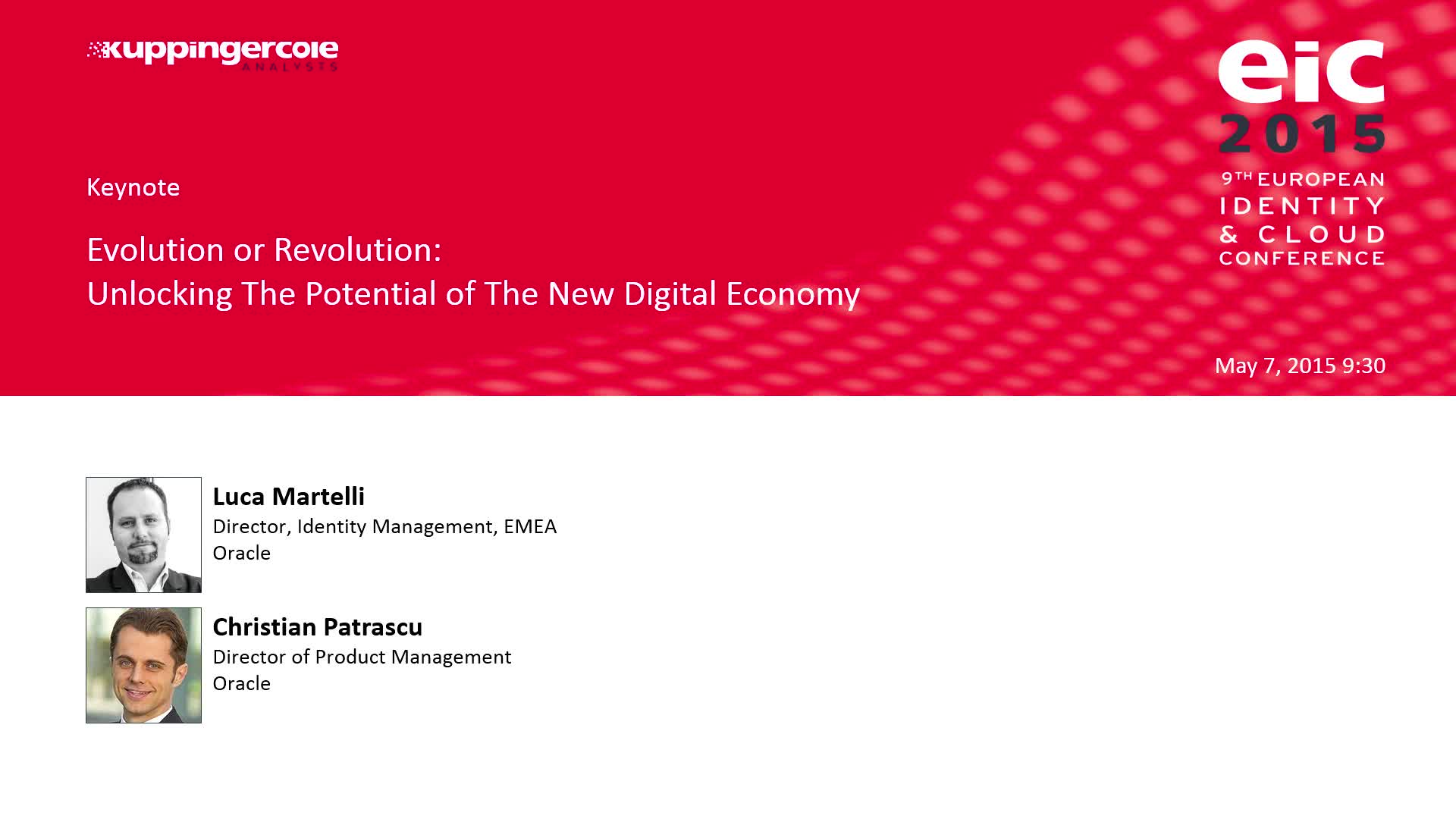
Cloud, Mobile & Social continue to have an impacting effect on IAM projects. In addition to this, Digital business plus Internet of Things have begun to further influence the IAM programs worldwide. The Convergence of identities like people & things is furthermore driving these trends. Hence the question can be put: Is Identity in the gravity center of these emerging trends? The presentation goes though some real life examples of how Security and Identity Management are enabling Digital Transformation from the business and technical points of view.

By monitoring traffic to all their enterprise databases, organizations can now detect unauthorized activity before it reaches the database, and can take appropriate measures to block that activity. In addition, these solutions can consolidate database logs and analyze them in real-time to generate alerts as well as provide a secure centralized repository for audit data for regulatory purposes.
Conceptually similar to network intrusion detection and prevention systems (IDS/IPS) or security information and event management (SIEM) that are part of every organization’s network, KuppingerCole believes adoption of this new technology will become just as widespread at the database layer and will help strengthen existing controls within database management systems. You will also hear from database leader, Oracle, about their new Oracle Audit Vault and Database Firewall solution and some of the organizations that have already adopted this solution as part of a database security defense in depth strategy.
In this webinar, Martin Kuppinger will outline how Database Security solutions fit into the approach of Database Governance, which role encryption technologies play therein, and what it needs for a holistic approach on Database Security – including the layers surrounding the databases like the applications, the operating system, and the network.
In the second part, Roxana Bradescu of Oracle will talk more in detail about the new Oracle Audit Vault and Database Firewall.

Bring Your Own Device (BYOD), die Nutzung mobiler Endgeräte im Unternehmen, egal ob diese sich im Besitz des Mitarbeiters oder des Unternehmens befinden, aber auch das Einbeziehen der Social Media in die interne und externe Unternehmenskommunikation - all das ist längst nichts neues mehr, sondern Alltag. Trotzdem: Die Konsumerisierung der IT (deutsch für "consumerization". Beschreibt den Einzug von Endgeräten, die eigentlich für den privaten Konsumenten gebaut sind, in die Unternehmens-IT) schreitet so schnell fort, dass viele Unternehmen ihre bisherigen "Verteidigungslinien" aufgeben müssen und nun vor der Frage stehen, wie und an welchen Stellen die Unternehmensinfrastruktur weiter zu öffnen sei, ohne dass man gänzlich unkalkulierbare Risiken für die Sicherheit der digitalen Werte vor Diebstahl und Missbrauch eingeht.
In diesem Webinar wird Martin Kuppinger, Principal Analyst bei KuppingerCole, darüber sprechen, wie die Unternehmens-IT die Erschließung des Nutzens dieser Trends ermöglicht, ohne die damit verbundenen Risiken für Ihre Informationssicherheit zu erhöhen.
Stefan Dodel, Business Development Manager bei Oracle wird daran anschließend entlang ausgewählter Praxisbeispiele konkrete Ansätze zur Realisierung einer funktionierenden BYOD & Social Media Strategie beschreiben.

Once upon a time we all preached that IAM projects should be done piecemeal, and should involve “best of breed” solutions. Forward looking enterprises took that advice, but they’re now faced with the somewhat daunting task of updating their IAM portfolio while rationalizing the installation and attempting to insure that all of the parts function together smoothly and flawlessly.
Your organization must decide – should you try to refurbish the apps and services you have or should you map out a plan to replace them all. And if you want to replace them, should you stick to best of breed (if that’s even applicable any more) or should you choose the vendor that’s the best fit for you, then fill out their line with the parts they recommend from third parties.
Join Kuppinger-Cole Senior Analyst Dave Kearns, Courion’s Dave Fowler and more experts, as they explore what’s new in IAM and what’s best for your organization.

Most IT environments today are hybrid. They build on a lot of on-premise services and have started adding cloud services. However, end users don't care about where the service lives. They just want to have a Single Sign-On experience. Thus organizations have to think about how to implement SSO for these hybrid environments, instead of separating the on-premise and the cloud environments and making things more complex for users.
Federation and SAML are the standard-based approaches for a transparent single sign-on to the cloud. However, federation isn't supported always and it requires more conceptual work and technical efforts to federation-enable an enterprise. Thus classical SSO might be the solution which delivers immediate value to the end users.
Learn when to best use which type of SSO to provide what your users want. It's not always federation, it might be Web Access Management or Enterprise SSO which proivde the biggest value and the real quick wins.
Join us for this live webcast and listen to Sebastian Rohr from KuppingerCole and Matt Berzinski from Oracle as they discuss:
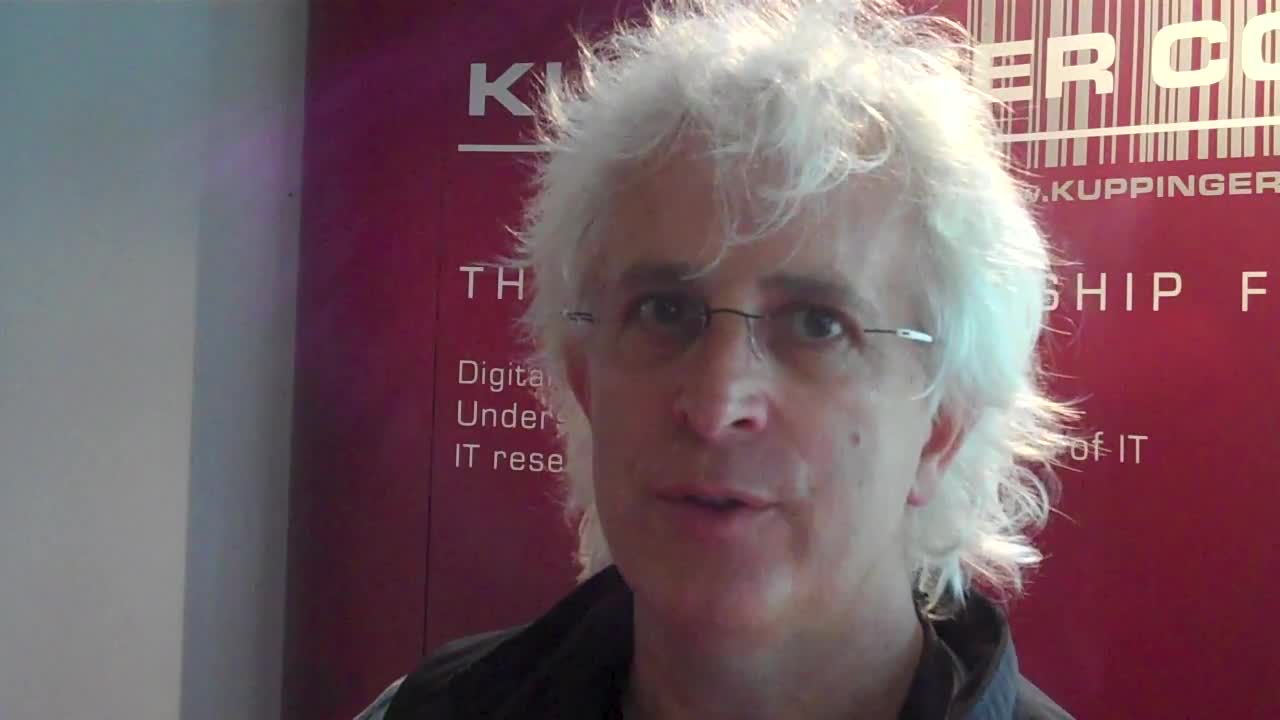

In this webinar, KuppingerCole´s Principal Analyst Martin Kuppinger will talk about the role database firewalls can and should play within database security and holistic security across the entire stack from applications down to the network. He will discuss the strengths like the non-intrusiveness of these technologies, as well the golden rules to have a solution which works accurate avoiding traps like for example “false positives”.
Steve Moyle, CTO Database Firewall at Oracle, then will dive deeper into technology and have a look at efficient approaches for deploy a database firewall in practice. He will explain how to write policies to ensure maximum flexibility and high performances. Finally, he will discuss how to address common issues like SQL injection attacks pointing out benefits of database firewalls versus traditional network firewalls.

Most sensitive information is held in databases – and numerous breaches have been reported for sensitive information held in databases. With an increasing number of privacy and regulatory mandates such as Sarbanes-Oxley, PCI-DSS (Payment Card Industry Data Security Standard), and many others, protecting your databases is a key issue. Database Governance as a structured concept for securing database information and Database Security to technically implement and enforce the security policies and controls are a must for any organization. Within this, encryption and strong authentication for data at rest as well as data in motion are key elements. Encryption is required by an increasing number of regulations and from the overall governance standpoint. The webinar will discuss the consequences of not encrypting data, the regulatory trends, and the approaches for encrypting data without impacting performance and usability.
In this webinar, Martin Kuppinger will outline how Database Security solutions fit into the approach of Database Governance, which role encryption technologies play therein, and what it needs for a holistic approach on Database Security – including the layers surrounding the databases like the applications, the operating system, and the network. He will provide rules for best practices and a structured approach on how to move forward towards and within the field of Database Security. Within that he will also present his view on strong authentication, encryption, and key management issues as specific aspects within this topic.
Roxana Bradescu of Oracle will talk more in detail how Oracle Advanced Security provides a complete solution for transparent database encryption which protects data at rest, in transit, and on backup. She will explain how the built-in key management means there is no need to deploy separate key management infrastructure, and how integration with the Oracle database ensures performance and easy deployment requiring no changes to existing applications.

Preventing unauthorized user access to sensitive application functions and data is a growing IT security challenge. Recent compliance regulations and modern security mandates require IT stakeholders to establish granular access privileges and enforce segregation of duties to protect sensitive business information from unauthorized users. But historically, authorization logic has been coupled with application business logic resulting in higher development costs, longer time to market, reduced IT agility, and difficult compliance. Learn how a combination of externalized authorization controls with an entitlement-centric approach to identity management ensures that enterprise-wide security policies can be consistently applied, easily audited, quickly deployed, and fine-grained enough to fortify security throughout your enterprise infrastructure.
In this webinar, Martin Kuppinger, Founder and Principal Analyst at Kuppinger Cole, will talk about the status and evolution of the market for Entitlement Management, the role XACML plays and what XACML can’t solve, real-world architectural consideration and approaches. He also will discuss the main drivers. Followed by Martin, Subbu Devulapalli, Principal Product Manager for Oracle Entitlements Server, will talk about solutions and real-world use cases that demonstrate how organizations can externalize authorization to ensure dependable enterprise security for heterogeneous environments.