



Cloud Sovereignty Risks and Data Backup Strategies: How to Protect Business Continuity
Learn how data backup strategies can protect against cloud sovereignty risks—including legal, operational, and geopolitical threats to business continuity.
Cloud services are now at the core of modern businesses, powering everything from real-time customer engagement to AI-driven analytics. However, beneath the promise of speed and scalability lies a geopolitical fault line: cloud sovereignty. For organizations that rely on non-sovereign cloud providers, especially those based in jurisdictions with far-reaching legal powers, this is more than a compliance headache. It is a direct threat to operational continuity, and business resilience as well as data confidentiality.
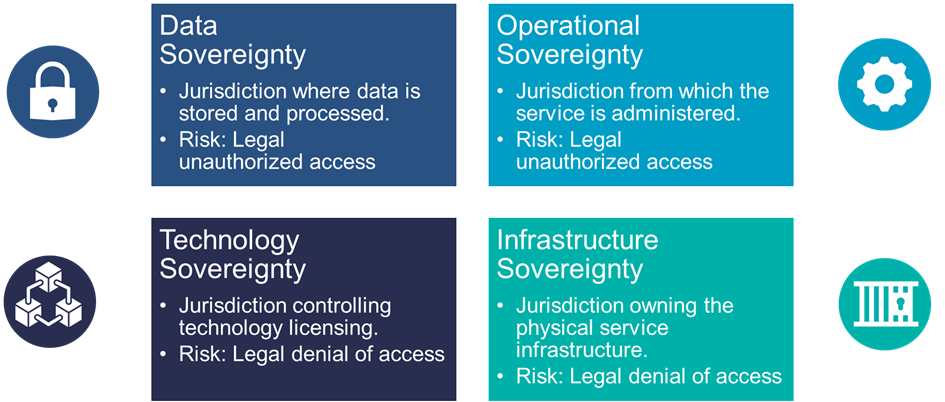
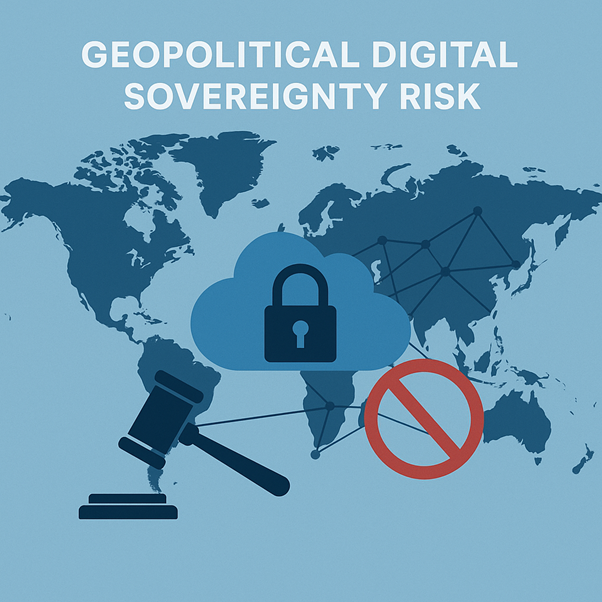
Figure 1: How digital sovereignty risks impact data backup strategies.
Data backup, often seen as the last line of defense against cyber-attacks, takes on a strategic role in this context, it is the critical defense needed to survive the digital impact of geopolitical shocks. In this blog I will compare two scenarios for data backup in this context, based on the four sovereignty risks: data sovereignty, operational sovereignty, infrastructure sovereignty, and technology sovereignty.
Risks of Storing Backup Data in a Non-Sovereign Cloud
In this scenario, backups of data in systems on premises, at the edge or in a sovereign cloud are stored in a non-sovereign cloud. For example, an organization is using a US owned cloud service to hold backups containing personal data relating to EU residents. This is common scenario since hyperscale cloud services are delivered from multiple locations and provide levels of availability, making them ideal for storing backup data.
Foreign laws, such as the US CLOUD Act, may compel a non-sovereign cloud provider to disclose the data, even if it is stored outside the cloud provider's home country. The European Data Protection Board (EDPB) supplementary measures describe in detail the controls needed to protect EU personal data in this case. These measures are also useful to protect all forms of sensitive data against legal but unauthorized access by a cloud service provider.
Technical Controls
- Encryption – strong state of the art encryption can provide adequate protection providing the keys are managed correctly.
- Pseudonymization – as opposed to anonymization, is explicitly allowed providing the additional data needed to reconstitute the data is adequately protected.
- The customer retains the encryption keys within their sovereign jurisdiction.
- Split-key or Shamir Secret Sharing and other secret management techniques can provide extra protection for the keys.
- Other confidential computing techniques must be used to protect backup data that is processed within the non-sovereign cloud.
Residual Risks
- Geopolitical conflicts, sanctions, or government actions could disrupt access to backup data.
- Proprietary formats, APIs, and services can make it difficult to restore data from backups if the cloud backup service provider ceases operations or services.
Using Sovereign Backups to Reduce Cloud Sovereignty Risks
In this scenario, an organization uses a non-sovereign cloud to store and process data. For example, an EU organization is using a US owned cloud service to deliver business critical applications. This exposes the organization to four major risks as I outlined in my blog “Why US Isolationism is Now a Global Cloud Risk.” In the section above I described how to mitigate data confidentiality risks, here are some examples of how data backup can help to mitigate the other risks.
Infrastructure Sovereignty Risk: Denial of Access
In times of political conflict or sanctions, governments could seize, disable, or restrict access to the cloud infrastructure, disrupting or severing access to critical business operations.
Technical Controls
- Sovereign backup - storing a backup of your organization’s data in a sovereign cloud or physical location within your sovereign jurisdiction ensures that you have an accessible copy. This is particularly important for organizations subject to strategic export controls or operating in politically sensitive sectors.
- Infrastructure as code backup - application infrastructure is defined by data, and the backup must also protect this data.
- Continuous backup - In a dynamic DevOps environment this infrastructure changes as the application evolves. The backup process must be able to capture these changes and support restoring not just the application data but also the virtual infrastructure that it needs.
Residual Risk
- The time to rebuild workloads in sovereign infrastructure depends on your recovery plan. If this includes migrating the application components to a different technology this may be complex and cause prolonged downtime.
Technology Sovereignty Risk: Lock-In Becomes Lock-Out
Cloud services are “software defined” and depend upon a complex technology stack. This involves proprietary hardware and software to deliver a proprietary user environment. While the basic capabilities of networking, storage and computing may support open standards, the user interfaces, tools, and APIs provided by the services are proprietary.
If a non-sovereign government were to legally oblige the cloud service provider to cease providing that service in certain geographies it would be difficult for organizations in those to maintain business continuity.
Technical Controls
- Use international and open standards when architecting and implementing business critical applications to reduce the risk of technology lock-out.
- Standard backup formats - backups of your environment in open, portable formats in your sovereign environment would allow you to restore your workloads to alternative platforms without relying on the provider’s proprietary tools.
Residual Risk
- Some workloads rely on proprietary features such as managed databases, AI models, or analytics pipelines that cannot be fully replicated outside of the proprietary cloud environment. Even with portable data formats, migrating applications integrations may require substantial reengineering, which can extend recovery timelines.
Conclusion
Cloud sovereignty risks are no longer abstract, hypothetical threats, they are unfolding in real time as global politics, trade policies, and jurisdictional power plays increasingly intersect with digital infrastructure. For organisations depending upon non-sovereign cloud services, the question is not whether sovereignty-related disruptions might happen, but when and how well prepared your organization will be when they do.
A well-planned backup strategy, whether to a sovereign cloud or physical location, acts as both a safety net and an enabler of digital independence. It provides your organization with resilience against not only cyber threats but also digital sovereignty risks.
By integrating sovereign cloud backups into your data backup strategy, your organization can strengthen business continuity and resilience against cloud sovereignty risks. To explore best practices in data protection and compliance, join us at Identity-Centric Cybersecurity Impact Day 2025 in Frankfurt November 6th, 2025.









