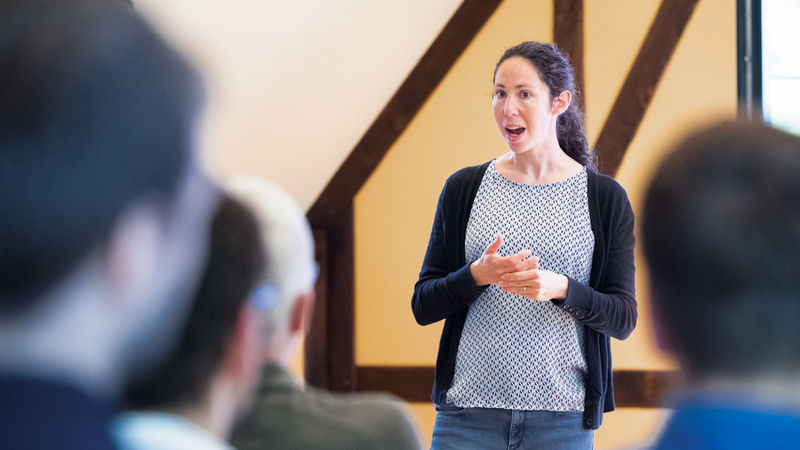
Welcome to the KuppingerCole Analysts chat. I'm your host. My name is Matthias Reinwarth. I'm an analyst and advisor with KuppingerCole Analysts. And so is my colleague, Matthew Gardiner, hailing from Boston. He's an analyst and he comes with nothing less but the topic of the hardest problem in cybersecurity. Why not start with that?
So, the hardest problem in cybersecurity, Matthew. In my career, yes. Why?
Well, I mean, you know, it's it's a topic no one really talks about these days is AI security and governance. Specifically, probably we'll talk more about AI agent. Why is it the hardest?
I mean, if I roll back my career, the previous hardest was sort of when the internet itself and the web was deployed and how to secure and govern that. That was hard, but in retrospect, not as complex as what we're facing right now. And partly it has to do with, you know, when the internet itself was being rolled out, it was being rolled out. So there wasn't like everywhere and it wasn't, you know, all this business wasn't being done on it yet. So we had time, if you will, to like, you know, catch up to it as it became more of a business and consumer function.
You know, agents roll into that world already well established where, you know, businesses are run on IT and it's all on, you know, on the cloud or, you know, on the web. And, you know, we're completely dependent on it across every industry.
And now you roll into these, these agentic systems that are, you know, kind of like people in the sense that they have some intelligence, but they're also software and they run at, you know, high speeds and they get delegated permissions and agents can spawn other agents and they can collaborate with themselves and other agents and you might have hundreds or thousands of them doing different things. And so the complexity of, you know, how do you secure and govern this is something we've only kind of experienced with humans.
But humans are very different than, you know, software that have, you know, autonomy and have some intelligence, my air quotes. So, you know, this complexity, like how are we going to, as an industry, how are we going to secure and govern these systems that are really becoming widely deployed? Right. And this is a topic that I see also in my advisory work when I talk to customers, when we talk to vendors that that is everywhere. So obviously there must be some truth to what you just said.
It's the hardest problem in cybersecurity, but as a foundation and you already hinted at that with parts of what you said already, but why are AI agents so hard to secure? What makes them so different? You mentioned autonomy, you mentioned agency, you've mentioned the scale. What else?
Well, I would say the other one is non-determinism. So the same inputs don't give the same outputs. So it's essentially a game of probability, which at one level people deal with probability all the time and not really recognize it. But on the other hand, we're not in the world of software and IT, we're used to sort of, it may be broken systems, but they're deterministic and broken in the same way every time. So in this world with non-determinism, you know, the outputs are hard to predict.
And so you may set it on a certain task and you may think you've directed it, prompted it in the right way. You may be wrong, you may be right at that point, but the agent itself may make decisions and take actions that you considered unexpected because for whatever reason, you know, it's semi-intelligence went a path you didn't expect. And of course that path could be leaking sensitive data. It could be, you know, making a transaction that is not what you desired. It could be, you know, causing a system to fail because, you know, it overtaxes it.
There's all sorts of sort of confidential integrity and availability challenges that an agent can cause. When I talk to you, on the one hand, you are, of course, an analyst with but you've mentioned that before and to me when we prepared for that episode. But you're also working with MIT and the cybersecurity in there, if I get that right. So you are looking at that also with a different perspective. What does this inform you? What does that give you as an additional angle that you look at things?
Yeah, I mean, you could kind of think of, you know, the professors and the universities, technical universities like MIT is a place where, you know, academic rigor is being applied to big problems. And, you know, they're attacking the same problems, you know, the vendors are attacking and that we as analysts are attacking, but they're doing it from a, you know, from a scientific method approach. So you hear kind of the academic view on these topics, but it's a consortium that also includes industry participants, including people like me.
And so we're constantly sort of batting around, you know, how grad students and professors can do research in a scientifically, you know, using the scientific method, but also apply it to real world problems. So it's kind of like all this ecosystem needs to work on a super hard problem. And we are working on it as a collective, you know, the vendors and the analysts and academics, but because it's such a hard problem, you know, we're kind of almost seeing the problem get bigger before, you know, before we're actually wrestling it down and feeling we have it in control.
So I see that tendency with me and myself as well. I usually look at agents at something that is within my own organization. So something that I can control, that I can at least initiate and can have an eye on what they're doing. So in session governance and all of this, I think this is only part of the equation because it's not only our agents, it's also, and you're talking about cyber security, about the agents of the attackers. So the question is, is this, yeah, yeah. How does that play into the overall equation? How does that change things and how can we deal with that?
So I think that's what I know. You know, agents, you know, as you said, available to the threat actors and they're, you know, they are using them and no doubt we'll use them more to automate and make their attacks more intelligent and, you know, more autonomous.
You know, we just have to, everything's going to speed up and be better from that, you know, from the threat actors point of view. There's the, like you say, there's the agents that we roll out explicitly inside the enterprise or personal agents in the case of consumers. But then also another category we should consider is this, you know, inside the SaaS application agents that the SaaS vendor themselves will embed and they, you know, make them available for you to use inside their application, but for your, with your data and with your business processes.
So kind of, this is the complexity, you know, lays out the complexity. It's how, with those things sort of changing on a daily basis, how do you secure and govern all of that, defend against the threat actors, but also secure and govern the systems that you essentially have inside your Right. And this is always something that makes me shy away a bit when I talk to my favorite LLM and says, and it says, Hey, I have these MCP connection to your favorite SaaS platform. Don't you want to connect? This is something where I think, not necessarily. Do I want to make this open with my own credentials?
This is identity management and access management in the end to say, okay, yeah, I give it, I give it my token. And so it can access my services on that platform. I'm a bit hesitant, but maybe others should be as well.
But, but I think, because I think that is one of the key issues here that we, I mean, as you know, we do it here, you're called. So I find it extremely useful.
I mean, it's, it's churning through, you know, Salesforce and, you know, letting me know that analysts, you know, that, that vendor had a briefing, you know, with another analyst. So just, it's extremely useful. As far as I know, it's not, it's not able to write to this database. It's just reading from it.
But yeah, I know what you mean. That's as more and more connections happen and more and more skills go to the agent, they can do more things.
And, and, you know, they, they, without a malicious, you know, malicious mindset, they can still go off and do things you didn't expect and may not appreciate. But, you know, that's the whole point is we're trying to harness the advantages and mitigate the disadvantages of these agents. And it becomes extremely complex, but everybody's working on it. That's at least, that's one positive. True.
And, and an agent that has a lot of connections to lots of diverse systems, providing information and can recombine that. I think they can, on the one hand, come up with great new insights, but they can also come up with great new things that I never thought of.
So that, that might be, that might be the challenge there as well. Yeah. At the end of the day, it's, you know, used properly. It's augmentation. Like you still have to have a critical mind attached to whatever it tells you. And that's part of the problem, you know, sort of this co-pilot model we're talking about right now. It doesn't really do anything.
It just, you know, gives you information, answers your questions. But now imagine that gets turned on to an autonomous agent. Now you've sort of given it permission to do things on your behalf, which may or may not be what you wanted or may not be what the organization wanted. And that's like, how do you balance that is really part of the complexity. Right.
And, and I want to shift the discussion towards something that I see from, from my experience as an advisor, when it comes to, to dealing with such simple systems, like an IAM systems, many organizations already struggle in making the right people responsible for the right task within the overall fabric of IAM. So ending up with something like a proper target operating model to say, okay, this, this, this group of people is responsible for, for governance. This group of people is responsible for actually doing things for automating things, for making sure that data quality is proper.
So this is something that I know from, from, from IAM. And we did lots of great discussions and also really extensive discussions to find the right target operating model just for IAM. But if we look at, at agentic AI cybersecurity, there are so many more people involved. So is this not only a technical problem, but also an organization problem? I know this is a simple question. Of course the answer is yes, it's more.
But in, in, in what dimensions are you thinking of that? Well, I mean, I think a lot of things you just mentioned for human identity has to happen for the agents, how, how it happens will be different, but the concepts are really the same.
I mean, one of my main concerns, you know, as I've been having worked in security for 25 years, is there is a tendency out there for the security team to take the blame for anything that goes wrong. And that's extremely unfair.
You know, in my mind that one might, you know, the framework confidentiality, integrity, availability, that's the security team's responsibility, not every bad outcome that an agent may do. Now we may provide data, you know, we may provide information or find things that we think are rogue and hand it off to the business. But at the end of the day, it needs to be a joint effort.
And in my, my work, what I see with, you know, leading organizations is that they've been setting up these sort of AI governance committees. You know, often there'll be a, you know, a chief of, you know, AI strategy that maybe runs this governance committee. The governance committee is, is cross-functional security team. It clearly has a, has a seat at it, but it's, you know, it's your classic risk decision to roll out agentic applications.
And the security team is an advisor on that, but not the decider because, you know, there are different risks, calculations, and, you know, you may be willing to accept a certain risk of a certain transaction being wrong because 99% of the time it's right. And so that's, that's a great failure rate from your point of view, but the security team shouldn't be responsible for every failure of the, you know, the agent applications. So I'm concerned that, you know, there'll be finger pointing in the early days where, you know, unexpected things happen and the security team gets pointed out. Right.
Maybe a bit of a shameless self plug. Two weeks ago, we had the, the AI and NHI impact day in, in Munich. And my opening keynote was called, who is the manager of your agent? So really understanding that governance does not end at cybersecurity, at the control plane that all these vendors are selling, but this is a, this is homework to do.
That is, that is organizational governance to, to define, to have the process around it and to live it on a daily basis to understand what actually, um, do you need to know about an agent to understand that it should be running? And if you do not understand that, that you might not want to have it running. So why does it exist within which bounds may it may act and who answers for what it does? So a person who answers for that. It's kind of the basics of, you know, you don't have a business process that's not owned by a business function.
So you shouldn't have representative, um, agents or, you know, these, these robotic processes, not owned by somebody because who's going to improve it or who's going to address it when concerns are raised, who's going to optimize it for whatever the business process is. I mean, um, as people come and go too, so you can't have like a personal agent that runs forever. That person is, is no longer around.
So that has to be just, you know, kind of a constant monitoring and clean up and, and, um, you know, that's part of the security team's responsibility is to point out where there's a lack of control or a lack of ownership.
Um, obviously it's, it's not necessarily their responsibility to provide that control and ownership, but one of the things they can do as part of the monitoring is flag these, you know, outliers things, you know, things happen in any business, just normal, but, you know, you can't have a principle that, you know, these agents are just out there operating and nobody knows who started them, who owned them, who's responsible for them. The whole concept is absurd if you can't run that way. Exactly. And we've mentioned a few of them who are, or should be involved in that process.
On one hand, very abstract, the business owner who says, I want this service to be running and it requires this agent. On the other extreme, we have a security team that needs to understand what this thing actually does at runtime, but who else do you think should be involved and how, uh, how should they cooperate after that? So first of all, who is involved as well?
Well, I mean, it's not terribly dissimilar from IT in general. You have risk and compliance, governance, risk and compliance, like maybe there's a potential impact for regulatory. So they have to shift, that team has to shift covering agents, um, legal, you know, at the end of the day, you know, sometimes there are judgment calls about, you know, that compliance that, that, um, or, you know, the use or misuse of something that needs an opinion on the legal aspect. So it's really all the same people we've been working with for years. They just need to all now move to this agentic model.
And, you know, it's going to, it's the reason it's going to be challenging is the reasons we've already talked about, but you have this sort of probabilistic system operating potentially sensitive business processes where the outcomes are somewhat unpredictable, but sort of by definition, everybody needs to sort of get comfortable with, you know, the answer is that probably won't happen. Is that good enough?
You know, it's 99% going to be good. Is this 1% failure good, or is that bad? Depends on the system, the business process, et cetera, to answer that. And that's sort of what the collective responsibility is to agree that that failure rate, whatever it is, is sufficient. And as long as we know that volume and speed and just increases, then even 1% is not just a statistic, something behind the cover. Yeah. 1% of a million things, 1% of a billion things.
I mean, it depends on the use case. You know, I always think back to the driverless cars as being a perfect model.
I mean, no one would have invented a driverless car and rolled it into production the next day. We didn't do that. We've been grinding away as a world for 10 years on that because, you know, it's complicated and the downsides are quite high if the system fails. So we did a good, you know, the industry did a good thing by running millions of miles of tests.
That's, you know, I'm not saying you have to do that with every agent. If what it's doing is relatively trivial with low downsides, you don't need to test it for 10 years.
But if, you know, if you're doing something that isn't trivial and the impact would be high, maybe you do want to test it for years in real life before putting it into production. Right. And I think if we bring in all these teams that play different roles of the overall agentic AI governance, cybersecurity control game, I think this is something that we can also translate into which tooling, which capabilities are required for actually achieving that. And that gets us a bit closer or away from philosophy, closer to technology.
Although philosophy is also fun when it comes to agent, agentic AI in general, because there's so much in there, which we did not have to care about earlier. So autonomy, agency.
Yeah, you definitely need to crawl. I think where you're leaning is the crawl, walk, run strategy, like on security and governance. You're not going to, you're not going to run right out of the chute.
You know, you've got to work your way into your security and governance program for agents. And so, you know, I don't think we as analysts have the answer, but we have at least the framework for thinking about it. So hopefully people will look at our six category framework. They're all kind of like controls we're used to with agent in front of it.
And it's, you know, how you do these things are different obviously with agents, but the concepts are still the same. You know, a crawl area is, you know, visibility, inventorying, observing, so that you can sort of get the data necessary to do some of the things you want to do when you start walking, you know, the more preventive controls or governance that is sort of a more mature. And maybe some people will listen to that and they go, well, I need all of it right out of the chute.
And like, well, you know, it's going to be a big investment. You know, the vendors in this space are still figuring out all the capabilities necessary to do all those capabilities, provide those capabilities.
And so, you know, you need to think about how you're applying agentic AI in your business and then look at the level of security maturity that you need to be comfortable with that program. And everybody's going to need a crawl, walk, run, how they go through that, you know, how they, how quickly they adopt those stages will depend, of course, but, you know, the principles are the same and well laid out into our six category framework. Right.
And I think it's actually pretty great that we do have that framework because it allows us to do prioritization, risk-based approach to understand where to start because having all six at one moment, more or less is what Alexey Balagansky, our colleague, calls this cargo cult. You buy it and you put it somewhere, but you don't have the chance or even the time to implement it. So starting with the right thing at the right time and in the beginning, obviously, is the better starting point than to say, I have everything, but I don't deploy it.
So if you need to, what would be a starting point for you if you have a look at these six categories? Well, I mean, my research right now is focusing on visibility and observability, which is one slice. And part of the reason we're doing that one is because all the other ones fall from it. Like it's hard to do a security control of something you don't know about or can't see. So how do you find them and start monitoring them? We have a six-category framework, but that doesn't necessarily mean that's going to be a class of vendors in each category succinctly.
We know we're ahead of the market in the sense of we're not trying to predict these are the six market spaces. We're trying to predict these are the six areas of control that are going to be necessary. And you'll probably need a fabric, to use a Kubernetes term, of multiple services, multiple vendors that will tie together ultimately to provide those six categories. But for what I'm doing is I'm starting at the basics and those systems that discover the agents, that's a big problem actually, challenging, because they can be all the different types we've already talked about.
And then being able to set up to monitor them. Unfortunately, not all agents are generating monitorable data directly like logs that we get maybe principally familiar with. And then inventorying, finding agents that you didn't know about and adding them to your inventory. And then ultimately, of course, you're setting up the continuous monitoring. And then you can start to set up behavioral monitoring.
Once you get the data about them, you can start to maybe set up some rules or some policies or an agent itself to review what's happening with the other agents to then flag things that are anomalous. And so that then starts to lead into the other security controls that are other parts of the six category framework.
Right, and you've mentioned that fabric and it's something that we really urgently need to not only understand which are the building blocks, the capabilities that we need, but also how they play well together, how they interact with each other. Of course, everybody says you need a registry. Your identities are first class beings or first class entities or agentic AIs are first class identities in your IAM.
Yes, they are, of course. And we need to start with visibility, with a registry, with discovery, with proper onboarding processes wherever possible, with blueprints for categories of ephemeral identities. We all need that. But that's a starting point, I think. And that would be, you said, crawl, walk, run. Does it still crawl?
Yeah, we're still crawling at that point. Walk is more, you know, is the agent doing what it should be doing? Sort of like behavioral monitoring.
You know, does it have this privilege? Does it have too much privilege? You're looking for that, those sort of anomalies or weaknesses or areas of control that are lacking, is an example of walk. And then run is a bit more like governance, you know, from a, you know, at scale, can I manage what these agents are doing from the outside? And that's, you know, pretty, gets pretty advanced.
You know, can I stop agents from calling other agents? I think that's inappropriate. So you have to be sort of wired into the agentic processes to be able to do that. So I think most organizations are at the crawl stage, not surprisingly. And that's, well, in my experience with security teams, sometimes they're somewhat afraid to know what the current state is because once you know, you have to, you feel you have to do something about it and they're not always equipped to do something about it.
So we'll have to overcome that because, you know, one of the first steps with a security program is to at least understand how good or bad the problem is so that you can then come up with solutions and sell it internally. And, you know, I hope no one is going to stick their head in the sand and just pretend it's not happening because if they look, they won't like what they see.
You know, it's an early stage market. We're all in this together and hopefully the security team will start with this observation and be able to go to the governance committee or, you know, argue that we have a problem here. We have all these agents doing things. We don't know what they are and who owns them. We need to have a, you know, a mature, more mature security and governance program now applied and start from there. And that's, that seems to be where our organizations are, you know, as they're in the crawl stage.
Right, but supporting them in their crawl stage is what you do with your research right now. When you said you do the AI visibility observability platform and you said that this is the research area that you're currently focusing on. Can you give a bit more detail of what you're observing there right now? On the one hand, capability-wise, technology-wise, maturity-wise, but on the other hand, also how does this play out within organizations? You said that they have the evidence in the end to say, okay, dear governance committee, there is something we should do something about.
That is one starting point, but maybe you can tell a bit more from what you see in real. Yeah, what I'm seeing in the invisibility observability platform space is a tremendous amount of vendor action here, both from established vendors as well as startups. And part of that has to do is they can't do anything else without visibility and, you know, monitoring.
So they want to get into, they're getting into, you know, higher level controls, but everybody kind of has to do that base layer, which is a problem because you imagine, why do we have 50, 70, a hundred vendors all doing the same kind of detections for agents? It seems inefficient ultimately, you know, we don't have a hundred vendors of directories for humans.
You know, we only have a handful and most applications just point at one of the human directories to find out about the people and authenticate in an identity provider that's centralized. So we're sort of in that early sort of inefficient stage where everybody's going to have to sort of create, all the vendors have to create their own foundational piece. Hopefully over time that will dissipate. The other thing, you know, that I'd point out is there are a lot of vendors, startups and established vendors. This AI security and governance challenge is not a secret to anyone.
And it's, and every vendor now is pivoting in some way relevant to their traditional business that they're established into extending it to agents. So that's good news. Ultimately it's complex in the short run because you have every vendor doing something in AI security and governance and how do you decide what to buy? But hopefully that's what our research will help with. You have the third thing that I've sort of alluded to is that no vendor will probably only be visibility and observability because it's not a valuable enough service.
Ultimately they need to provide preventive controls or, you know, governance or or, you know, threat detection, those sort of higher value controls on top of this visibility and observability. So they're all extending in some ways into those areas. So ultimately I think visibility and observability will become, you know, commoditized. It will be available in less than a hundred vendors.
You know, there'll be some centralization, although not perfectly centralized. But at the end of the day, it's foundational.
So, you know, it has to happen first for anything on a higher level to happen. And so I see the innovation, the startup culture is alive and well globally.
So, you know, that gives me some hope that we have a lot of, you know, financial investment, but also intellectual property, human capital being invested into this problem space. So a lot of good things are happening. It's just very early days and complex. So we don't have the answer yet how we're going to do all this. Right. And I think that also the term visibility and observability maybe is a bit too small because when you're just visibility and observability and you get as a result of such a broad product category, the result you have 12,000 unmanaged agents. That is no value in itself.
You need much more when it comes to information to actually act upon that, to understand what are they doing? What are the credentials? What is the risk? What are they interacting with? And I think that this is also something that you cover within that market to understand what can they really do? How deep can they look into these agents? And then you can build on top of that what you just described. So the detect, the respond, and the prevent part to say, okay, how can I get much better there?
But first of all, you need much more excellent information and really timely information to really understand what's going on right now. And it is machine speed. Yeah. And that is part of the equation. It's essentially a risk-weighted sorting of unknown agents is part of these solutions. They're trying to help you focus on the ones that matter most versus the ones that matter least.
I mean, for example, a personal agent of mine that has only internal access and can't send email out or whatever, it might mess me up by giving me, doing something wrong, but it's not, probably not going to, you know, torpedo the organization as opposed to, you know, or can transact business on your behalf or someone's behalf or the business's behalf, you know, those are more risky. So you'd want to, you know, that those would rise up at the top of the list for addressing. And so that is definitely part of the equation.
I think people understand that, you know, you just can't give someone a list of 12,000 things because, you know, we're back to the, that would be back to the early days of software vulnerability management where, you know, here are all your software vulnerabilities. We don't tell you whether they're exploitable or, you know, whether they're patchable or, you know, what business process they're enabling, you know, it becomes useless.
Same, same idea is in the agentic side. And I think, you know, everyone in the security vendor side is, understands that, but you know, the response process to threats or the response process to vulnerabilities are part of the six category framework. Like how do you sort out you know, either manually with people or automatically with controls or semi-automatically with like human in the loop. That's all part of the higher level controls that, you know, are part of the six category framework. Right.
So the VOP, the visibility and observability platform provides much more information than you would expect. So it's not just logging, creating a list saying here are your problems, as you said, and I don't tell you how to deal with that, but it's much more targeted operation. Those systems want as much as they can get.
And, you know, they're often monitoring like browser activity of users to see what they're doing to find agents or they're, you know, sniffing endpoints or they're at least connecting up to endpoint systems to sniff, find agents. They're connected up. Once they find the agents, they connect up to the APIs of the SaaS app to the AI development platforms, which increasingly through their APIs provide, you know, monitoring, you know, activity information. It can be part of the monitoring.
So, you know, they want to know everything about everything. Ultimately, the underlying systems don't always provide that.
But, you know, over time, you know, as as it becomes clearer and as some of the interfaces become standardized, hopefully, you know, you'll get better and better information to make better and better risk, you know, risk weighted decisions on, you know, where the concerns, the highest concerns lie. It's always great to have a guest in that podcast.
You can quote and I quote your own blog post from May where you said it's we are not talking about what access an agent has, but actually what authority it has and how it can use that in communication with other agents, with systems, with resources that they can access, because then it comes to another level of accountability. We are not talking about technical account doing something over and over again. But this is something that has agency, that can decide for itself, that makes a plan for itself. So the authority such an agent holds is much more important.
Maybe you can elaborate a bit more on that. And the activity, you know, ultimately what they actually have done.
I mean, granted, if they've done things that you didn't want them to do, it's already happened. But, you know, in this real in this real world, there is going to be a failure rate and you have to determine whether that's acceptable, but constantly monitor it.
You know, again, it's like a driverless car. You know, when the driverless cars get stuck somewhere, you got to figure out how they got stuck and, you know, update the program so they don't get stuck there anymore. Same thing will happen here. So hopefully you've deployed the agent in a way that when it makes those mistakes or the things you didn't expect, it's not catastrophic. It may be costly or annoying or something you wish didn't happen, but then you should go back to it and, you know, find out where the failure was and fix it.
And so that's sort of the mode we're going to be in for, you know, forever really is part of the monitoring is to find those actions that you wished hadn't happened so that you can correct them later. And so it's non-deterministic. So you have to plan for, you know, unexpected behavior as part of the trade-off of using agents in a business application. Right. We started this episode with saying the hardest problem in cybersecurity is securing and governing AI agents. I've learned today that the discovery, the visibility, the observability part is not yet fully solved, but we are getting there.
So that is not the immediate challenge, but to prevent it from being just another list of things that we cannot heal. I think that is exactly what you're aiming at. So this interaction of agents, that evolution of agency and just the spread of systems being available and we are communicating or they are communicating with, which are within or not within our organization. That is the challenge, which is still the hardest part. Right.
Well, I'd actually throw it back at the people alignment. I'm very concerned. Like I sort of alluded, I alluded to before, like security getting blamed for every bad outcome.
You know, what the, what needs to happen is that there needs to be a joint understanding and alignment about the risks and rewards of agentic activity or commerce. It won't happen in every organization. There will be mistakes made for sure, but ultimately like you have to ask, what do you want this thing to do? And what behaviors are unacceptable?
And, you know, you have to engineer the system. Ultimately there's going to be a lot of like bad engineering where the system, not just because of the IT team, but because of the whole environment isn't done right. And you're going to get some failures. So ultimately it needs to be owned by the business where every function, IT, security, GRC, legal, and the business unit itself are all in it together.
Because, you know, it's early days. We haven't really figured it all out. We won't for quite a number of years. So ultimately that's what I'm concerned about is that there'll be, you know, finger pointing or your average company won't really comprehend the complexity and they'll go into it anyway. And then there'll be, you know, failures that someone has to take the blame for. And that's not very, you know, that's not a mature organization. Let me put it that way.
You've got to, you know, come together under the sort of AI governance or AI strategy and all work together, you know, in this new domain to make it work for you and your customers and business partners with acceptable levels of risk. Right. I think that was a great call to action because it prevents finger pointing but involves the whole organization, whoever is responsible for several aspects of this agentic AI journey that we are on. And we won't be stopping there. It will continue. So the question is not, do we do it? We do it. The question is, how do we do it properly?
And how do we involve the people who should be involved, who are responsible? And it's not the security team. It's not the developer. It's not the platform operator. They are doing things. They make things happen, but they're not responsible. Any final call to action, some recommendation that you would hand over to those who are listening right now to get them from crawl to war?
Well, I think most organizations actually just start with crawl, to be honest. I mean, there is, I would say the beauty of crawl and the visibility and observability is it gives you a continuously updated scope of what's going on or at least visibility into what's going on so that you can bring it back to the other business units and saying, did you know that this is happening or that user is doing this? And so it puts data in front of the rest of the business as opposed to not having any data.
So that's probably where I would start is start at the beginning, get a visibility and observability program going. And there's lots of vendors that you can pick from, established and new, and just get started. It's going to be bumpy, but it's, like I said, it's the biggest, if we can solve this problem, like we solved, kind of solve the internet more or less, the benefits to businesses and society as a whole are gigantic. The potential is gigantic, but we have to do it, do it right. If I can give an additional recommendation, don't trust any infographic that you see on LinkedIn.
Most of them are not that good. If you want to find proper information, maybe read Matthew's blog on our website and follow what we are doing in that area. We're trying to provide really trustworthy and solid information on that market without the hype, without shiny animated infographics, but a lot of information. I saw kind of related, but unrelated. I saw a graphic where it was a sailing ship and it had the wheel in the bow. It's like complete nonsense. The wheel is in the stern of a sailing ship because that's where the rudder is. It's sort of like someone published this thing.
It's completely absurd to have the wheel up front. Yes, I agree with you. There's so much sort of AI slop out there. Use your good judgment and make sure it's augmenting your judgment. And go directly to cupingacol.com. Absolutely, there's that too. Right.
Thank you, Matthew, for being my guest today, for sharing your research insights, for sharing your common sense, which is great to hear sometimes when it comes to lots of people talking about different aspects of the same issue. It's really good to have this more holistic view of things and to understand, yes, visibility is important, observability and discovery is important, but what comes next and how do we get to some kind of maturity, even if it's just walk instead of crawl? Thank you for being my guest today. Look forward to more.
Yeah, we have a lot in flight, so I encourage people to reach out to us. Some stuff has been published and some is in the works, but we're here to advise.
Obviously, we learn at the same time as we're hopefully helping you learn. Right.
Next stop, AI Security Fabric. Look out for that. It should be out in a few days or weeks. So that is something where all of what you just described will fit in smoothly to make sure we get to this interconnected set of services and capabilities. Looking forward to having you soon again here in this podcast, elaborating more on walk and maybe sometimes run. Thank you very much, Matthew. My pleasure. My pleasure. Thank you. Bye-bye. Bye-bye.