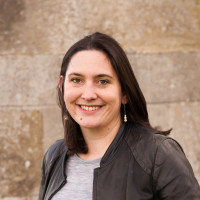
So yes, I'm Allan, and I am, I guess, the president of the DIAF, because that was what the other two weren't. We all got the jobs, and so the purpose of where I want to start here is just to do a little bit of an update as to what we've been doing, what we've done with things, some new things that are coming up, and some changes that we're doing. And then we have some of our awardees that are actually with us here, and we can talk with them and dive into that.
So first of all, we have now, as I push the button, Elizabeth's face is going to show up, but it'll only be there for a second, she tells me. So we have that.
Now, what do I do? Do I press something to make it start?
Okay, let's start it. Yes, so I chose to go to IIW. So the aspects that I was really interested in were a lot of the how digital identity is addressing the equity concerns of different portions of the population, having different socioeconomic levels, how to make sure that when we roll out digital identity to everybody, to not exclude any particular portions of the population.
And I found that there's a lot of different discussions that weren't necessarily strictly about that topic, but that we're related in how to solve a lot of these problems with tech, like what happens if you only have one device? How do you recover from losing your IDs and all that kind of stuff? And on the second day, I actually did participate in that rush to try and hold a session, particularly the underserved populations.
And in that session, we discussed what we're doing in New Zealand, how we're trying to address for young people the issue of digital IDs by using information held by the schools. Other participants in that discussion pointed out that in other countries, it could be achieved in different ways. You could have village elders attest someone's identity. You could have trusted people coming from different sources. So there wasn't necessarily any one solution, but there are a range of solutions that apply, depending on what culture you're coming from.
One of the things that's a bit more recent is, for me, I've been elected onto the Digital Identity New Zealand board. It's one of the SME and startup category positions. I essentially campaigned on focusing around the equity and inclusion aspect, especially for young people, which is a lot of what we do at Maimaki. And I think that kind of resonated with a lot of people where they looked at where things were going and kind of saw that maybe there are some gaps in some places where my input would be appreciated.
So, yeah, I'm looking forward to making some inputs on that and improving the situation here. And hopefully what we do here gets replicated abroad. So this is Stefan.
Stefan, I believe, and Elizabeth and I were talking about this, I believe it was 2024 that he was, won in 24, out of New Zealand and dived into it. So one of the things he went to, as he said, was IIW. And really exciting that going back to New Zealand and getting elected to the board and things like that, it sort of really just highlights the things that we are trying to do at DIAF.
So a little bit of the history and how we got here and what our mission out of it is, is that those of us who have been around for a while recognize the fact that it's often really difficult to come to things like this or get involved in the community. There's a travel expense, there's hotel expenses. It's expensive and difficult to come to do with it and it's hard to get someone else to pay for it. And so the purpose that we were trying to do, how can we bring new people who are going to contribute into the community into our space? Stefan is a perfect example of that, right?
This is somebody who's getting into digital identity and now is an active leader in the community down there. So our goal, and I'll get into the history on it in just a second, but our goal is to remove this financial roadblock or the problems of getting involved into the community and invest in the future leaders, the people who are coming up and are going to be taking up these stages next year, five years from now, ten years from now, and we're looking into the new technology and all of the things we get to address. So how do we start? I notice a few of the OIDF people sitting inside of here.
Originally, we started off as a recognition. Kim Cameron started, Mike and the OIDF organization started up a Kim Cameron Award, and I won this with the, that was what, 23?
Okay, I've got a timeline. I'll go into the timeline. Subsequent to that, there was Victoria, which seemed to make sense to get into that, and we moved the, sort of moving it into the Digital Identity Foundation because the discussions we had that seemed like a dedicated organization specifically focusing on those missions that we just spoke about seemed like the right way to do things. So our timeline, okay, 2022, the first Kim Cameron Award.
Moving up, 2024, the Victoria Award when we were inside of the DIAF. Then we started dealing with the U.S. government to try and deal with 501c3 certification. They lost our letters. We lost their letters. We weren't talking to each other.
Finally, the beginning of this year, we actually got 501c3 certification from the taxes. Yay.
So 501c3, for those of you who are not intimately familiar with the U.S. tax code, is a nonprofit, but the nice part about it is it is a nonprofit where donations to the organization can be deducted from your taxes. So it becomes a way for people to give donations and recognize their deductions or for their taxes on that. It's a nice funding model for us. So eventually, we got through with that, and we got that set up officially inside of that, and you can see the timeframe between our incorporation and the 501c3 took quite a while.
We've also, I don't know if I'm allowed to announce, but I'm going to do it anyway, that we actually have acquired diaf.org, which is a lot easier than typing that really long URL now. So we've got diaf.org and a redoing of the website to try and build up that visibility. So quickly to sort of go through the awards where we have it, we've got the Ken Cameron Award. To recognize his contributions because he is an absolute pillar in this community. I think many of us who have been around for a while heard his talks and felt his leadership within this space.
And this was the motivation of how do we get new people, how do we enable new people to come in and become part of that community. We have some awardees. This was the Kim Cameron Award 2026, and I'm probably going to mess up which conferences are going to which, but there's IRW. So we've got multiple organizations and multiple conferences that people want to be able to go to. Subsequent to that, we had the Vittorio Bertucci Award.
And again, another one of those people that many of us recognize, many of us sat inside of his talks, and many of us got explained things that suddenly make sense when Vittorio explained those. His passion was that for standards. And so the separate award that we have for the Vittorio Award is to enable people, again, to get rid of those financial roadblocks, to get involved in standards organizations. So in 2025, we haven't done the 2026 ones yet, but the 2025, you want to do them again since you run all of that? So Apoorva went to IIW, and he's still in the process of spending his award.
And Chris Phillips went to an IIW and an IETF. So the intent of the Vittorio Award was to make it a little bit more longer term, so that people can actually get involved in the standards bodies, not just once. But as we all know, it's always the ongoing effort that we have when we want to get people involved.
And then, of course, we have some speakers here, right? Well, mostly here. We have Sachin, I hope, is online. He will be for the panel. He will be for the panel. And we have Rachel sitting right over here. Jen is in Ideniverse. Jen's in Ideniverse. I'll explain, actually, because we have four speakers. What this slide is meant to be is the people who have their own sessions that got accepted themselves on their own. So Sachin did a presentation yesterday here at EIC, remotely, but he did it nonetheless. Rachel is doing a Trust Frameworks presentation, and she sat on a panel yesterday.
And then Jen, I think she's doing several things at Ideniverse, actually. And then, of course, we have a panel.
And then, Jen, I think she's doing several things at Ideniverse, actually. And Authenticate. She's in Authenticate.
Oh, hot off the presses, I think. Very good. Which is exactly the intent and the combination of the intent of what the award is trying to achieve. This is the sort of gang of thieves that try and runs this with one particular face missing. And we'll get to that one in just a second. But there's Aaron Crow, myself, and Ian Glazer, and we're kind of driving the organization and putting those things, getting the awards set up and trying to make things happen, except to do all of the work. And we'll get to that in just a second.
Elizabeth does all of the work, and is going to continue doing all of the work in a few minutes when I'm done with this. All of the work of getting the awardees, getting the proposals to come back, setting up the evaluation and judging, and actually choosing the candidates that we're going to send off. A little bit about the future. There's some things that we are looking at, especially now that we have our 501c3 certification. We can start taking donations. That's called donations from people.
We're looking at other ways and constantly looking at other ways to be able to facilitate the mission. How do we lower the bar for people to get involved in all of the things that we do? This is education. This is facilitating the community and meetups. It's going to conferences. It's producing content for all of the various things we produce content for, and anything else. So my sort of request, if you have an idea for a way for us to spend your money, please come and talk to me. Because these are really valuable. That money enables us to do these things.
And talking about the money, we have some sponsors that we're incredibly grateful for, that have given money towards the event, whether it be conferences like this and tickets and attendance, whether it be to actually cover things like airfares and accommodations and things like that, or focusing on sort of specific projects. And so we are incredibly grateful for those sponsors and what they're doing for us.
Also, through the website that we've had, many of you guys, many of the people in the bigger community who are contributing and trying to help make that happen. So thank you very much for that, the efforts that you enable us to be able to do that. Yes? You could also thank our judges. I didn't make a slide for them. We didn't have a slide?
Well, I guess the judges get a black slide. We have a couple in the audience here. The judges have to do an incredible piece of work because we get all of these submissions in. The judges then have to read each of those submissions and evaluate, are these people, where is the content coming? It's a very difficult thing to actually choose who we get to sponsor. It would be great to be able to facilitate for all of them, but we have to choose some to go to those and the judges do an incredibly hard job to get to that. So also the judges, thank you very much for all of the efforts.
And with that, I am going to call on Elizabeth to now alligator wrestle everybody else. Sure. I'm just going to do a segue at this moment because it's time for Rachel's presentation. We've got four minutes.
Yeah, of course, we have some time left for questions and we do have questions. And we have a strange person in the back corner. Who's that guy?
Again, just a quick reminder, please raise your hand and we will give you the microphone. When are we going to see an Andrew Nash award for achievements in identity as a business? Hopefully sometime soon. So the challenge on that has been to work out what the focus of the award will be. Obviously many of us have been also influenced by Andrew. Andrew was famous for his mentoring and facilitating things. And so part of the challenge working with Pam and talking about that is the challenges of actually putting together how the funding works and what they want to be able to focus on.
But obviously recognizing the work of both Andrew and Pam is definitely on our minds. We don't have a time frame for it, but it would make a lot of sense. How do we help? Remember that money thing? Yes. The QR code.
No, that goes to the questions, unfortunately. That is absolutely right. If you have access to donors or people who have money that they can spend into that, that definitely makes the process easier and streamlines the process. Diav.org. So how can we collectively spread the word about you? Tell everybody and actually keep track of the call for papers, the call for attendees. Follow us on LinkedIn. Follow us on LinkedIn, all the social media things.
But if you know of people that belong in the community that are unable or do not have the resources to be able to come to the community, when we go out and ask for nominees, that's a great time to be able to ask them to get involved. And follow us so that you know when the award cycle opens up. Share it on your platforms, your socials. We're only really visible on LinkedIn. I'll try and do more. I kind of don't do X anymore. Don't judge me. I don't know if anyone does it. Share it where you are. Share it with your communities.
Be looking out for people who you think should be applying for this award and let them know when it's open. And also, just sort of in addition to that, it's not only these awards. If you see things where this community can facilitate the underlying mission, right, to facilitate and enable people to get involved, talk about that. Talk about that to us and say this would be a good place for us to be involved. And that does take us to Rachel's talk. So that's diaf.org. If it's not obvious how to donate, let me know.
Well, thank you very much, Ellen and Elizabeth.