Why don't you like this?



Description
Short Summary
Interesting Facts
Notable Quotes
Recommendations
Takeaways


Executive Summary
Application Programming Interfaces (APIs) have evolved from humble beginnings as technical tools for developers to become the connective tissue of our digital world. They orchestrate business logic, drive automation, and power integrations across mobile apps, cloud platforms, industrial IoT systems, and, in the latest round of disruptive innovation, Generative AI. Every layer now embeds APIs into digital transformation making them essential for building agile, scalable, and intelligent digital enterprises.
The emergence of AI-native applications has accelerated this trend. APIs no longer just support business operations but define them. Modern AI agents interact with each other and external services almost exclusively over APIs. Protecting AI models from prompt injection or misuse is futile if the APIs that interface with those models are left unguarded. In other words, you cannot secure AI without securing APIs: a fact many organizations still overlook in their rush to embrace AI.
KuppingerCole has followed the API space for over a decade, and it has evolved from basic management utilities into a vast and complex ecosystem. As organizations embrace multi-cloud, microservices, and composable architectures, the role of APIs has expanded in both scope and complexity. They are no longer a backend feature, but the product, the risk vector, and often the biggest compliance challenge.

Figure 1: AI growth leading to API complexity explosion
Today’s API environments are not limited to REST. They encompass diverse protocols like GraphQL and gRPC, streaming interfaces such as Kafka and MQTT, and asynchronous communication models designed for loosely coupled microservices. These modern API protocols offer performance and flexibility but also amplify the attack surface, increase operational complexity, and expose architectural blind spots.
The recently introduced Model Context Protocol (MCP) is already gaining strong traction. It has emerged as the de facto standard designed to facilitate structured, dynamic, and secure communication between AI agents and external IT systems, including APIs, databases, software tools, and sensor networks. MCP provides a universal interface for context-aware reasoning, real-time decision-making, and modular orchestration of tasks by allowing AI agents to interact with tools and environments in a deterministic, explainable way.
Like REST two decades ago, MCP was not designed with strong security controls in mind, and unchecked implementation of such interfaces can lead to massive data breaches and even more catastrophic scenarios that until recently firmly belonged to the realm of science fiction. Also, emerging technologies like WebAssembly allow applications to execute API logic in isolated sandboxes at the edge or in the browser, introducing new security and observability challenges that traditional tools are ill-equipped to handle.
Even the traditional API gateway, once the centerpiece of API management, is losing its prominence. In fast-moving, containerized, service-mesh-powered environments, centralized gateways are being replaced, or at least augmented, by distributed, autonomous policy enforcement components that operate in real-time and in context. This evolution has fundamentally reshaped the API management and security market. API security has matured into an industry of its own, one that now addresses a broad and growing range of challenges, many of which fall outside the conventional security playbook.
The API security and management market is no longer a niche sector within application infrastructure or network security: it has become a strategic pillar of modern cybersecurity. APIs have emerged as the de facto conduit for exposing business logic, data, and services. They are now both the lifeline of innovation and a critical segment of enterprise security.
Key Findings
- APIs are the backbone of AI: Every LLM integration, agentic AI workflow, or autonomous decision system depends on API calls. Most AI-related vulnerabilities, including prompt injection, data exfiltration, or model abuse, are exposed through insecure APIs.
- Shadow APIs proliferate: Many organizations struggle with shadow APIs: undocumented, forgotten, or unmonitored interfaces that create unmanaged attack surfaces and compliance blind spots.
- Business logic attacks are rising: Unlike traditional vulnerabilities, these attacks exploit the intended functionality of APIs to gain unauthorized access or manipulate data, bypassing rule-based defenses.
- “Shift Left” meets “Shift Right”: While API security testing earlier in the development lifecycle (shifting left) remains a growing trend, real-time runtime protection and observability (shifting right) are equally vital. Effective strategies now span the full API lifecycle.
- Multi-gateway and hybrid API fabrics are now the norm: Modern architectures often include multiple gateways, service meshes, and other API management tools deployed across environments, requiring unified management and consistent policy enforcement across them.
- Edge-native enforcement is gaining momentum: APIs deployed in edge environments require local policy enforcement and observability, challenging traditional centralized architectures.
- Compliance is a growing driver: With regulations like the EU AI Act and GDPR tightening, securing APIs is no longer optional: it is a regulated requirement for any organization handling sensitive personal or operational data.
- The market continues to consolidate: In the past year alone, we have seen multiple acquisitions of key API security vendors. These moves reflect a growing trend of integrating API security deeper into broader application delivery and observability platforms.
- The Overall Leaders in API Security and Management, in alphabetical order, are 42crunch, Akamai, Axway, Broadcom, Cequence Security, Forum Systems, Google, Gravitee, Imperva, Kong, Qualys, Salt Security, Traefik Labs, Wallarm, and WSO2.
Market Analysis
Traditionally, the API landscape was shaped by vendors offering API gateways, developer portals, and traffic management tools, geared toward performance, availability, and developer enablement. However, as attackers shifted their attention toward APIs as entry points, the industry began to pivot. The rise of API security vendors offering specialized capabilities such as discovery, behavioral analysis, runtime protection, and compliance has redefined the market.
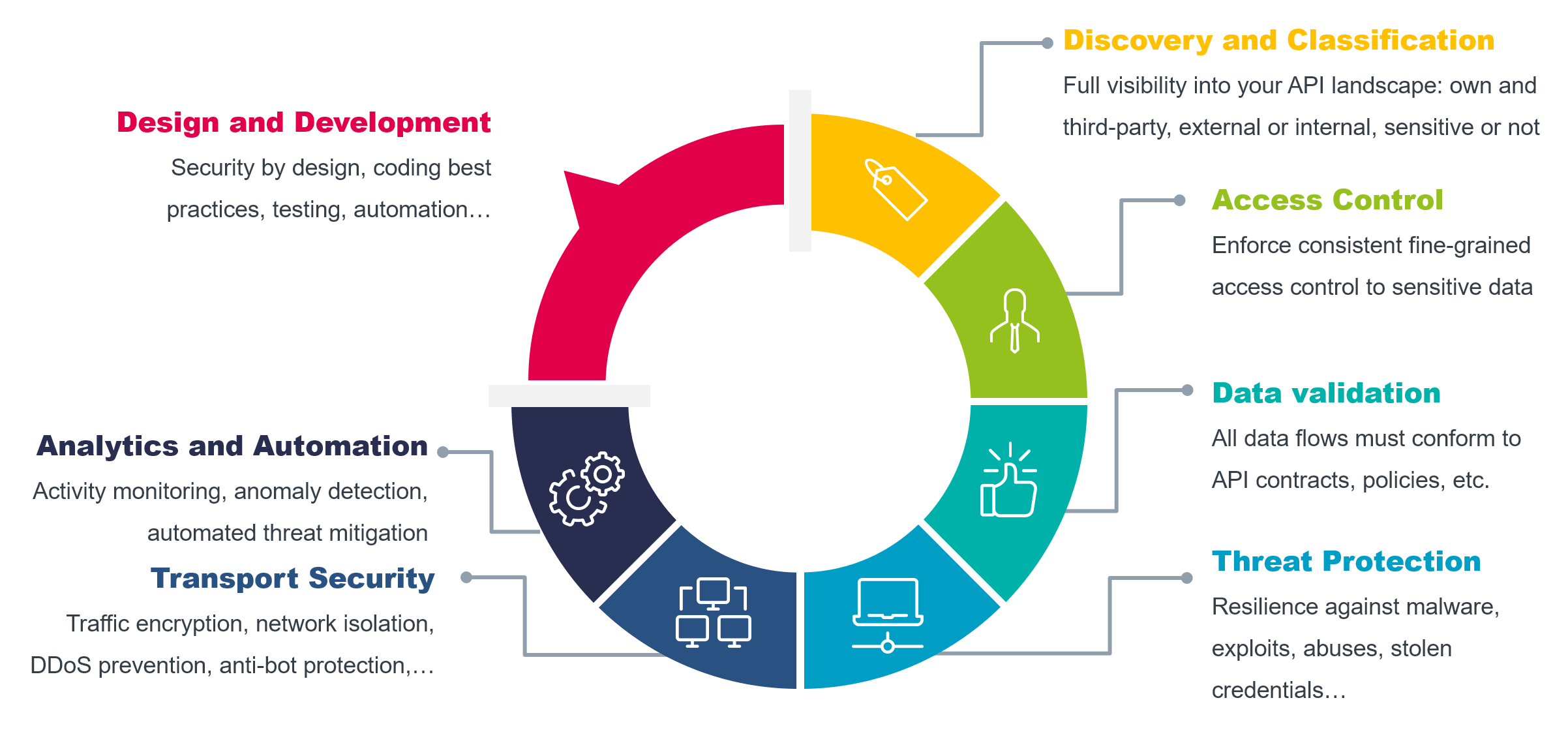
Figure 2: The scope of modern API security
The line between traditional API management and modern API security has blurred to the point of irrelevance. Legacy gateways now evolve into full-featured security platforms, while pureplay security vendors expand their offerings to cover API discovery, posture management, and traffic analysis. API security solutions now operate across every phase of the API lifecycle, from initial design and automated testing, through discovery and runtime protection, to post-mortem forensics and behavioral analytics. This end-to-end approach reflects the market’s shift toward holistic API protection, where security is not a feature, but a strategy.
Several major trends are reshaping the market for the years to come:
The number of APIs in a typical enterprise has grown exponentially. According to Postman’s 2024 State of the API report, 92% of organizations increased API usage over the past year, with an average enterprise operates hundreds to thousands of APIs, many of them undocumented or unmonitored “shadow APIs”.
The widespread adoption of large language models and AI agents has dramatically expanded the enterprise attack surface. APIs now serve as the communication layer between AI and IT. Risks such as prompt injection, data leakage, and rogue agent behavior must be addressed with multiple cybersecurity controls, and enforcing them at the API layer is the most universal and sustainable approach.
With regulatory frameworks such as GDPR, HIPAA, PCI DSS, and the EU AI Act now enforcing specific requirements for data protection and interface governance (to say nothing about regulations that directly target API or AI management systems like ISO 42001 and NIST SP 800-228), API security is no longer just a best practice, it’s a strict requirement for many critical and regulated industries. API logs, access policies, and data flows must be audit-ready, consistently protected, and access to them must be governed by strict and universal policies.
Beyond that, several emerging technologies are beginning to influence the evolution of APIs:
As applications move closer to the edge to meet low-latency, high-resilience requirements, API security must follow. Traditional centralized models cannot scale to protect APIs at the edge. Security enforcement must become decentralized, lightweight, and autonomous. Policy-as-code, local data residency enforcement, and edge-native observability are becoming essential components of modern API security fabrics.
WebAssembly (Wasm) is gaining traction as a secure, portable execution environment for serverless and embedded workloads. APIs delivered via Wasm modules challenge traditional gateway and service mesh architectures. They enable near-native performance, sandboxed execution, and extreme portability, but they also blur the lines between application logic and infrastructure. API security solutions must evolve to inspect, validate, and enforce policies on Wasm-based APIs in real time, even when traditional inspection points are bypassed.
With enterprise IT increasingly accountable for its environmental footprint, API design and infrastructure decisions are coming under scrutiny. Efficient APIs that reduce redundancy and enable smart caching can directly contribute to sustainability goals. Green APIs are becoming a relevant design and operational consideration, especially in large cloud-native environments.
At the same time, the market is increasingly shaped by vendor convergence. Security platforms now integrate with developer tools, CI/CD pipelines, service meshes, IAM, and SIEM systems, forming an “API security fabric” that blends into the broader enterprise IT ecosystem. This convergence is favored by enterprise customers who now expect a platform approach, not a combination of point solutions.
Ultimately, the current market is not just about picking a tool to secure APIs. It’s about building a strategy to manage risk, enforce governance, and maintain compliance across the entire API landscape, including the interfaces that power your AI. In the upcoming years, the market will continue to grow, fueled by increasing complexity. The convergence of application modernization, AI adoption, and regulatory pressure places APIs at the center of enterprise risk and innovation. Vendors that can deliver integrated, intelligent, and adaptable platforms will lead the market.
Delivery Models
API management and security solutions are expected to support highly heterogeneous environments spanning Kubernetes clusters, hybrid clouds, on-premises systems, and edge devices. They are designed to be loosely coupled, flexible, scalable, and environment-agnostic, with a goal to provide consistent functional coverage for all types of APIs and other services. While traditional gateways remain a staple of API management, deployment models now include:
- Service meshes for microservice interconnectivity.
- Inline and out-of-band sensors for runtime traffic analysis.
- SaaS control planes for global policy enforcement and analytics.
- Edge deployments for low-latency, high-resilience enforcement.
These edge deployments increasingly require lightweight, decentralized enforcement mechanisms capable of operating with limited bandwidth, intermittent connectivity, and region-specific compliance constraints.
Pureplay API security solutions that rely on real-time monitoring and analytics may be deployed either in-line, intercepting API traffic, or rely on out-of-band communications with API management platforms. For highly sensitive or regulated environments, customers may opt for fully on-premises deployments. Complex and highly distributed projects, especially those that face data sovereignty requirements, will benefit from edge-based deployments.
However, management consoles, developer portals, analytics platforms, and many other components are usually deployed in the cloud to enable a single pane of glass view across heterogeneous deployments. A growing number of capabilities are now being offered as Software-as-a-Service (SaaS) with consumption-based licensing.
Multi-cloud and hybrid deployment is no longer an option; it is the baseline requirement for modern enterprise security architectures. Vendors must support decentralized enforcement while providing centralized visibility.
Required Capabilities
We are looking for solutions that cover at least several of the following key functional areas, either focusing on more traditional API management or specializing in securing existing APIs (ideally, combining both approaches in a single integrated platform).
API Design and Testing – these functions cover the earliest stages of the API lifecycle such as API contract design, transformation of existing APIs, or modernization of legacy backend services, as well as creating and managing policies that govern API performance, availability, and security.
API Discovery, Classification, and Inventory – without a comprehensive, accurate, and dynamically updated inventory of all APIs across all corporate IT environments (on-premises, cloud-native, hybrid, Kubernetes, etc.) any security program will not be able to provide consistent visibility, governance, and protection across the entire API attack surface.
Microservice Management – traditional API gateways do not scale well for modern distributed architectures and must be augmented with modern service management capabilities such as the Istio service mesh, which provides native connectivity, monitoring, and security that scale for hundreds and thousands of microservices.
Developer and CI/CD Tools – exposing APIs for consumption, providing documentation and collaboration functions, onboarding and managing developers and their apps are among the functions we are looking for here, as well as integrations into existing continuous delivery pipelines of modern application development projects.
Identity and Access Control – Solutions should support multiple identity types, standards, protocols, and tokens while providing flexible dynamic access control capable of making runtime context-based decisions. This does not only apply to the APIs themselves, but management interfaces and developer tools as well.
API Vulnerability Management – discovering existing APIs and analyzing their conformance to API contracts, security best practices, and corporate policies is the only truly proactive approach towards API security. Intelligent prioritization of discovered vulnerabilities by business risk assessment improves both developer productivity and overall security posture.
Analytics and Security Intelligence – continuous visibility and monitoring of all API transactions and administrative activities allow for quick detection of not just external attacks, but infrastructure changes, misconfigurations, insider threats, and other suspicious activities.
Integrity and Threat Protection – securing APIs and services from hacker attacks and other threats requires a multilayered approach to address both transport-level attacks and exploits specific to messaging protocols and data formats.
Strong Internal Security – administrative and developer access to the management console must be secured, with role-based access control implemented across the whole platform and delegated administration capabilities added for scalability and decentralization. Multifactor authentication and audit trail for all activities are recommended.
Hybrid, Multi-cloud Deployment – supporting heterogeneous distributed environments including cloud, containers, microservices, and serverless platforms to be able to provide consistent visibility, analytics, and protection across the entire corporate IT is a critical success factor for any API security solution.
AI Security – expanding the security coverage to protecting application interfaces of large language models against both general-purpose threats like data leaks and LLM-specific risks like prompt injection. Incorporating AI capabilities to improve API security will be considered a major rating boost, too.
Compliance – with the increasing proliferation of API and AI regulations, customers are looking for solutions that can address the burden of complexity of complying with those regulations.
Integrations
Since we do not expect every vendor to be able to provide complete API management and security coverage on their own, seamless interoperability both with the vendor’s other own products and with existing third-party products is crucial. A strong focus is put on integration into existing security infrastructures to provide consolidated monitoring, analytics, governance, or compliance across multiple types of information stores and applications.
We expect modern API security solutions to support at least some of the following integrations:
- Popular API management platforms, gateways, service meshes, etc.
- Development tools for integrating into DevOps/DevSecOps processes.
- IAM/IAG platforms for identity management and access governance.
- SIEM/XDR platforms for unified monitoring and security intelligence.
- Additional security solutions like data protection, DLP, WAF, Bot Defense, etc.
Naturally, an API management or security solution also needs to provide its own set of APIs for integration, automation, monitoring, and other purposes.
For more on our methodology and evaluation criteria, refer to the KuppingerCole Leadership Compass Methodology.
Leadership
In the full chapter: Overall Leadership, Product Leadership, Innovation Leadership, and Market LeadershipCreate a free account
Product/Vendor evaluation
In the full chapter: Spider graphs, 42Crunch – API Security Platform, Akamai – API Security, Akto – Akto, Axway – Amplify API Management Platform, Broadcom – Layer7 API Management, Cequence Security – Unified API Protection, Check Point – CloudGuard WAF, Cloudflare – API Shield, Curity – Identity Server, Ergon – Airlock Secure Access Hub, F5 – Distributed Cloud API Security, Forum Systems – Forum Sentry API Security Gateway, Google – Apigee API Management, Gravitee – API Management Platform, Imperva – Application Security, Kong – API Platform, Moesif – Moesif, Nevatech – Sentinet API Management, Pynt – API Security, Qualys – TotalAppSec, Salt Security – API Security Platform, Traefik Labs – Traefik Hub Platform, UBIKA – UBIKA WAAP Gateway and UBIKA WAAP Cloud, Wallarm – Advanced API Security, and WSO2 – API Manager, Integrator, Identity Server, Asgardeo, Choreo, Bijira, DevantCreate a free account
Vendors to Watch
In the full chapter: Akana by Perforce, Apache APISIX, Apiiro, Barracuda Networks, Boomi, Cerbos, Citrix, Data Theorem, Fastly, HAProxy Technologies, IBM, Link11, Mayhem, MuleSoft, Ping Identity, PlainID, Radware, Spherical Defence, SmartBear, StackHawk, Traceable by Harness, Tyk, and ZuploCreate a free account
Related Research
Leadership Compass: API Security & Management (2023)
Buyer's Compass: API Management and Security
Leadership Compass: Web Application Firewalls
Leadership Compass: Policy-Based Access Management
Advisory Note: The Role of APIs for Business
Whitepaper: The Dark Side of the API Economy
Executive View: Cequence Security Unified API Protection
Executive View: Curity Identity Server
Executive View: Forum Sentry API Security Gateway
Executive View: WSO2 Choreo
Executive View: Noname API Security Platform
Rising Star: Zuplo
Copyright
© 2026 KuppingerCole Analysts AG. All rights reserved. Reproducing or distributing this publication in any form is prohibited without prior written permission. The conclusions, recommendations, and predictions in this document reflect KuppingerCole Analysts' initial views. As we gather more information and conduct deeper analysis, the positions presented here may undergo refinements or significant changes. KuppingerCole Analysts disclaims all warranties regarding the completeness, accuracy, and adequacy of this information. Although KuppingerCole Analysts' research documents may discuss legal issues related to information security and technology, we do not provide legal services or advice, and our publications should not be used as such. KuppingerCole Analysts assumes no liability for errors or inadequacies in the information contained in this document. Any expressed opinion may change without notice. All product and company names are trademarks™ or registered® trademarks of their respective holders. Their use does not imply any affiliation with or endorsement by them.
KuppingerCole Analysts supports IT professionals with exceptional expertise to define IT strategies and make relevant decisions. As a leading analyst firm, KuppingerCole Analysts offers firsthand, vendor-neutral information. Our services enable you to make decisions crucial to your business with confidence and security.
Founded in 2004, KuppingerCole Analysts is a global, independent analyst organization headquartered in Europe. We specialize in providing vendor-neutral advice, expertise, thought leadership, and practical relevance in Cybersecurity, Digital Identity & IAM (Identity and Access Management), Cloud Risk and Security, and Artificial Intelligence, as well as technologies enabling Digital Transformation. We assist companies, corporate users, integrators, and software manufacturers to address both tactical and strategic challenges by making better decisions for their business success. Balancing immediate implementation with long-term viability is central to our philosophy.
For further information, please contact clients@kuppingercole.com.
Executive Summary


Leadership
Product/Vendor evaluation
Spider graphs
42Crunch – API Security Platform
Akamai – API Security
Akto – Akto
Axway – Amplify API Management Platform
Broadcom – Layer7 API Management
Cequence Security – Unified API Protection
Check Point – CloudGuard WAF
Cloudflare – API Shield
Curity – Identity Server
Ergon – Airlock Secure Access Hub
F5 – Distributed Cloud API Security
Forum Systems – Forum Sentry API Security Gateway
Google – Apigee API Management
Gravitee – API Management Platform
Imperva – Application Security
Kong – API Platform
Moesif – Moesif
Nevatech – Sentinet API Management
Pynt – API Security
Qualys – TotalAppSec
Salt Security – API Security Platform
Traefik Labs – Traefik Hub Platform
UBIKA – UBIKA WAAP Gateway and UBIKA WAAP Cloud
Wallarm – Advanced API Security
WSO2 – API Manager, Integrator, Identity Server, Asgardeo, Choreo, Bijira, Devant
Vendors to Watch
Akana by Perforce
Apache APISIX
Apiiro
Barracuda Networks
Boomi
Cerbos
Citrix
Data Theorem
Fastly
HAProxy Technologies
IBM
Link11
Mayhem
MuleSoft
Ping Identity
PlainID
Radware
Spherical Defence
SmartBear
StackHawk
Traceable by Harness
Tyk
Zuplo
Related Research
Copyright


















































Table of Contents


Table of contents
Close
Executive Summary
Leadership
Product/Vendor evaluation
Spider graphs
42Crunch – API Security Platform
Akamai – API Security
Akto – Akto
Axway – Amplify API Management Platform
Broadcom – Layer7 API Management
Cequence Security – Unified API Protection
Check Point – CloudGuard WAF
Cloudflare – API Shield
Curity – Identity Server
Ergon – Airlock Secure Access Hub
F5 – Distributed Cloud API Security
Forum Systems – Forum Sentry API Security Gateway
Google – Apigee API Management
Gravitee – API Management Platform
Imperva – Application Security
Kong – API Platform
Moesif – Moesif
Nevatech – Sentinet API Management
Pynt – API Security
Qualys – TotalAppSec
Salt Security – API Security Platform
Traefik Labs – Traefik Hub Platform
UBIKA – UBIKA WAAP Gateway and UBIKA WAAP Cloud
Wallarm – Advanced API Security
WSO2 – API Manager, Integrator, Identity Server, Asgardeo, Choreo, Bijira, Devant
Vendors to Watch
Akana by Perforce
Apache APISIX
Apiiro
Barracuda Networks
Boomi
Cerbos
Citrix
Data Theorem
Fastly
HAProxy Technologies
IBM
Link11
Mayhem
MuleSoft
Ping Identity
PlainID
Radware
Spherical Defence
SmartBear
StackHawk
Traceable by Harness
Tyk
Zuplo
Related Research
Copyright









