Why don't you like this?



Description
Short Summary
Interesting Facts
Notable Quotes
Recommendations
Takeaways


Introduction
Organizations face persistent cyber threats that target infrastructure, applications, cloud workloads, identity systems, and connected devices. Attack techniques continue to advance, yet many organizations struggle to operate effective security operations because they lack skilled staff and cannot maintain continuous monitoring. MDR has therefore become an essential component of enterprise resilience. MDR combines advanced analytics, automation, and human expertise to detect and contain attacks quickly while supporting continuous improvement of security posture.
MDR has matured from managed alert handling into a service model that focuses on validated detections, contextual investigations, and coordinated response. Vendors deliver these outcomes through managed or co-managed operating models that span endpoint, network, identity, cloud, and application telemetry.
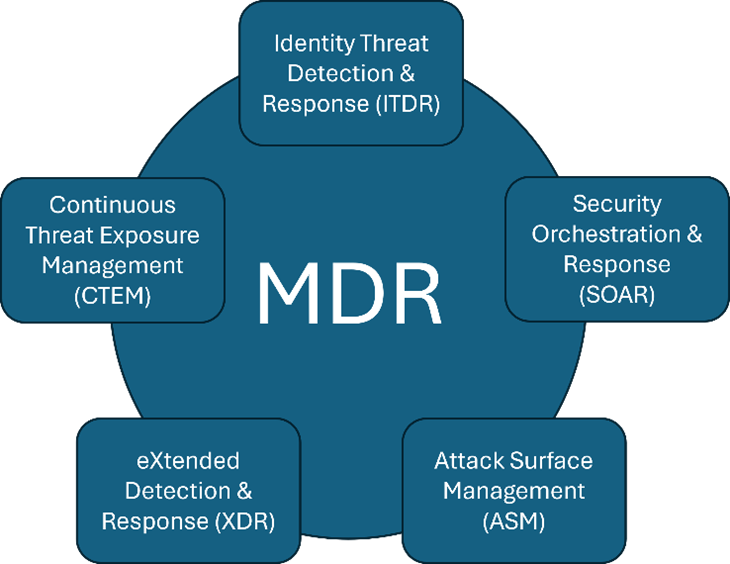
Figure 1: Integrated capabilities of modern MDR solutions
MDR now incorporates capabilities from eXtended Detection and Response (XDR), Security Orchestration, Automation, and Response (SOAR), Identity Threat Detection and Response (ITDR), Continuous Threat Exposure Management (CTEM), and Attack Surface Management (ASM), while frequently leveraging Security Information and Event Management (SIEM) platforms as the underlying data aggregation and correlation layer. This convergence enables unified visibility and coordinated defense across all computing environments.
Organizations adopt MDR because they need continuous monitoring, fast and accurate detection, and fast and effective response. MDR providers supply human analysts, who investigate alerts, correlate activity, and determine whether incidents require containment. These services reduce Mean Time to Detect (MTTD) and Mean Time to Respond (MTTR) by combining automated analytics with targeted human review. MDR also improves the value of existing tools because providers tune controls, refine detections, and create integrations that many customers would not have the capacity to maintain on their own. MDR services also help customers meet regulatory and security expectations under frameworks such as the European Union’s Network and Information Security Directive 2 (NIS2) and the US Health Insurance Portability and Accountability Act (HIPAA), which require demonstrable monitoring and Incident Response (IR) capabilities.
MDR capabilities can also support compliance and assurance objectives under widely adopted standards and regulatory schemes, including the International Organization for Standardization’s Information Security Management Systems standard (ISO 27001) and Common Criteria for Information Technology Security Evaluation (ISO 15408), the Payment Card Industry Data Security Standard (PCI DSS), the UK Cyber Essentials scheme, Germany’s Cloud Computing Compliance Criteria Catalogue (C5), France’s SecNumCloud certification framework, the US Federal Information Processing Standard for Advanced Encryption (FIPS 197) and for Security Requirements for Cryptographic Modules (FIPS 140-2), and the US National Institute of Standards and Technology Special Publication 800-57: Recommendation for Key Management (NIST SP 800-57).
Identity has become a primary attack vector, so MDR providers increasingly include identity-centric analytics, credential misuse detection, and monitoring for anomalous access behaviors. This aligns MDR with ITDR requirements and reflects the importance of identity in modern attacks. MDR providers also incorporate exposure management functions that identify vulnerabilities, misconfigurations, and risky behaviors before adversaries can exploit them. Many vendors integrate exposure data with detection workflows to give customers clearer insight into attack paths and priorities for remediation and improvement of defenses.
Automation plays a central role in MDR. Vendors apply Machine Learning (ML), User and Entity Behavior Analytics (UEBA), and increasingly Large Language Models (LLMs), including Generative Artificial Intelligence (GenAI), to accelerate alert triage, streamline investigations, and support analyst workflows. Detection logic remains grounded in validated telemetry correlation and behavioral models, while GenAI is primarily used to summarize incidents, assist investigations, and improve reporting efficiency.
Customers expect transparency about how AI models influence detections and recommendations, leading vendors to document model behavior, training boundaries, and decision support limitations. Response automation continues to expand, with many services offering orchestrated containment actions through established playbooks. These automations allow MDR teams to address routine threats quickly while focusing human analysts on complex investigations and strategic tasks.
MDR supports organizations of all sizes. Smaller organizations rely on MDR as their primary security operations function due to skill shortages and the much lower cost of outsourcing compared with building and staffing an equivalent capability internally. Larger organizations use MDR to extend coverage, add expertise, or co-manage detections and IR actions with their internal teams. Co-managed MDR has become a mainstream delivery model because it gives customers shared visibility into investigations while delegating operational work to an expert provider.
Industry-specific MDR offerings continue to grow. Vendors develop tailored content packs, detections, and reporting for sectors such as healthcare, finance, and manufacturing. MDR services also extend into Operational Technology (OT), industrial automation, and connected devices. These environments require specialized telemetry, context, and response actions, so vendors invest in domain-specific expertise and integration capabilities.
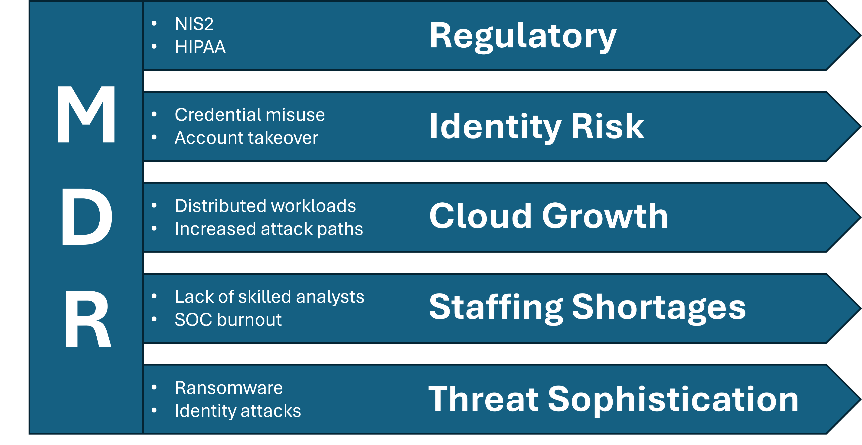
Figure 2: MDR market drivers
Customers now evaluate MDR providers based on delivered outcomes rather than tool checklists. They seek measurable improvements in detection efficiency, response speed, containment quality, and posture enhancement. Vendors that demonstrate these improvements through transparent reporting and evidence-based metrics have a competitive advantage. MDR, therefore, plays a central role in enterprise security strategy because it connects detection, analysis, response, exposure management, and compliance into a single operational function at an affordable cost.
This Leadership Compass is designed as a tool to help organizations identify their requirements and map them to the capabilities offered by specific vendors, taking into consideration the size, growth, skills, and budget of the customer organization. To better understand the fundamental principles this report is based on, please refer to the KuppingerCole Analysts Research Methodology.
Key Findings
-
MDR has become a unified security operations function that integrates detection, investigation, response, and exposure management across multiple telemetry domains.
-
Outcome-focused service delivery drives vendor differentiation because customers require measurable improvements in detection and response efficiency.
-
Identity-centric analytics strengthens MDR because identity compromise remains the leading attack vector across enterprise environments.
-
ML and LLMs support triage, investigation, and reporting, improving analyst productivity and reducing operational workload.
-
Exposure management, continuous assessment, and attack surface insights expanded MDR from reactive activity into ongoing posture improvement.
-
All vendors in the report offer co-managed MDR adoption increased because customers want shared visibility, collaborative investigations, and control of response decisions.
-
MDR providers offer specialized services for regulated sectors to support reporting requirements and tailored detection content.
-
Integration and interoperability across diverse tools have become requirements because organizations need unified visibility across distributed environments.
Market Analysis
In the full chapter: Delivery Models and Required CapabilitiesCreate a free account
Leadership
Selecting a vendor of a product or service must not be based only on the information provided in this KuppingerCole Analysts Leadership Compass. The Leadership Compass provides a comparison based on standardized criteria and can help identify vendors that should be considered for further evaluation. However, a thorough selection process should include a detailed analysis and a Proof of Concept (PoC) or pilot phase, based on the specific criteria of the customer.
Overall Leadership
Every vendor's name and exact position, and the analysis of this chartSubscribe
Product Leadership
Every vendor's name and exact position, and the analysis of this chartSubscribe
Innovation Leadership
Every vendor's name and exact position, and the analysis of this chartSubscribe
Market Leadership
Every vendor's name and exact position, and the analysis of this chartSubscribe
Product and Vendor Evaluation
This section provides a structured evaluation of each product and vendor included in this KuppingerCole Analysts Leadership Compass. Each profile contains a description of the company and its offering, an analysis of relevant capabilities for this market segment, and an assessment of strengths and challenges. Where applicable, vendors are positioned as Leaders in the Product, Innovation, or Market categories.
Arctic Wolf – Arctic Wolf MDR

A preview of the evaluation of Arctic Wolf, free with an accountCreate a free account
Atos – Atos MDR/AIsaac
A preview of the evaluation of Atos, free with an accountCreate a free account
Barracuda Networks – Barracuda Managed XDR

A preview of the evaluation of Barracuda Networks, free with an accountCreate a free account
Check Point – Check Point MDR for Workspace/MDR 360°
A preview of the evaluation of Check Point, free with an accountCreate a free account
CrowdStrike – Falcon Complete MDR

A preview of the evaluation of CrowdStrike, free with an accountCreate a free account
eSentire – eSentire MDR

A preview of the evaluation of eSentire, free with an accountCreate a free account
ESET – ESET PROTECT MDR

A preview of the evaluation of ESET, free with an accountCreate a free account
N-able – Adlumin MDR

A preview of the evaluation of N-able, free with an accountCreate a free account
NuSummit Cybersecurity – CogniX MDR
A preview of the evaluation of NuSummit Cybersecurity, free with an accountCreate a free account
Optiv – Optiv MDR
Free preview: this evaluation is shown in full. The other 12 are in the full report.
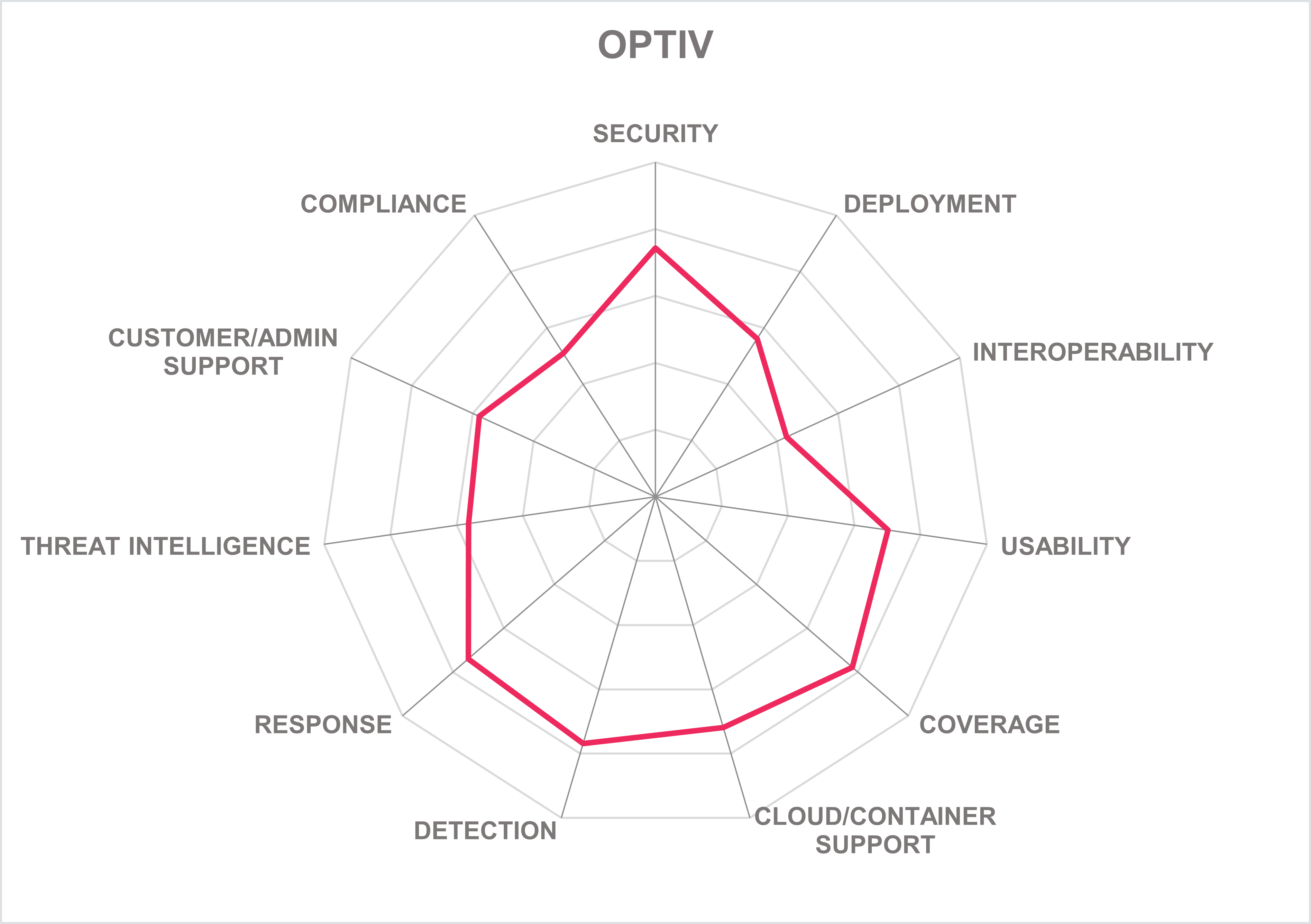
Optiv is a private cybersecurity company founded in 2015 and headquartered in Denver, Colorado, in the US. Optiv has offices across the US and in Mississauga, Canada, with SOCs in Leawood, Kansas in the US and Bangalore in India. Optiv mainly targets mid-market organizations with its MDR service, followed by larger enterprises, with most customers in NA. Optiv bases core service licensing on the volume of data ingested per day. Optiv MDR is SaaS delivered. The service runs in the public cloud, with optional on-premises elements for log collection and integration, depending on customer requirements.
Optiv MDR combines Google SecOps with Optiv’s own content, automation, and data engineering workflows. The platform ingests telemetry from endpoints, networks, identity systems, and cloud services through APIs and log collection. It provides round-the-clock monitoring, detection, and response with human oversight supported by Agentic AI personas. The service includes Active Defense hours to bridge the gap between incident confirmation and full IR engagement.
Optiv’s primary strength lies in its data engineering architecture, which uses dedicated ingestion pipelines to collect large volumes of heterogeneous security telemetry. This approach allows the platform to operationalize telemetry from diverse security tools and environments, improving detection quality and investigation speed. Optiv’s specialized AI agents operate in defined roles such as threat hunter, detection engineer, and tiered analyst, each processing specific elements of an alert in parallel or sequence to preserve context and improve accuracy rather than relying on a single generalized model.
Optiv Essential Content provides a mapped detection library aligned to the ATT&CK framework. The user interface provides shared visibility through dashboards, case timelines, investigation views, and reporting that mirror the SOC experience. Areas for improvement include broader protocol coverage for IoT and industrial environments, addressing the absence of activity recording and playback, and adding stronger support for data sovereignty requirements outside the US.
Optiv MDR provides monitoring across endpoints, servers, identity systems, Edge environments, IoT devices, mobile devices, and remote workers. It supports all major operating systems and common browsers, and it includes ITDR capabilities for monitoring identity misuse and privilege abuse. The platform can resolve every alert when required by the customer through automated SOAR workflows. It can discover and continuously monitor shadow IT. It analyzes DNS, HTTPS, SSH, and RDP traffic, including encrypted sessions, but does not support industrial or SCADA protocols.
Integrations include selected EPDR solutions such as the CrowdStrike Falcon Platform, selected XDR platforms such as Palo Alto Networks Cortex XDR, SOAR platforms such as Google SecOps SOAR, a wide range of SIEM platforms including Microsoft Sentinel, limited DLP and DSP tools, selected identity platforms such as Microsoft Entra ID and Okta Workforce Identity, limited SASE support with Prisma SASE as the only native integration, and selected vulnerability and exposure platforms such as Tenable One Cloud Security. The platform supports the OCSF.
The service provides 24/7 monitoring across cloud services and SaaS applications and supports Kubernetes monitoring. It can detect suspicious logins, unusual administrative activity, and resource changes across major cloud services. However, it does not include native CWP, CSPM, or multi-cloud vulnerability scanning within the core MDR service, and it does not analyze serverless or container workload telemetry such as AWS Lambda or Azure Functions. Integrations include Microsoft 365, Box, GitHub, Jira, Google Workspace, and several CSPM platforms including Prisma Cloud, Microsoft Defender for Cloud, and Wiz.
Optiv MDR detects account compromise, credential misuse, token theft, privilege escalation, and anomalous access through correlated identity, endpoint, and network telemetry. According to Optiv, the average time taken to detect threats anywhere in the customer IT estate is one minute. Its analytics correlate identity, device, and network telemetry to identify anomalous access patterns across distributed environments. It can identify MFA bypass attempts, abnormal access to sensitive data, unusual file uploads or downloads, and PUPs. Network detections support remediation actions and enrichment through threat intelligence, but exclude east-west traffic capture, on-demand full packet inspection, and investigation of unknown signals. The solution cannot perform baseline and periodic scans of endpoints for FIM and alerting. UBA is fully managed by Optiv and cannot be self- or co-managed by customers. Optiv MDR integrates with third-party IDS and IPS.
Optiv MDR provides automated response actions such as session termination, process disruption, and rollback of configuration changes. It supports policy-approved automated containment and can enforce JIT privilege revocation and session termination through identity and PAM integrations. It can also automatically deprovision users or disable risky sessions via SCIM, SAML, or API calls, depending on the available response actions of the IAM technology in use. The service does not include software patching. Ransomware can be blocked before encryption. Google SecOps orchestration and Optiv playbooks support response workflows. The solution can detect and respond to phishing attacks in real time. Optiv provides SLAs for time to respond, as well as update frequency and incident resolution.
Optiv MDR includes a dedicated threat hunting team that delivers automated and hypothesis-driven hunts, supported by real-time intelligence enrichment. Google Threat Intelligence is included as part of the base service. Threat intelligence draws on external feeds, open-source sources, and partner telemetry. Support for exchange standards is limited to MISP. The solution does not include CTEM. Customers receive reports on security posture, emerging threats, and hunting outcomes.
Optiv MDR‘s Agentic AI triage breaks investigations into specialized autonomous workflows with human oversight. These multi-step workflows use defined AI personas to automate alert ingestion, enrichment, correlation, triage, and early analysis while preserving context for human analysts. LLMs facilitate alert summarization, query creation, code and configuration development, and dynamic playbook optimization. The platform applies ML to detect abnormal activities, insider threats, and other cyber threats, and to improve usability. The platform includes UBA, but not attacker behavior analytics. Optiv continues to improve automation for detection engineering. Customers benefit from direct access to multiple layers of telemetry and investigation context. The platform offers BAS support as an optional extra. The service does not include deception capabilities or forensic playback features.
Optiv MDR aligns detections and reporting with the ATT&CK framework and generates ATT&CK-mapped incident reports. The service has SOC 2 Type I and Type II attestation. It does not provide regulatory reporting for NIS2, DORA, or GDPR. The platform guarantees data residency only for the US, and the platform cannot operate fully within customer-controlled environments for sovereignty needs.
Optiv MDR provides SOC coverage with co-management options, supported by a dedicated customer success manager. Optiv provides support and documentation only in English. Optiv provides on-site support only in NA. Optiv offers an ROI calculator and pre-sales trial access for qualified prospects. Optiv offers dedicated risk advisory services only as an add-on. The service does not provide insurer-ready reporting or forensic evidence gathering.
Optiv MDR is suitable for organizations from around 50 employees upward, including large enterprises, seeking a transparent MDR service with deep integration into existing security investments. It is of particular interest to North American organizations in regulated sectors that require tailored detection engineering, identity-focused threat coverage, and strong operational support.
| Strengths |
|
| Challenges |
|
SISA – SISA ProACT Agentic SOC
A preview of the evaluation of SISA, free with an accountCreate a free account
Sophos – Sophos MDR
A preview of the evaluation of Sophos, free with an accountCreate a free account
Tata Communications – Tata Communications MDR

A preview of the evaluation of Tata Communications, free with an accountCreate a free account
Vendors to Watch
Besides the vendors covered in detail in this document, we observe some other companies in the market that readers should be aware of. These vendors did not participate in the rating for several reasons but nevertheless offer a significant contribution to the market space.
Accenture
Accenture is a global professional services company, offering strategic, technology, and operations services.
AgileBlue
AgileBlue is a privately held company providing cloud-delivered MDR and SOCaaS for resource-constrained teams, combining analytics, behavioral monitoring, and automation across regulated industries.
Binary Defense
Binary Defense is an American managed security solution provider founded in 2014 and headquartered in Stow, Ohio. The company offers MDR and SOCaaS, using human-driven and technology-assisted approaches for 24x7 threat monitoring and incident response.
Blackpoint Cyber
Blackpoint Cyber is a private cybersecurity company founded in 2014, headquartered in Denver, Colorado, in the US.
Expel
Expel is a US-based security operations provider, founded in 2016 and headquartered in Herndon, Virginia.
Fortinet
Fortinet is a worldwide provider of broad, integrated, and automated cybersecurity solutions.
Fortra
Fortra (formerly HelpSystems) is a cybersecurity and data protection provider offering Agari Cloud Email Protection, DMARC authentication, and Titus data classification/DLP integrated for comprehensive inbound and outbound email protection.
IBM Security
IBM is a global technology company with extensive cloud, integration, and security infrastructure.
Kudelski Security
Kudelski Security was launched in 2012 as the cybersecurity division of the Kudelski Group, headquartered in Cheseaux-sur-Lausanne, Switzerland, with US headquarters in Phoenix, Arizona.
LevelBlue
LevelBlue was launched in 2024 through combination of AT&T Cybersecurity and WillJam Ventures, headquartered in Dallas, Texas, in the US.
Obrela
Obrela is a private cybersecurity services company founded in 2009 with roots in Athens, Greece and headquarters in London, UK, maintaining major operational and delivery center in Athens and presence in the Middle East.
Ontinue
Ontinue is a private MDR company spun out of Open Systems in 2023, with dual headquarters in Redwood City, California (USA) and Zurich, Switzerland.
Palo Alto Networks
Palo Alto Networks is a leading global cybersecurity company best known as an early pioneer of Next Generation Firewall (NGFW) technology.
PricewaterhouseCoopers (PwC)
PwC (PricewaterhouseCoopers) is a global professional services network, widely recognized as one of the Big Four accounting firms.
Proficio
Proficio is an American managed security services provider (MSSP) founded in 2010 and headquartered in Carlsbad, California, with SOCs in the US, Singapore, and Spain.
Rapid7
Rapid7 is a Boston-based cybersecurity company founded in 2000, offering a broad portfolio spanning SIEM, vulnerability management, cloud security, application security, and SOAR.
Red Canary
Red Canary is a US-based managed detection and response specialist founded in 2014 and headquartered in Denver, Colorado.
ReliaQuest
ReliaQuest, founded in 2007 and headquartered in Tampa, Florida, is a cybersecurity technology company specializing in MDR and security operations.
SecurityHQ
SecurityHQ is a privately held global MSSP founded in 2003, headquartered in London, UK with SOCs in the US, UK, UAE, South Africa, India, and Australia.
SentinelOne
SentinelOne is a cybersecurity company that offers an AI-powered endpoint security platform integrating endpoint protection, detection, and response to prevent and remediate cyber threats across enterprise networks.
ThreatLocker
ThreatLocker is a US startup offering agent-based endpoint security with an emphasis on tightly controlling application interactions and containment, using their Ringfencing™ technology.
Uptycs
Uptycs is a cybersecurity company specializing in cloud and endpoint security.
WatchGuard
WatchGuard Technologies delivers advanced network security, secure Wi-Fi, multi-factor authentication, and endpoint security solutions for small to midsize businesses and distributed enterprises.
A preview of why each of these 23 vendors is worth watchingCreate a free account
Related Research
Leadership Compass: Managed Detection and Response (MDR) 2024
Leadership Compass: Identity Threat Detection and Response (ITDR)
Leadership Compass: Network Detection and Response (NDR)
Leadership Compass: eXtended Detection and Response (XDR)
Leadership Compass: Attack Surface Management
Leadership Compass: Endpoint Protection Detection and Response (EPDR)
Buyer’s Compass: Managed Detection and Response (MDR)
Analyst’s View: Managed Detection and Response (MDR)
Copyright
© 2026 KuppingerCole Analysts AG. All rights reserved. Reproducing or distributing this publication in any form is prohibited without prior written permission. The conclusions, recommendations, and predictions in this document reflect KuppingerCole Analysts' initial views. As we gather more information and conduct deeper analysis, the positions presented here may undergo refinements or significant changes. KuppingerCole Analysts disclaims all warranties regarding the completeness, accuracy, and adequacy of this information. Although KuppingerCole Analysts' research documents may discuss legal issues related to information security and technology, we do not provide legal services or advice, and our publications should not be used as such. KuppingerCole Analysts assumes no liability for errors or inadequacies in the information contained in this document. Any expressed opinion may change without notice. All product and company names are trademarks™ or registered® trademarks of their respective holders. Their use does not imply any affiliation with or endorsement by them.
KuppingerCole Analysts supports IT professionals with exceptional expertise to define IT strategies and make relevant decisions. As a leading analyst firm, KuppingerCole Analysts offers firsthand, vendor-neutral information. Our services enable you to make decisions crucial to your business with confidence and security.
Founded in 2004, KuppingerCole Analysts is a global, independent analyst organization headquartered in Europe. We specialize in providing vendor-neutral advice, expertise, thought leadership, and practical relevance in Cybersecurity, Digital Identity & IAM (Identity and Access Management), Cloud Risk and Security, and Artificial Intelligence, as well as technologies enabling Digital Transformation. We assist companies, corporate users, integrators, and software manufacturers to address both tactical and strategic challenges by making better decisions for their business success. Balancing immediate implementation with long-term viability is central to our philosophy.
For further information, please contact clients@kuppingercole.com.
Introduction


Market Analysis
Leadership
Product and Vendor Evaluation
Arctic Wolf – Arctic Wolf MDR
Atos – Atos MDR/AIsaac
Barracuda Networks – Barracuda Managed XDR
Check Point – Check Point MDR for Workspace/MDR 360°
CrowdStrike – Falcon Complete MDR
eSentire – eSentire MDR
ESET – ESET PROTECT MDR
N-able – Adlumin MDR
NuSummit Cybersecurity – CogniX MDR
Optiv – Optiv MDR
SISA – SISA ProACT Agentic SOC
Sophos – Sophos MDR
Tata Communications – Tata Communications MDR
Vendors to Watch
Accenture
AgileBlue
Binary Defense
Blackpoint Cyber
Expel
Fortinet
Fortra
IBM Security
Kudelski Security
LevelBlue
Obrela
Ontinue
Palo Alto Networks
PricewaterhouseCoopers (PwC)
Proficio
Rapid7
Red Canary
ReliaQuest
SecurityHQ
SentinelOne
ThreatLocker
Uptycs
WatchGuard
Related Research
Copyright
































Table of Contents


Table of contents
Close
Introduction
Market Analysis
Leadership
Product and Vendor Evaluation
Arctic Wolf – Arctic Wolf MDR
Atos – Atos MDR/AIsaac
Barracuda Networks – Barracuda Managed XDR
Check Point – Check Point MDR for Workspace/MDR 360°
CrowdStrike – Falcon Complete MDR
eSentire – eSentire MDR
ESET – ESET PROTECT MDR
N-able – Adlumin MDR
NuSummit Cybersecurity – CogniX MDR
Optiv – Optiv MDR
SISA – SISA ProACT Agentic SOC
Sophos – Sophos MDR
Tata Communications – Tata Communications MDR
Vendors to Watch
Accenture
AgileBlue
Binary Defense
Blackpoint Cyber
Expel
Fortinet
Fortra
IBM Security
Kudelski Security
LevelBlue
Obrela
Ontinue
Palo Alto Networks
PricewaterhouseCoopers (PwC)
Proficio
Rapid7
Red Canary
ReliaQuest
SecurityHQ
SentinelOne
ThreatLocker
Uptycs
WatchGuard
Related Research
Copyright










